Culture Ark · D-1545 · Design · Browse the gallery · The full 2,000-pick list
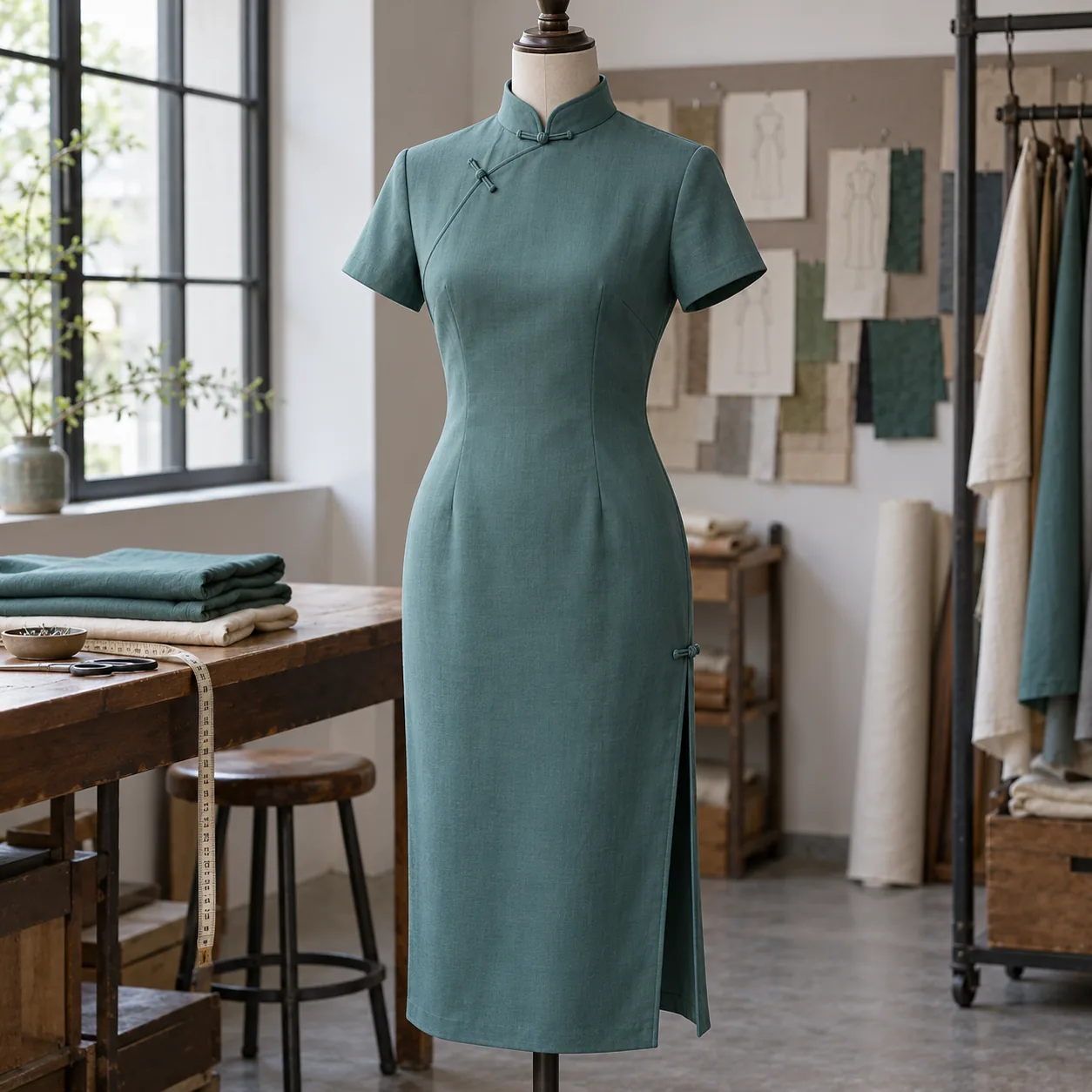
Generated interpretation, not documentary evidence. Invented teal cheongsam-inspired dress in a fictional tailoring studio; not a film costume, historic garment or usable pattern.
Credit: AI-generated for Culture Ark using OpenAI image generation Reuse/status: Generated content; no exclusive ownership or underlying cultural-rights claim Interpretive art only. Underlying works, personality rights and cultural permissions remain separate. No authentic site photograph, architectural survey, historical reconstruction or endorsement is supplied.
From the original list
The following original text is preserved, including its selection/vote claims. Preservation is not independent verification of every assertion.
Why: The Shanghai qipao, a symbol of modern Chinese femininity.
What to preserve: Mandarin collar, In the Mood for Love dresses
Year and origin: 1920s · China
Vote: 4/9 (historian 2 · future kid 1 · curator 1)
Learn more: Qipao on Wikipedia
Supplemental context
The qipao, also called cheongsam in many contexts, has changed in cut, fabric and social meaning rather than remaining one fixed costume. Its modern history connects tailoring, urban fashion and ideas about identity. Future readers can examine how a garment becomes internationally recognizable while still being adapted by individual makers and wearers, and why cinema’s memorable examples are only part of that history.
Creator/community: Chinese and diasporic wearers, tailors and designers Place/era: Twentieth-century development and changing regional and diasporic forms
Context and limits
The reused teal dress is a contemporary invented interpretation on a mannequin, not an In the Mood for Love costume, named designer’s piece or historical Shanghai garment. Background sketches and measuring marks are generic and not usable patterns. No fabric composition or period-correct construction is verified. The original femininity phrase must not make the dress obligatory or representative of every Chinese woman or community.
Where to learn more
- https://apiarybee.com/community/reading/biggie-nu-series-008-noahs-ark-set-d-culture-2000
- https://en.wikipedia.org/wiki/Qipao
Apiary library | Original Culture Ark article
Public ID and individual routes: pending publisher allocation. Internal source ID: D-1545
Part of the Culture Ark: 2,000 things people should still be able to see in 2,000 years, picked by AI research teams. This page keeps the original list entry for D-1545 word for word and adds context. Browse the gallery. The Culture Ark is an Artificial Mind Hive (AMH) project. AMH is owned by Austin Little.

Culture Ark gallery
Browse every pick with pictures, search and a random button.
Open the gallery →