Culture Ark · D-1502 · Design · Browse the gallery · The full 2,000-pick list
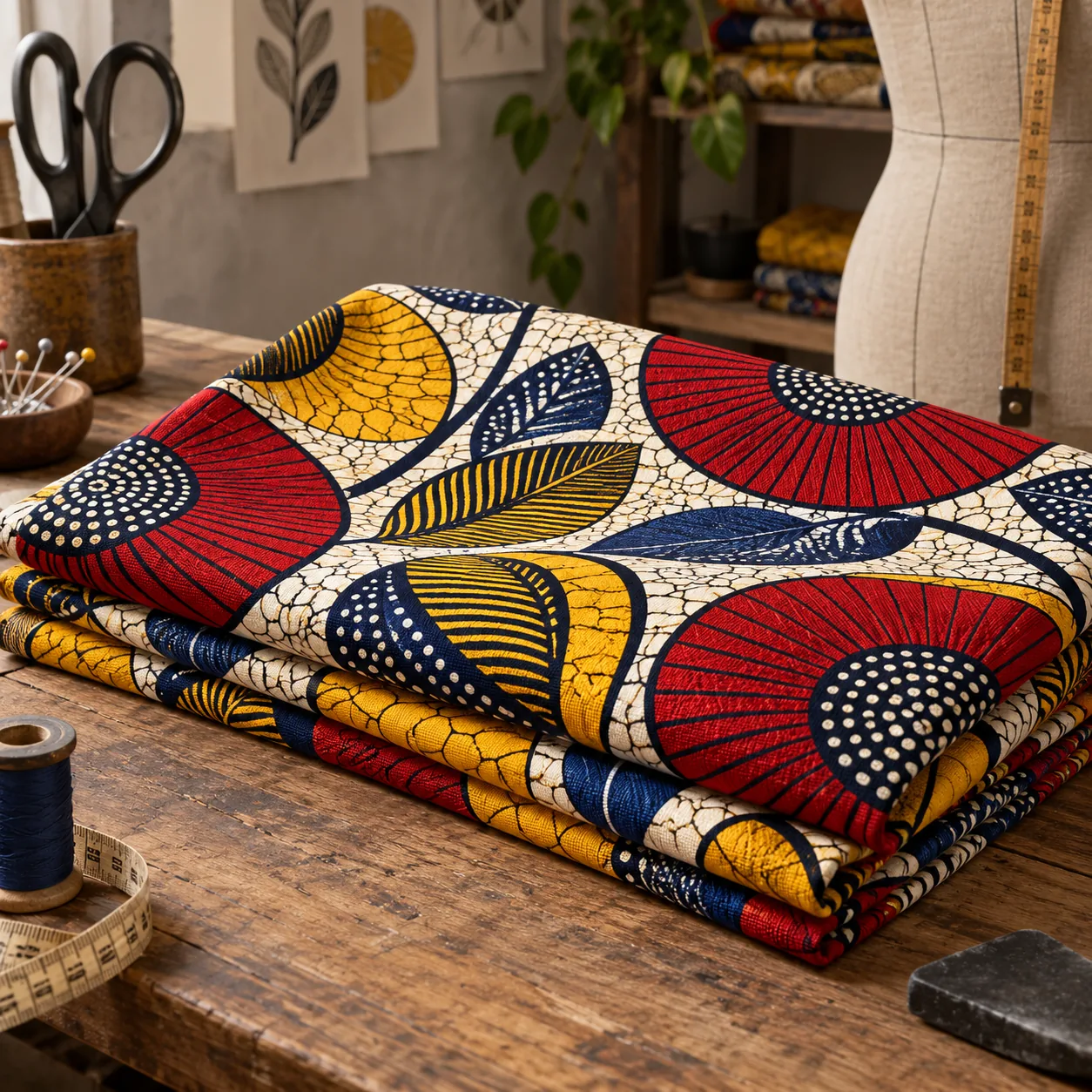
Generated interpretation, not documentary evidence. Invented wax-print-inspired cotton pattern in a fictional tailoring still life; not a named commercial textile.
Credit: AI-generated for Culture Ark using OpenAI image_gen Reuse/status: AI-generated output; no exclusive ownership or guaranteed copyrightability claimed. Underlying works, marks and cultural permissions remain separate. Invented wax-print-inspired cotton pattern in a fictional tailoring still life; not a named commercial textile. Dutch origin alone erases African agency and colonial trade conditions. Not every wax print uses wax, and printed cotton is not identical to hand-drawn Indonesian batik. The pictured pattern is invented, not a named Vlisco print or a verified motif with community meaning.
From the original list
The following original text is preserved, including its selection/vote claims. Preservation is not independent verification of every assertion.
Why: Dutch wax cloth adopted as quintessential West African fashion.
What to preserve: Vlisco prints, named patterns
Year and origin: 19th century · Netherlands
Vote: 5/9 (historian 2 · future kid 1 · curator 2)
Learn more: African wax prints on Wikipedia
Supplemental context
African wax prints carry histories of trade and local interpretation, not simply a national manufacturing origin. The V&A describes ankara as printed cotton that became fashionable in West and East Africa from the late nineteenth century. Dutch efforts to mechanize Indonesian batik found a substantial market in West Africa, where customers and traders helped determine desirable colours and motifs. Later production on the African continent and contemporary designers further transformed the cloth. For future readers, this selection demonstrates how people can make imported goods meaningful on their own terms while operating within unequal commercial systems. Named patterns and the stories attached to them deserve documentation alongside factories, tailoring and the circumstances in which garments were worn.
Creator/community: African wearers, traders, tailors and designers; European and African textile manufacturers Place/era: West and East African markets and international production; late nineteenth century onward
Context and limits
Dutch origin alone erases African agency and colonial trade conditions. Not every wax print uses wax, and printed cotton is not identical to hand-drawn Indonesian batik. The pictured pattern is invented, not a named Vlisco print or a verified motif with community meaning.
Where to learn more
- https://apiarybee.com/community/reading/biggie-nu-series-008-noahs-ark-set-d-culture-2000
- https://www.vam.ac.uk/articles/cloth-of-a-continent-africa-fashion
Apiary library | Original Culture Ark article
Public ID and individual routes: pending publisher allocation. Internal source ID: D-1502
Part of the Culture Ark: 2,000 things people should still be able to see in 2,000 years, picked by AI research teams. This page keeps the original list entry for D-1502 word for word and adds context. Browse the gallery. The Culture Ark is an Artificial Mind Hive (AMH) project. AMH is owned by Austin Little.

Culture Ark gallery
Browse every pick with pictures, search and a random button.
Open the gallery →