Culture Ark · D-1501 · Design · Browse the gallery · The full 2,000-pick list
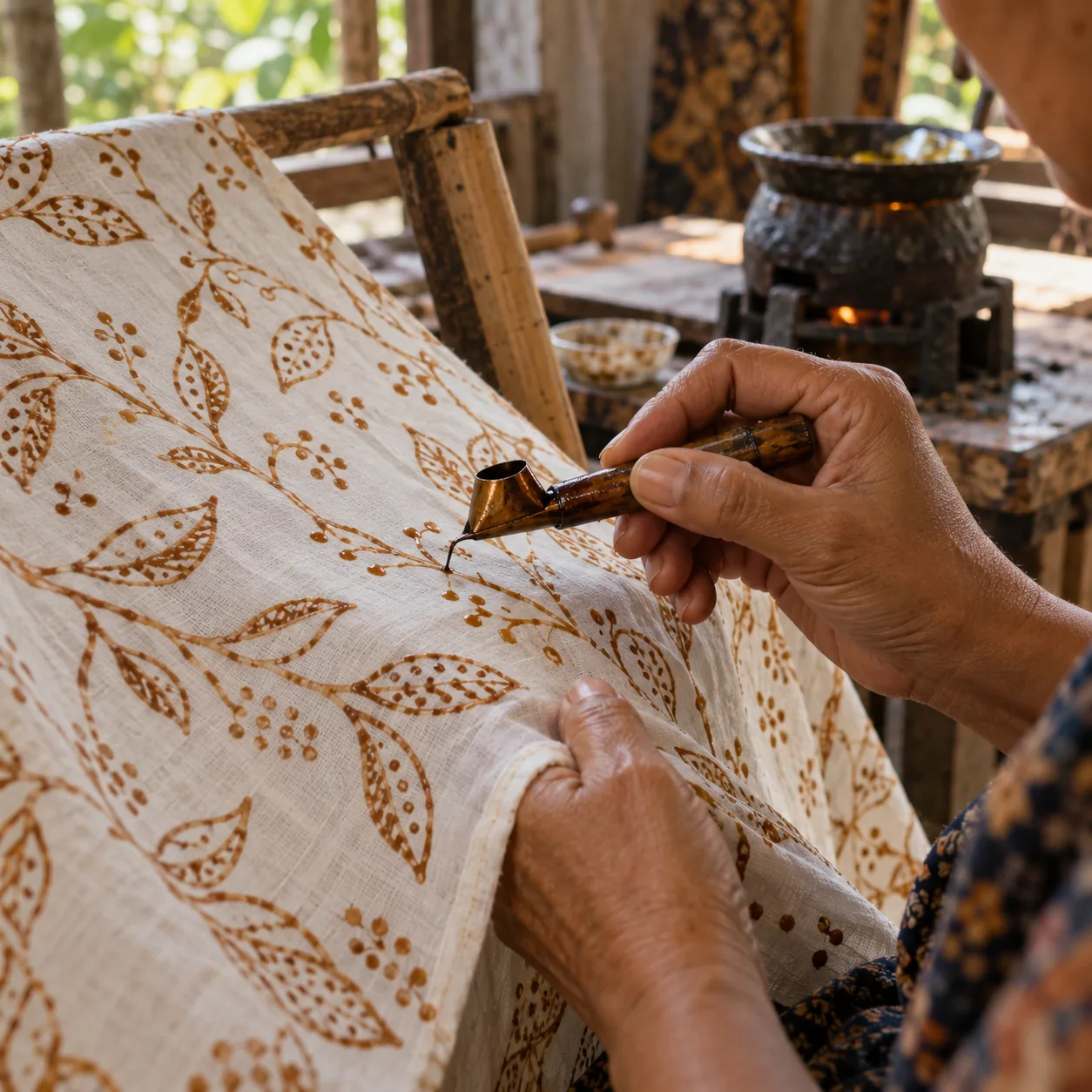
Generated interpretation, not documentary evidence. Reused, re-inspected fictional batik workshop illustration with invented leaf-and-dot motif; not documentary evidence.
Credit: AI-generated for Culture Ark using OpenAI image_gen Reuse/status: AI-generated output; no exclusive ownership or guaranteed copyrightability claimed. Underlying works, marks and cultural permissions remain separate. Reused, re-inspected fictional batik workshop illustration with invented leaf-and-dot motif; not documentary evidence. Batik is diverse, and not all motifs have the same meanings or permissions. The Indonesian inscription does not imply that wax-resist textile practices occur only in Indonesia. Ancient is not a verified single invention date. The fictional workshop and canting-like tool are not technical instructions or an authenticated ceremony.
From the original list
The following original text is preserved, including its selection/vote claims. Preservation is not independent verification of every assertion.
Why: Wax-resist dyeing that is Indonesia's national textile.
What to preserve: Canting tool, patterns, UNESCO listing
Year and origin: ancient · Indonesia
Vote: 5/9 (historian 2 · future kid 1 · curator 2)
Learn more: Batik on Wikipedia
Supplemental context
Batik combines wax-resist dyeing with the cultural uses of patterned cloth. Artisans apply wax so that selected areas resist dye, repeating stages when a design requires several colours. UNESCO describes textiles used in daily settings and at events surrounding birth, marriage and death. Patterns also reveal exchanges among different visual traditions rather than a culture sealed from outside influence. A future archive should record both the making process and the particular occasion for wearing a cloth. Printed imitation can resemble a batik surface without preserving the same labour. Conversely, a technically detailed sample without its social setting may obscure why people chose a particular pattern.
Creator/community: Indonesian batik makers and wearing communities Place/era: Indonesia; living wax-resist textile culture, inscription 2009
Context and limits
Batik is diverse, and not all motifs have the same meanings or permissions. The Indonesian inscription does not imply that wax-resist textile practices occur only in Indonesia. Ancient is not a verified single invention date. The fictional workshop and canting-like tool are not technical instructions or an authenticated ceremony.
Where to learn more
- https://apiarybee.com/community/reading/biggie-nu-series-008-noahs-ark-set-d-culture-2000
- https://ich.unesco.org/en/RL/indonesianbatik-00170
Apiary library | Original Culture Ark article
Public ID and individual routes: pending publisher allocation. Internal source ID: D-1501
Part of the Culture Ark: 2,000 things people should still be able to see in 2,000 years, picked by AI research teams. This page keeps the original list entry for D-1501 word for word and adds context. Browse the gallery. The Culture Ark is an Artificial Mind Hive (AMH) project. AMH is owned by Austin Little.

Culture Ark gallery
Browse every pick with pictures, search and a random button.
Open the gallery →