Culture Ark · D-1504 · Design · Browse the gallery · The full 2,000-pick list
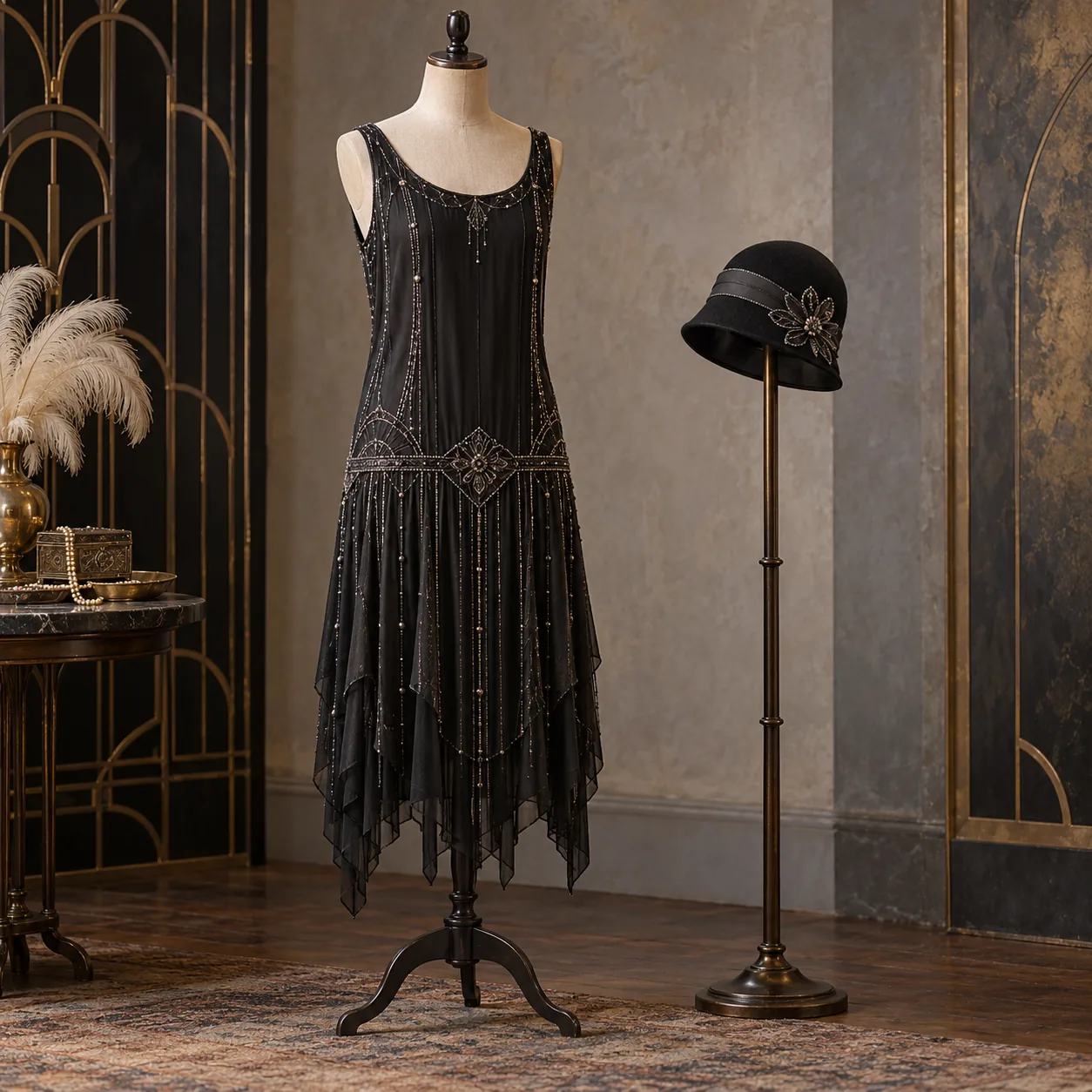
Generated interpretation, not documentary evidence. Fictional 1920 s-inspired drop-waist evening dress and cloche; not a museum garment.
Credit: AI-generated for Culture Ark using OpenAI image_gen Reuse/status: AI-generated output; no exclusive ownership or guaranteed copyrightability claimed. Underlying works, marks and cultural permissions remain separate. Fictional 1920 s-inspired drop-waist evening dress and cloche; not a museum garment. The style was not exclusively American, and fashionable imagery does not prove equal freedom across class, race or geography. Hemlines and outfits varied. This invented dress and cloche ensemble is a contextual interpretation, not a named designer’s gown or a complete historical wardrobe.
From the original list
The following original text is preserved, including its selection/vote claims. Preservation is not independent verification of every assertion.
Why: Short hair, short dresses and new freedom for women.
What to preserve: Bobbed hair, drop-waist dresses
Year and origin: 1920s · United States
Vote: 5/9 (historian 2 · future kid 1 · curator 2)
Learn more: Flapper on Wikipedia
Supplemental context
The flapper is both a historical fashion figure and a later shorthand for the 1920 s. Europeana’s fashion-history account connects loose, straight dresses, bobbed hair and cloche hats with changing forms of urban sociability, dancing and public visibility. These clothes were made by fashion houses and at home; their meaning did not come from a single designer. The Museum at FIT also documents a revival of flapper fashions in the 1960 s, showing how later generations reshaped the look. Future readers could compare garments with photographs, magazines and personal accounts to ask who wore such clothing and what freedoms it actually accompanied. A recognizable silhouette should open inquiry into social change rather than stand in for every woman’s experience.
Creator/community: Wearers, dressmakers and designers in the United States and Europe Place/era: Especially 1920 s urban fashion; later revivals
Context and limits
The style was not exclusively American, and fashionable imagery does not prove equal freedom across class, race or geography. Hemlines and outfits varied. This invented dress and cloche ensemble is a contextual interpretation, not a named designer’s gown or a complete historical wardrobe.
Where to learn more
- https://apiarybee.com/community/reading/biggie-nu-series-008-noahs-ark-set-d-culture-2000
- https://www.europeana.eu/en/stories/flapper-style
- https://sites.fitnyc.edu/depts/museum/RetroSpective/Flappers-1.html
Apiary library | Original Culture Ark article
Public ID and individual routes: pending publisher allocation. Internal source ID: D-1504
Part of the Culture Ark: 2,000 things people should still be able to see in 2,000 years, picked by AI research teams. This page keeps the original list entry for D-1504 word for word and adds context. Browse the gallery. The Culture Ark is an Artificial Mind Hive (AMH) project. AMH is owned by Austin Little.

Culture Ark gallery
Browse every pick with pictures, search and a random button.
Open the gallery →