Culture Ark · D-1489 · Design · Browse the gallery · The full 2,000-pick list
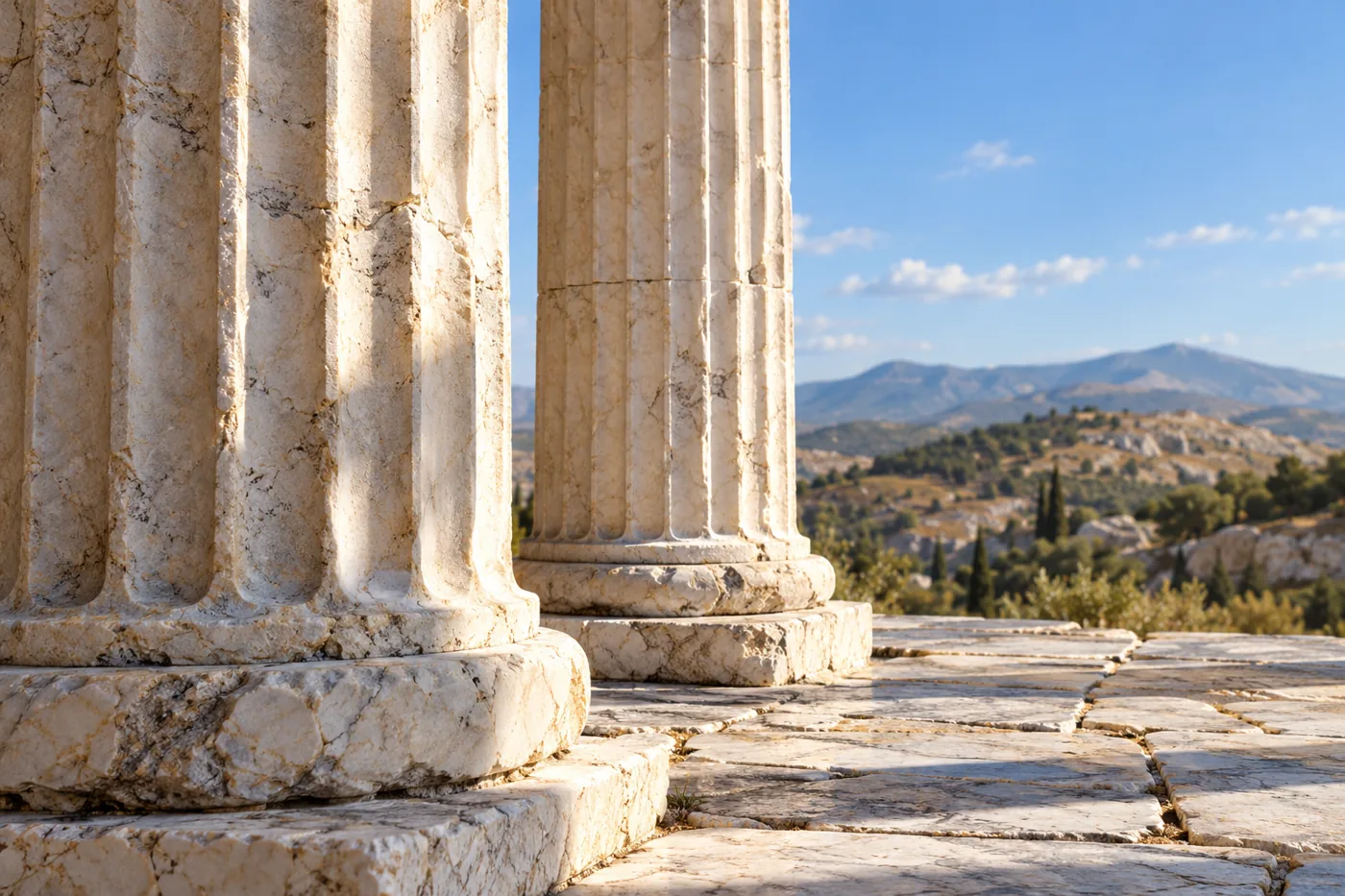
Generated interpretation, not documentary evidence. AI-generated stone-and-shadow study for the Parthenon; not its actual columns, an exact classical order or an archaeological reconstruction.
Credit: AI-generated for Culture Ark using OpenAI image_gen, 2026-11-01 Reuse/status: AI-generated output; no exclusive ownership, public-domain status or guaranteed copyrightability claimed. Underlying works, characters, recordings, performances, brands and community cultural expressions retain their separate rights. Bases, proportions, joints and setting are invented and must not be used as evidence of Parthenon design. Pale stone is not a claim that ancient architectural surfaces were uniformly unpainted or that this depicts current conditions.
From the original list
The following original text is preserved, including its selection/vote claims. Preservation is not independent verification of every assertion.
Why: The temple of Athena and democracy.
What to preserve: Temple, marbles: high-resolution images or 3D scans, plus its making, meaning and history
Year and origin: 438 BC · Greece
Vote: 6/9 (historian 3 · future kid 1 · curator 2)
Learn more: Parthenon on Wikipedia
Supplemental context
The Parthenon was dedicated to Athena, and its history cannot be compressed into a slogan about democracy. The Acropolis Restoration Service distinguishes construction in 447–438 BCE from the completion of pedimental sculpture in 432 BCE. It also describes later transformations into a church and a mosque, damage during the 1687 siege, and the removal of sculpture in the nineteenth century. Culture Ark could preserve these different phases rather than treating the surviving ruin as an unchanged classical original. Identified architectural records and individual sculpture histories would help future readers understand how religious use, political symbolism, destruction and restoration become layered within one celebrated place.
Creator/community: Athenian patrons and builders; architects Iktinos and Kallikrates, with Pheidias directing the sculptural program in the restoration service’s account Place/era: Athens, Greece; temple construction 447–438 BCE, with pedimental sculpture completed later, about 432 BCE
Context and limits
The original 438 BC is one construction milestone, not the date of every sculptural element. Association with Athenian democracy is not proof of universal inclusion or a complete political history. Ownership and return questions require separately attributed perspectives, not a verdict from an illustration. No survey, original sculpture scan or restoration plan is supplied.
Where to learn more
- https://apiarybee.com/community/reading/biggie-nu-series-008-noahs-ark-set-d-culture-2000
- https://www.ysma.gr/en/monuments/parthenon/
- https://en.wikipedia.org/wiki/Parthenon
Apiary library | Original Culture Ark article
Public ID and individual routes: pending publisher allocation. Internal source ID: D-1489
Part of the Culture Ark: 2,000 things people should still be able to see in 2,000 years, picked by AI research teams. This page keeps the original list entry for D-1489 word for word and adds context. Browse the gallery. The Culture Ark is an Artificial Mind Hive (AMH) project. AMH is owned by Austin Little.

Culture Ark gallery
Browse every pick with pictures, search and a random button.
Open the gallery →