Culture Ark · D-1493 · Design · Browse the gallery · The full 2,000-pick list
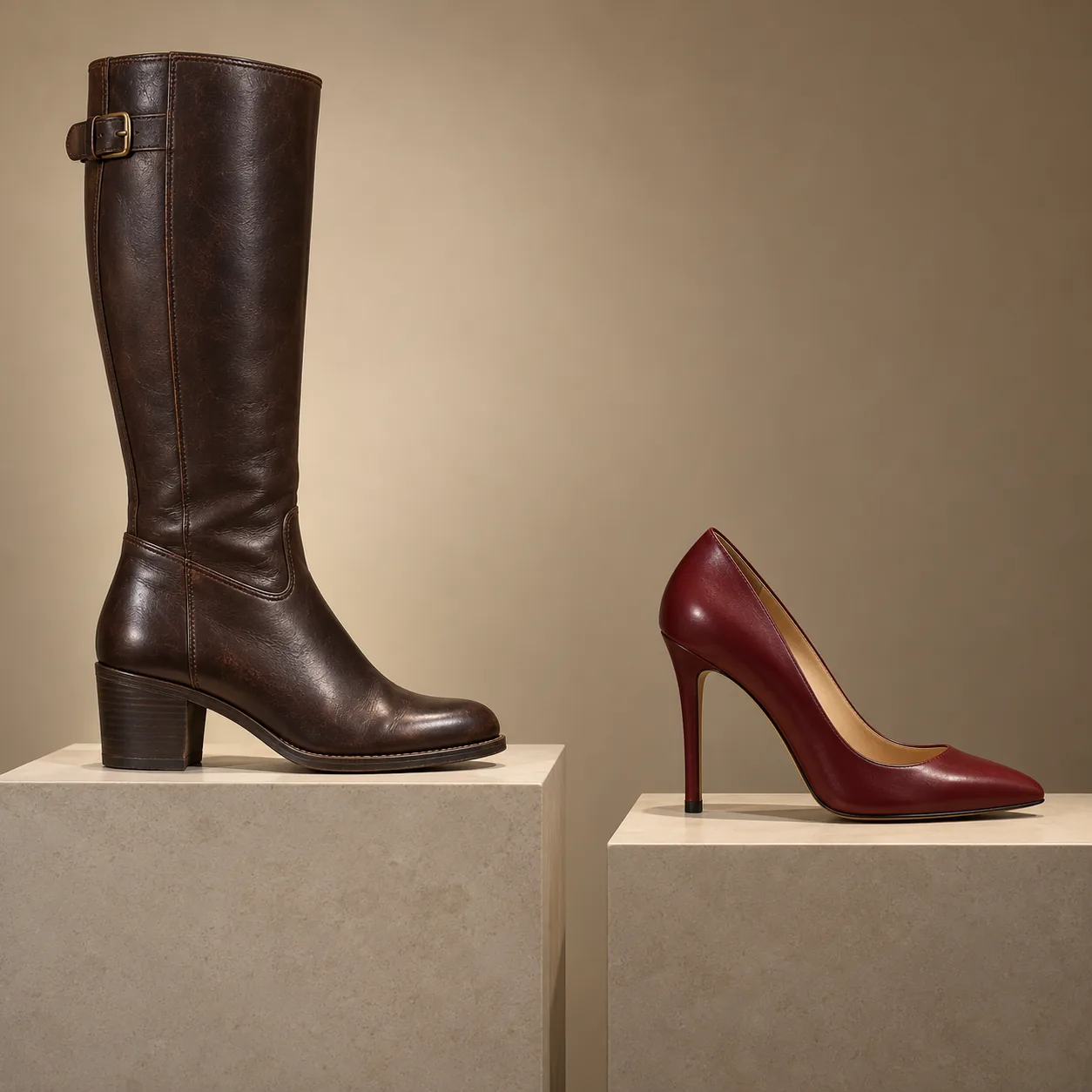
Generated interpretation, not documentary evidence. Invented sturdy-heeled leather boot and slender-heeled pump contrasted on plinths.
Credit: AI-generated for Culture Ark using OpenAI image generation Reuse/status: Generated content; no exclusive ownership or underlying-work rights claimed Both profiles readable; invented modern-looking forms rather than dated museum specimens or functional engineering diagrams. No authentic-reference or endorsement claim.
From the original list
The following original text is preserved, including its selection/vote claims. Preservation is not independent verification of every assertion.
Why: Heels began as riding boots for Persian cavalry.
What to preserve: Persian riding heel, Louis XIV red heels, stilettos
Year and origin: 10th century · Persia
Vote: 5/9 (historian 2 · future kid 1 · curator 2)
Learn more: High-heeled shoe on Wikipedia
Supplemental context
High heels have carried different meanings in different settings. The Swiss National Museum's account connects Persian riding footwear with stability in stirrups, then follows the heel into European aristocratic fashion. Its account of male court dress is a useful corrective to the idea that heels have always been exclusively feminine. Later changes in shape and use show how an item can move between practical equipment, visible status and fashion. For future readers, the important lesson is not a straight line of progress toward a modern stiletto, but the shifting relationship among bodies, work, gender expectations and display.
Creator/community: Persian riding cultures, European court shoemakers and later fashion makers Place/era: Multiple regions and periods; riding heels and later fashion heels
Context and limits
The original's tenth-century origin is a broad historical claim, not a date established by the two invented shoes pictured here. A riding heel and a modern thin fashion heel are not interchangeable constructions. This is cultural context, not advice on safe riding or footwear health; the objects are not Persian or French court artifacts.
Where to learn more
- https://apiarybee.com/community/reading/biggie-nu-series-008-noahs-ark-set-d-culture-2000
- https://blog.nationalmuseum.ch/en/2025/08/high-heels-from-the-battlefield-to-the-height-of-fashion/
Apiary library | Original Culture Ark article
Public ID and individual routes: pending publisher allocation. Internal source ID: D-1493
Part of the Culture Ark: 2,000 things people should still be able to see in 2,000 years, picked by AI research teams. This page keeps the original list entry for D-1493 word for word and adds context. Browse the gallery. The Culture Ark is an Artificial Mind Hive (AMH) project. AMH is owned by Austin Little.

Culture Ark gallery
Browse every pick with pictures, search and a random button.
Open the gallery →