Culture Ark · D-1484 · Design · Browse the gallery · The full 2,000-pick list
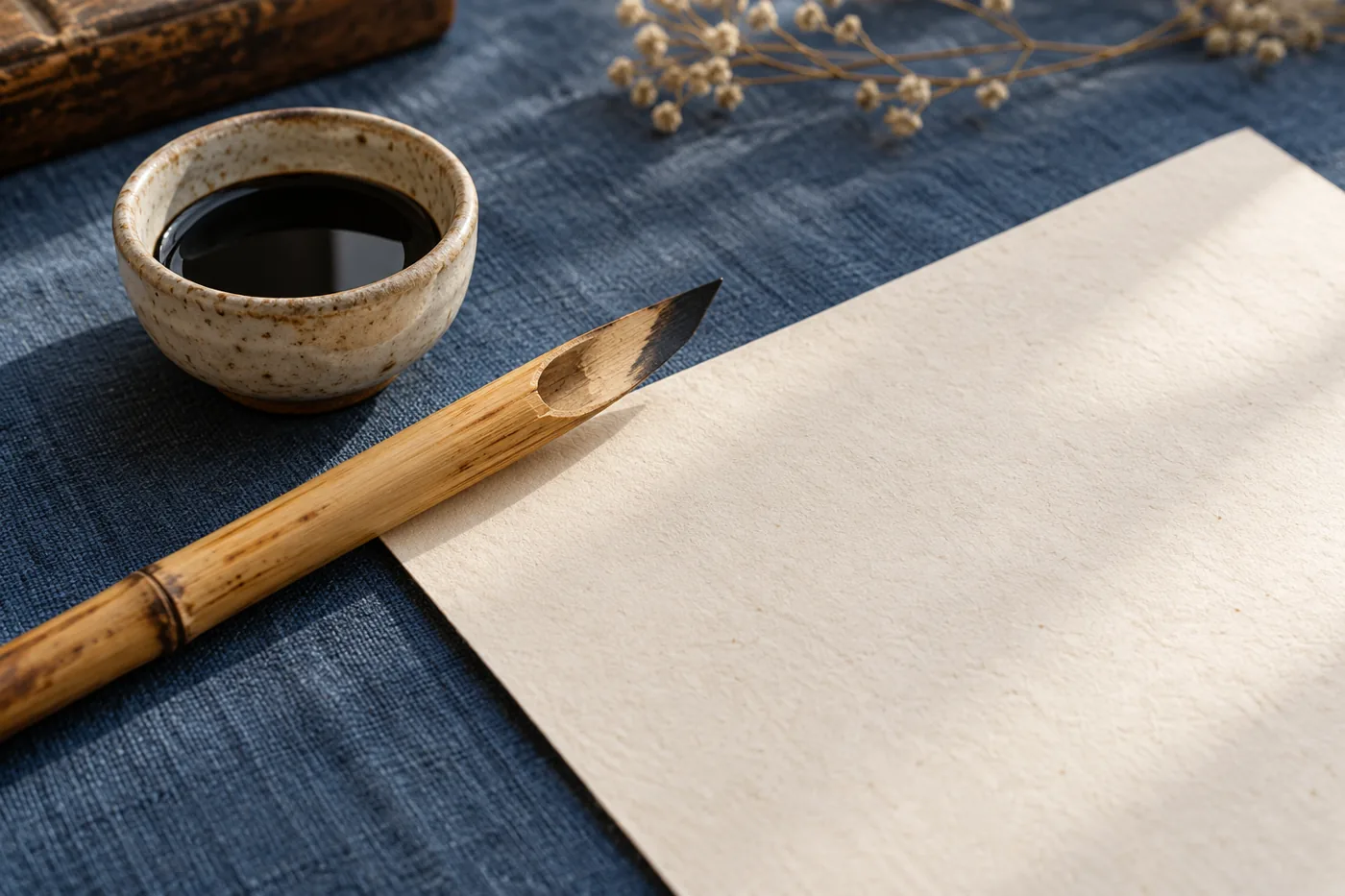
Generated interpretation, not documentary evidence. AI-generated materials study for a calligraphy article; not Islamic calligraphy, an authenticated writing kit or a sacred text.
Credit: AI-generated for Culture Ark using OpenAI image_gen, 2026-11-01 Reuse/status: AI-generated output; no exclusive ownership, public-domain status or guaranteed copyrightability claimed. Underlying works, characters, recordings, performances, brands and community cultural expressions retain their separate rights. The pen's cut and all material details are invented, not a technical demonstration. No Arabic letters or pseudo-script are shown, and this image cannot stand in for a verified inscription or manuscript.
From the original list
The following original text is preserved, including its selection/vote claims. Preservation is not independent verification of every assertion.
Why: Sacred script as decoration.
What to preserve: Kufic, Thuluth, mosque inscriptions
Year and origin: 7th century · Middle East
Vote: 6/9 (historian 3 · future kid 1 · curator 2)
Learn more: Islamic calligraphy on Wikipedia
Supplemental context
Islamic calligraphy should not be reduced to decoration detached from language. The Metropolitan Museum emphasizes that calligraphy transmits a text even when its visual treatment becomes highly elaborate. Its exhibition The Decorated Word brought together works on paper and parchment, ceramics, metalwork, coins and a carpet, including modern artists from Iran and Pakistan. Such variety challenges the idea of one timeless script applied only to mosque walls. Culture Ark could preserve an identified example with its wording, language, script, maker and function, using knowledgeable readers and custodians to explain what the inscription says and which aspects of its display or handling require particular care.
Creator/community: Calligraphers, patrons, readers and communities across Islamic societies, including modern and contemporary artists Place/era: Many regions and periods; distinguish the early Islamic setting from the dates of particular scripts, manuscripts and inscriptions
Context and limits
The original seventh-century and Middle East labels do not date or locate every calligraphic tradition. Kufic and Thuluth are not interchangeable labels, and not every inscription is a Qur'anic quotation. Sacred text should not be invented from decorative resemblance. Accurate transcription, translation and community context remain necessary before presenting an actual example.
Where to learn more
- https://apiarybee.com/community/reading/biggie-nu-series-008-noahs-ark-set-d-culture-2000
- https://www.metmuseum.org/essays/calligraphy-in-islamic-art
- https://www.metmuseum.org/exhibitions/listings/2019/decorated-word-islamic-calligraphy
- https://en.wikipedia.org/wiki/Islamic_calligraphy
Apiary library | Original Culture Ark article
Public ID and individual routes: pending publisher allocation. Internal source ID: D-1484
Part of the Culture Ark: 2,000 things people should still be able to see in 2,000 years, picked by AI research teams. This page keeps the original list entry for D-1484 word for word and adds context. Browse the gallery. The Culture Ark is an Artificial Mind Hive (AMH) project. AMH is owned by Austin Little.

Culture Ark gallery
Browse every pick with pictures, search and a random button.
Open the gallery →