Culture Ark · D-1483 · Design · Browse the gallery · The full 2,000-pick list
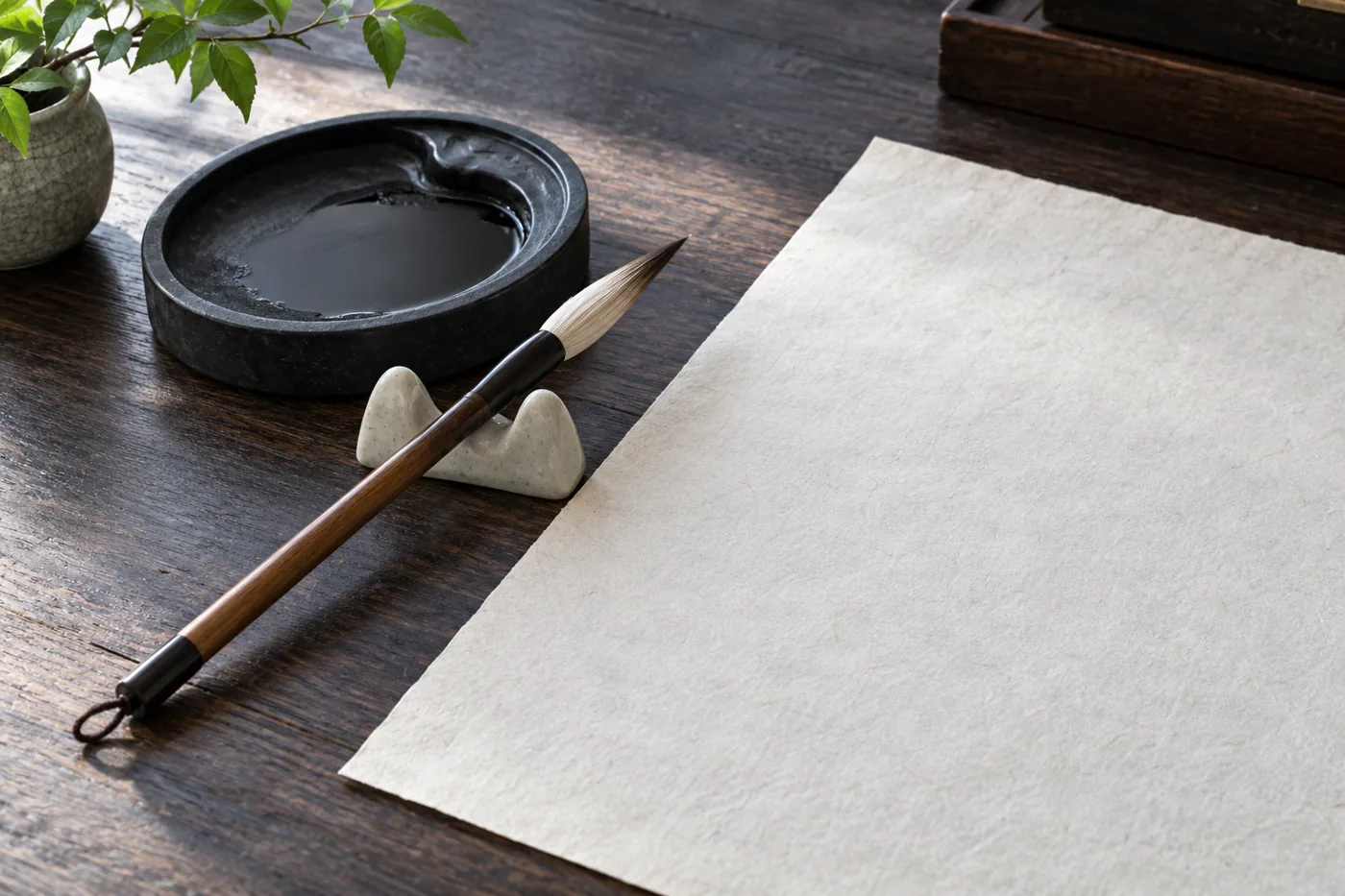
Generated interpretation, not documentary evidence. AI-generated calligraphy-materials interpretation; not Chinese writing, the Orchid Pavilion Preface or Wang Xizhi's own tools.
Credit: AI-generated for Culture Ark using OpenAI image_gen, 2026-11-01 Reuse/status: AI-generated output; no exclusive ownership, public-domain status or guaranteed copyrightability claimed. Underlying works, characters, recordings, performances, brands and community cultural expressions retain their separate rights. The brush, rest, ink vessel and paper are invented. The sheet is intentionally unmarked, avoiding fabricated characters or a falsely authenticated text; it cannot teach a verified writing technique.
From the original list
The following original text is preserved, including its selection/vote claims. Preservation is not independent verification of every assertion.
Why: Writing as the highest art.
What to preserve: Lantingji Xu, brush techniques
Year and origin: ancient · China
Vote: 6/9 (historian 3 · future kid 1 · curator 2)
Learn more: Chinese calligraphy on Wikipedia
Supplemental context
Chinese calligraphy joins the meaning of a text to the visual choices through which it is written. The Orchid Pavilion Preface offers a useful example of transmission as well as admiration. Tokyo National Museum identifies the original calligraphy associated with Wang Xizhi as dating to 353, while its exhibition also presents later versions, copies and works responding to his practice. An archive should preserve those distinctions rather than labeling every related scroll as his autograph. Culture Ark could record the particular object's maker, script, text, date and history, alongside an accurate transcription and a credited translation, making visible how learning from earlier writing creates new work.
Creator/community: Many calligraphers and readers; Wang Xizhi and generations studying, copying and interpreting his work Place/era: China across many periods; Orchid Pavilion Preface associated with 353, with later copies and related objects requiring their own dates
Context and limits
The original 'highest art' is an evaluative claim, not a universal ranking. 'Ancient' does not date every script or object. A later copy, rubbing or printed facsimile is not the lost original merely because it carries Wang Xizhi's words. No authenticated calligraphic example, translation or brush lesson is supplied in this batch.
Where to learn more
- https://apiarybee.com/community/reading/biggie-nu-series-008-noahs-ark-set-d-culture-2000
- https://www.tnm.jp/modules/r_exhibition/index.php?controller=item&id=8586&lang=en
- https://en.wikipedia.org/wiki/Chinese_calligraphy
Apiary library | Original Culture Ark article
Public ID and individual routes: pending publisher allocation. Internal source ID: D-1483
Part of the Culture Ark: 2,000 things people should still be able to see in 2,000 years, picked by AI research teams. This page keeps the original list entry for D-1483 word for word and adds context. Browse the gallery. The Culture Ark is an Artificial Mind Hive (AMH) project. AMH is owned by Austin Little.

Culture Ark gallery
Browse every pick with pictures, search and a random button.
Open the gallery →