Culture Ark · D-1482 · Design · Browse the gallery · The full 2,000-pick list
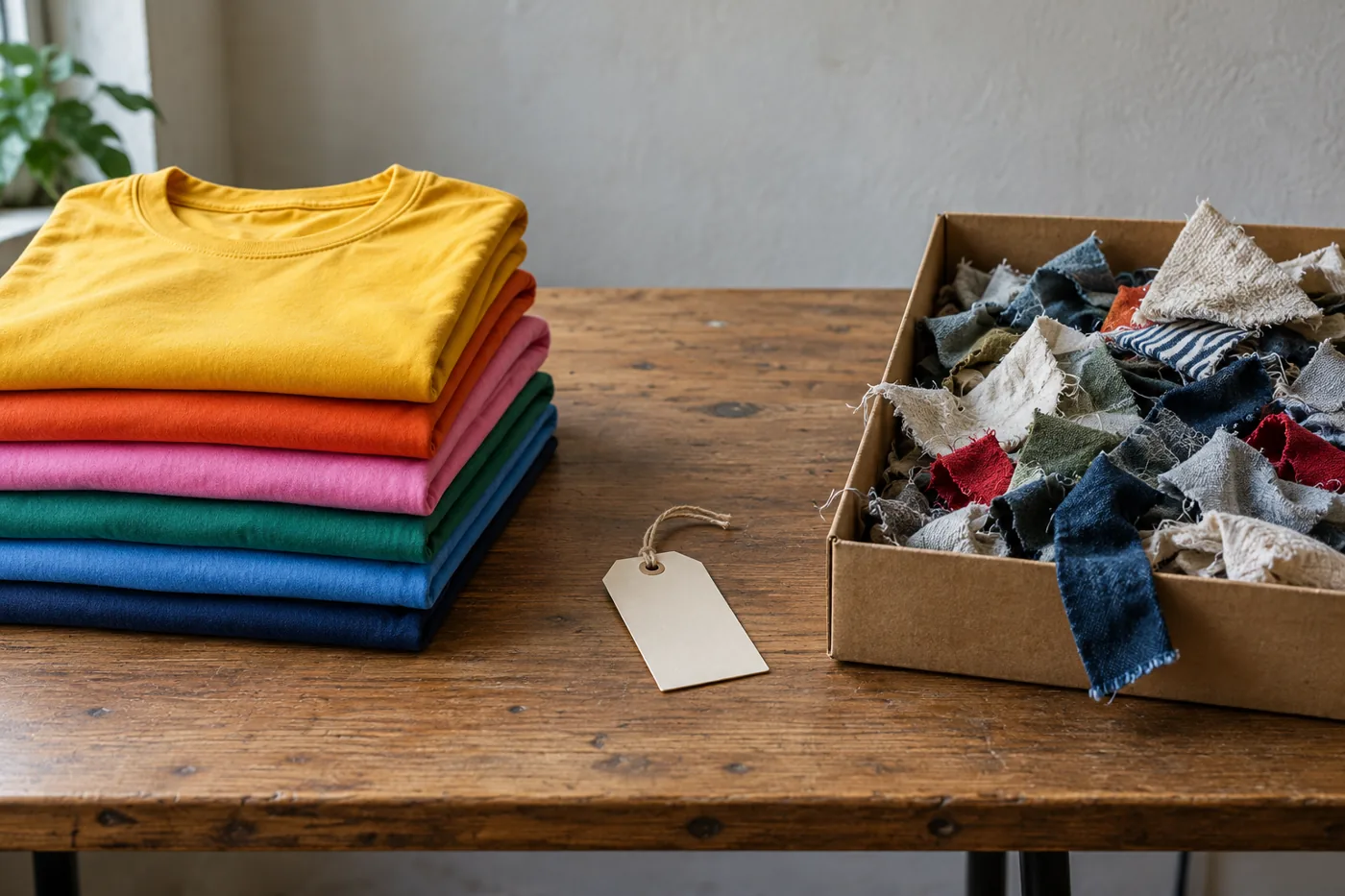
Generated interpretation, not documentary evidence. AI-generated consumption-and-waste still life; not Rana Plaza, a real factory, an identified retailer's products or evidence of a particular supply chain.
Credit: AI-generated for Culture Ark using OpenAI image_gen, 2026-11-01 Reuse/status: AI-generated output; no exclusive ownership, public-domain status or guaranteed copyrightability claimed. Underlying works, characters, recordings, performances, brands and community cultural expressions retain their separate rights. The garments and scraps are invented. Their appearance does not prove fiber composition, factory conditions, waste destination or environmental impact, and no disaster victims are depicted.
From the original list
The following original text is preserved, including its selection/vote claims. Preservation is not independent verification of every assertion.
Why: Cheap trendy clothing and its social and environmental costs.
What to preserve: Rana Plaza, textile waste
Year and origin: 1990s · worldwide
Vote: 6/9 (historian 3 · future kid 1 · curator 2)
Learn more: Fast fashion on Wikipedia
Supplemental context
Fast fashion is best preserved as a relationship between clothing, speed and the people who bear its costs, not merely as a rack of inexpensive outfits. UNEP describes a business model of rapid turnover, high volume and low prices, with consequences for waste and pollution. The ILO's account of the Rana Plaza collapse on 24 April 2013 brings workers' safety into the same field of attention. Culture Ark could place a dated garment and advertisement beside carefully sourced supply-chain records and consented worker testimony. That would connect the pleasures of changing style to lives and material consequences that are often invisible at the point of purchase.
Creator/community: Garment workers, designers, manufacturers, brands, shoppers and people handling used textiles Place/era: Global clothing systems across several decades; Rana Plaza collapse in Bangladesh on 24 April 2013 is a specific historical event
Context and limits
The original 1990s label is not a single verified global invention date. Rana Plaza is a specific disaster, not a generic illustration of every factory. Numerical impacts vary by source and scope; no universal footprint statistic or claim against a named brand is supplied. Survivors' testimony and disaster images need respectful, permission-aware handling.
Where to learn more
- https://apiarybee.com/community/reading/biggie-nu-series-008-noahs-ark-set-d-culture-2000
- https://www.unep.org/en/news-and-stories/story/environmental-costs-fast-fashion
- https://vzf.ilo.org/Photo%20Exhibition/a-turning-point-for-occupational-safety-and-health-in-supply-chains/
- https://en.wikipedia.org/wiki/Fast_fashion
Apiary library | Original Culture Ark article
Public ID and individual routes: pending publisher allocation. Internal source ID: D-1482
Part of the Culture Ark: 2,000 things people should still be able to see in 2,000 years, picked by AI research teams. This page keeps the original list entry for D-1482 word for word and adds context. Browse the gallery. The Culture Ark is an Artificial Mind Hive (AMH) project. AMH is owned by Austin Little.

Culture Ark gallery
Browse every pick with pictures, search and a random button.
Open the gallery →