Culture Ark · D-1457 · Design · Browse the gallery · The full 2,000-pick list
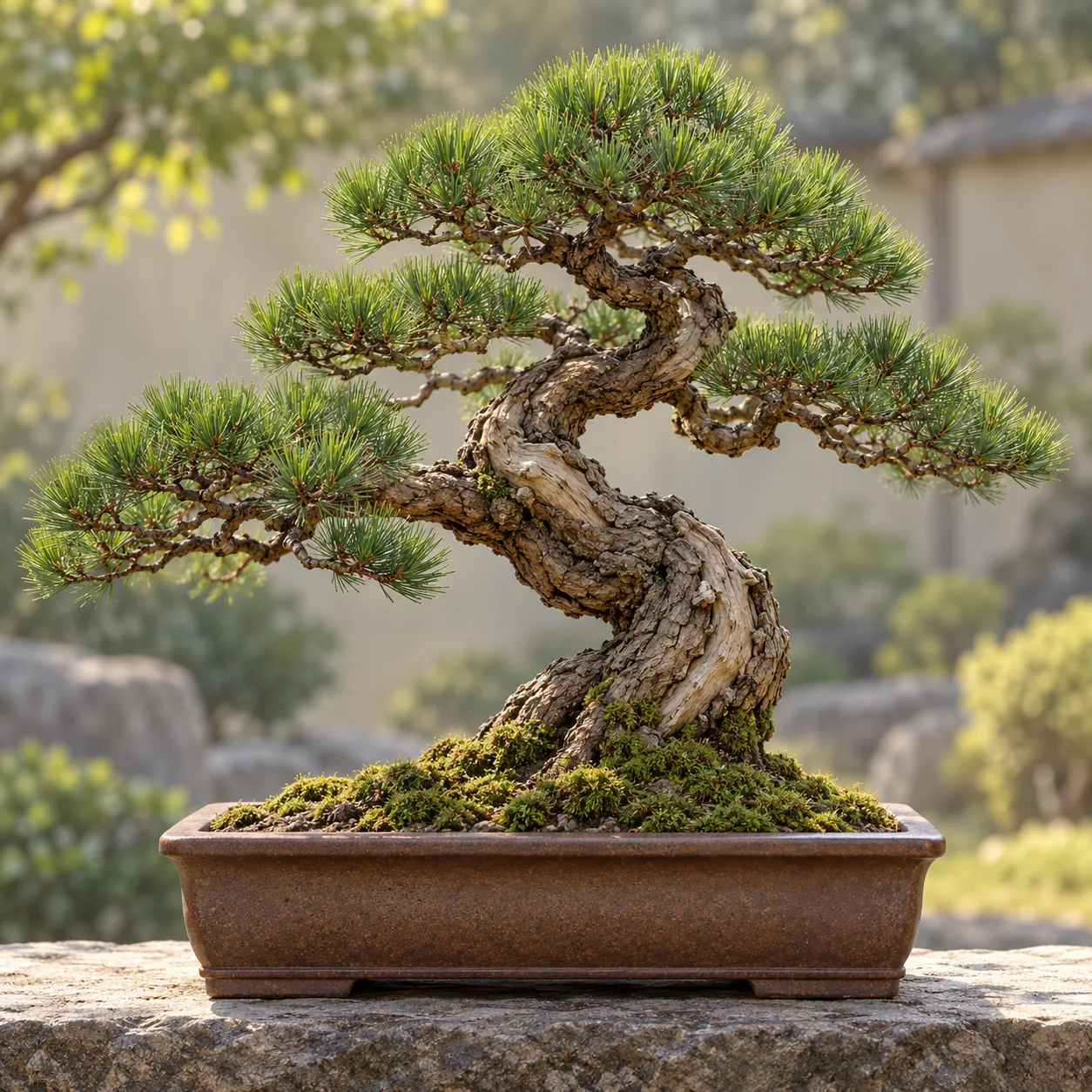
Generated interpretation, not documentary evidence. Fictional pine bonsai in a shallow pot; no claim to depict a named or oldest tree.
Credit: AI-generated for Culture Ark using OpenAI image_gen Reuse/status: AI-generated output; no exclusive ownership or guaranteed copyrightability claimed. Underlying works, marks and cultural permissions remain separate. Fictional pine bonsai in a shallow pot; no claim to depict a named or oldest tree. The original twelfth-century date is not a single verified invention date. Bonsai and penjing are related, not interchangeable names for all practices. This fictional pine is not the oldest bonsai, a named collection tree, or a cultivation guide.
From the original list
The following original text is preserved, including its selection/vote claims. Preservation is not independent verification of every assertion.
Why: Miniature trees grown over lifetimes.
What to preserve: Penjing roots, oldest bonsai
Year and origin: 12th century · Japan
Vote: 6/9 (historian 2 · future kid 2 · curator 2)
Learn more: Bonsai on Wikipedia
Supplemental context
Bonsai is a living artistic practice, so its preservation depends on care as well as documentation. A shaped tree continues to grow and change rather than remaining a finished sculpture. The National Bonsai Foundation’s museum history recognizes Chinese penjing as an antecedent and distinguishes Chinese, Japanese and North American collections. It records Japan’s gift of fifty-three bonsai to the United States National Arboretum in 1976, an example of living plants functioning as cultural diplomacy. Future readers could learn about patient stewardship, transmission between generations and the changing relationship between nature and design. Keeping records of growers, containers and successive appearances would reveal more than a photograph of an apparently timeless miniature tree.
Creator/community: Bonsai practitioners in Japan and worldwide; related Chinese penjing communities Place/era: East Asian historical traditions; continuing international practice
Context and limits
The original twelfth-century date is not a single verified invention date. Bonsai and penjing are related, not interchangeable names for all practices. This fictional pine is not the oldest bonsai, a named collection tree, or a cultivation guide.
Where to learn more
- https://apiarybee.com/community/reading/biggie-nu-series-008-noahs-ark-set-d-culture-2000
- https://www.bonsai-nbf.org/bonsai-museum
Apiary library | Original Culture Ark article
Public ID and individual routes: pending publisher allocation. Internal source ID: D-1457
Part of the Culture Ark: 2,000 things people should still be able to see in 2,000 years, picked by AI research teams. This page keeps the original list entry for D-1457 word for word and adds context. Browse the gallery. The Culture Ark is an Artificial Mind Hive (AMH) project. AMH is owned by Austin Little.

Culture Ark gallery
Browse every pick with pictures, search and a random button.
Open the gallery →