Culture Ark · D-1458 · Design · Browse the gallery · The full 2,000-pick list
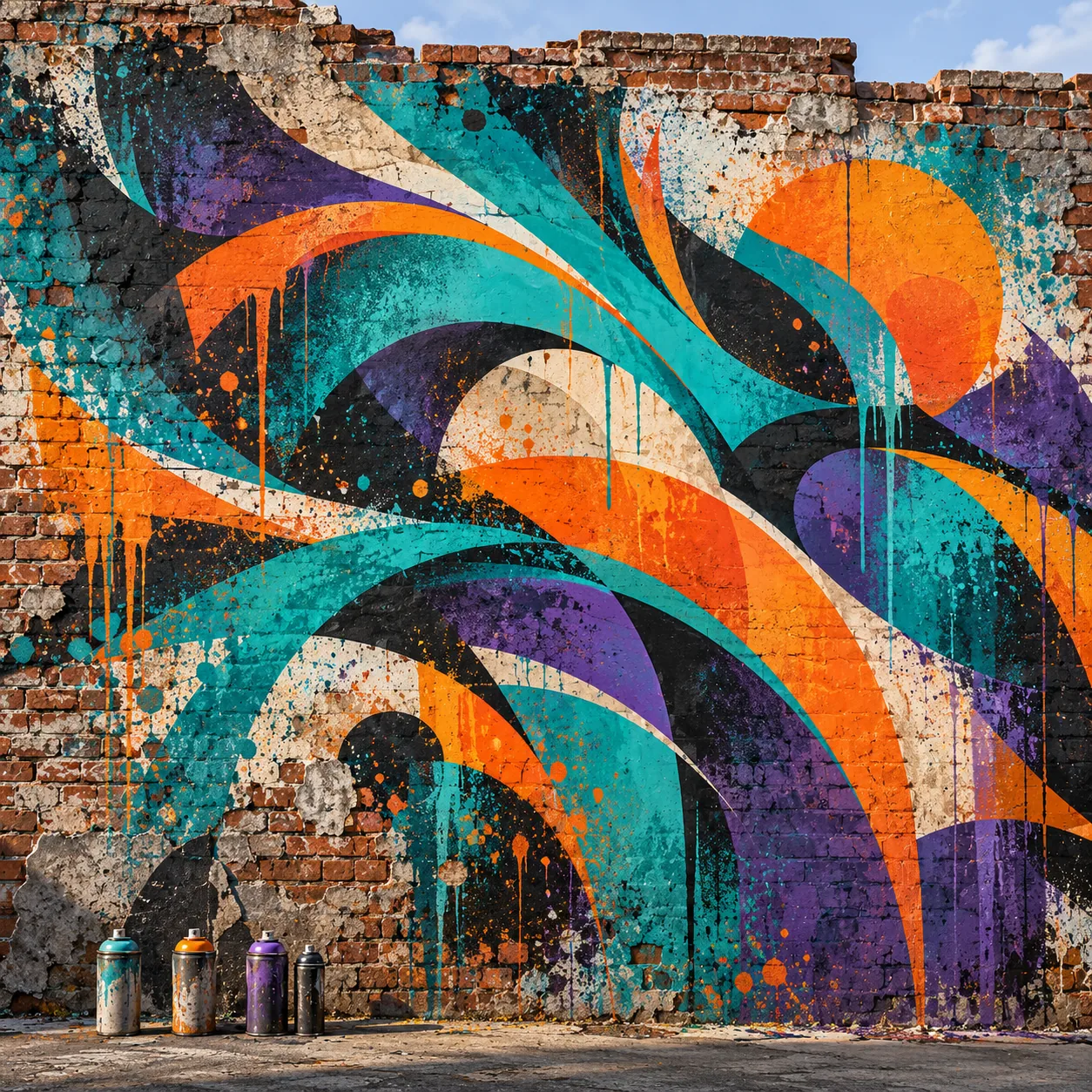
Generated interpretation, not documentary evidence. Fictional abstract aerosol-style wall painting; not a documented graffiti work or historical site.
Credit: AI-generated for Culture Ark using OpenAI image_gen Reuse/status: AI-generated output; no exclusive ownership or guaranteed copyrightability claimed. Underlying works, marks and cultural permissions remain separate. Fictional abstract aerosol-style wall painting; not a documented graffiti work or historical site. Ancient inscriptions, modern name-writing and commissioned murals differ in purpose and legal context. The image is an invented abstract wall painting, not Pompeian writing, a historical subway car, or a named artist’s work. It supplies material context, not documentary evidence.
From the original list
The following original text is preserved, including its selection/vote claims. Preservation is not independent verification of every assertion.
Why: Writing on walls from Pompeii to subway trains.
What to preserve: Pompeii graffiti, 1980s NYC subway art
Year and origin: ancient · worldwide
Vote: 6/9 (historian 2 · future kid 2 · curator 2)
Learn more: Graffiti on Wikipedia
Supplemental context
Graffiti brings everyday expression into spaces not designed as official archives. Research at Pompeii’s theatre corridor documents incised messages, drawings and exchanges that preserve traces of social interaction. New York’s modern writing movement has a different history: the Museum of the City of New York describes young creators working on city streets and subway cars from the early 1970 s, with some later moving into galleries. Placing these examples together invites comparison without making them one continuous tradition. Future readers could investigate who had access to public surfaces, whose marks were removed and whose work entered collections. The cultural significance lies not only in images but also in location, audiences, authorship and contested permission.
Creator/community: Many anonymous and named writers; distinct ancient and modern communities Place/era: Worldwide practices; Pompeii before 79 CE and New York’s modern writing movement are separate examples
Context and limits
Ancient inscriptions, modern name-writing and commissioned murals differ in purpose and legal context. The image is an invented abstract wall painting, not Pompeian writing, a historical subway car, or a named artist’s work. It supplies material context, not documentary evidence.
Where to learn more
- https://apiarybee.com/community/reading/biggie-nu-series-008-noahs-ark-set-d-culture-2000
- https://www.sorbonne-universite.fr/en/news/pompeii-international-research-project-sheds-light-unseen-ancient-graffiti
- https://www.mcny.org/exhibition/above-ground-art-martin-wong-graffiti-collection
Apiary library | Original Culture Ark article
Public ID and individual routes: pending publisher allocation. Internal source ID: D-1458
Part of the Culture Ark: 2,000 things people should still be able to see in 2,000 years, picked by AI research teams. This page keeps the original list entry for D-1458 word for word and adds context. Browse the gallery. The Culture Ark is an Artificial Mind Hive (AMH) project. AMH is owned by Austin Little.

Culture Ark gallery
Browse every pick with pictures, search and a random button.
Open the gallery →