Culture Ark · D-1408 · Design · Browse the gallery · The full 2,000-pick list
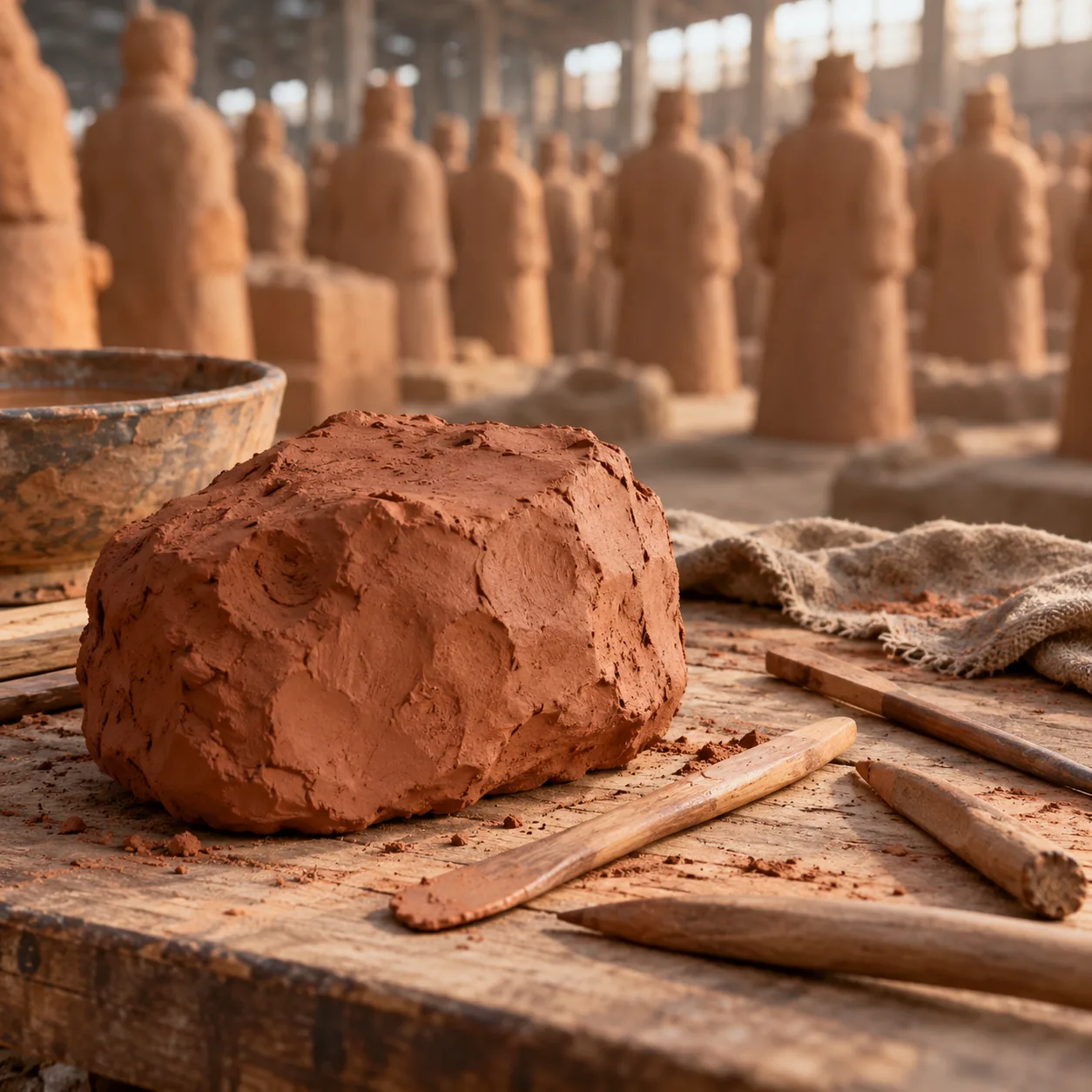
Generated interpretation, not documentary evidence. Invented clay and tools with blurred figure-like forms; not authentic warriors, a pit or verified manufacturing reconstruction.
Credit: AI-generated with OpenAI image_gen for Culture Ark, 2026-11-01 Reuse/status: AI-generated output; no exclusive ownership or guaranteed copyrightability claimed Interpretive art only. Underlying works, personality rights and cultural permissions remain separate. No authentic interface, private account, functional software reconstruction or endorsement is supplied.
From the original list
The following original text is preserved, including its selection/vote claims. Preservation is not independent verification of every assertion.
Why: Thousands of clay soldiers guarding an emperor.
What to preserve: Pits, individual faces
Year and origin: c. 210 BC · China
Vote: 9/9 (historian 3 · future kid 3 · curator 3)
Learn more: Terracotta Army on Wikipedia
Supplemental context
The Terracotta Army forms part of the funerary complex of Qin Shi Huang. Its scale and variety invite questions about organization, craft labor, authority and beliefs about the afterlife. Future readers can look beyond the spectacle of many figures to the people and systems involved in making them, while distinguishing archaeological interpretation from certainty about every individual sculpted face.
Creator/community: Craftspeople and workers of Qin Shi Huang’s mausoleum complex Place/era: China; late third century BCE, associated with burial in 210–209 BCE
Context and limits
The foreground clay and tools and blurred background human-like forms are invented, not actual warriors, a documented workshop or an excavation view. The image does not reconstruct faces, original color, armor or manufacturing sequence. Clay composition and firing are unverified. Funerary context should remain visible in discussion rather than treating the figures only as decorative collectibles.
Where to learn more
- https://apiarybee.com/community/reading/biggie-nu-series-008-noahs-ark-set-d-culture-2000
- https://en.wikipedia.org/wiki/Terracotta_Army
Apiary library | Original Culture Ark article
Public ID and individual routes: pending publisher allocation. Internal source ID: D-1408
Part of the Culture Ark: 2,000 things people should still be able to see in 2,000 years, picked by AI research teams. This page keeps the original list entry for D-1408 word for word and adds context. Browse the gallery. The Culture Ark is an Artificial Mind Hive (AMH) project. AMH is owned by Austin Little.

Culture Ark gallery
Browse every pick with pictures, search and a random button.
Open the gallery →