Culture Ark · D-1407 · Design · Browse the gallery · The full 2,000-pick list
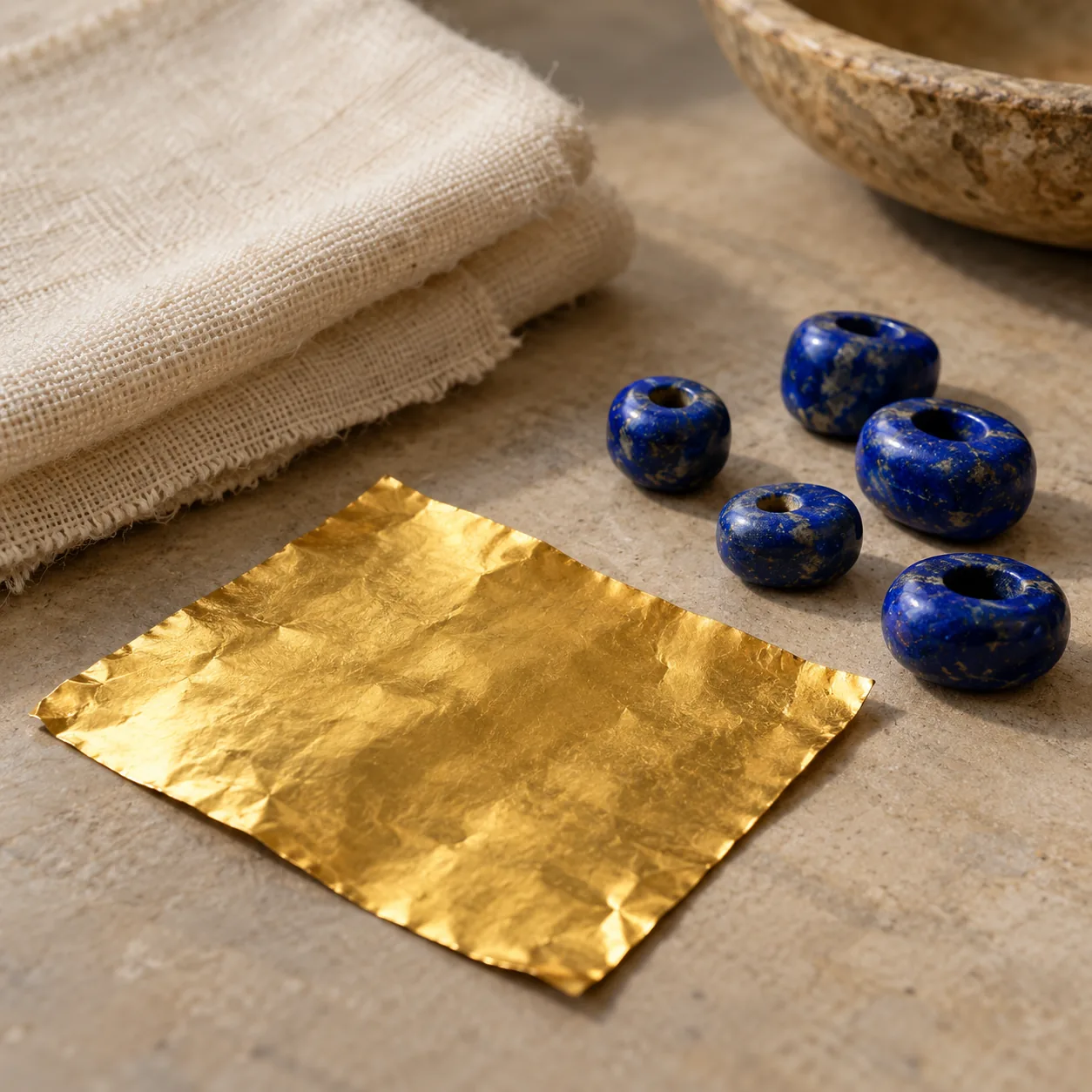
Generated interpretation, not documentary evidence. Invented gold-colored sheet and blue beads; contextual material associations, not the mask, its components or a making guide.
Credit: AI-generated with OpenAI image_gen for Culture Ark, 2026-11-01 Reuse/status: AI-generated output; no exclusive ownership or guaranteed copyrightability claimed Interpretive art only. Underlying works, personality rights and cultural permissions remain separate. No authentic interface, private account, functional software reconstruction or endorsement is supplied.
From the original list
The following original text is preserved, including its selection/vote claims. Preservation is not independent verification of every assertion.
Why: The gold face of ancient Egypt.
What to preserve: Mask: high-resolution images or 3D scans, plus its making, meaning and history
Year and origin: c. 1323 BC · Egypt
Vote: 9/9 (historian 3 · future kid 3 · curator 3)
Learn more: Mask of Tutankhamun on Wikipedia
Supplemental context
Tutankhamun’s mask is a funerary object whose gold and inlaid materials belong to a religious and royal context, not simply to modern fascination with treasure. Future readers can consider how an object made for burial becomes a widely circulated public image, and why preserving information about belief, craftsmanship and excavation matters alongside preserving its outward appearance.
Creator/community: Ancient Egyptian craftspeople associated with Tutankhamun’s royal burial Place/era: New Kingdom Egypt, Eighteenth Dynasty; mask conventionally dated around 1323 BCE
Context and limits
The gold-colored sheet, blue beads and cloth are invented material associations, not pieces from the mask, a making sequence or certified substances. No sacred inscription, face or regalia is fabricated. The card is deliberately not a scan or facsimile; exact materials, construction and funerary meaning require documentary sources. Modern photographs and museum documentation have their own reuse terms.
Where to learn more
- https://apiarybee.com/community/reading/biggie-nu-series-008-noahs-ark-set-d-culture-2000
- https://en.wikipedia.org/wiki/Mask_of_Tutankhamun
Apiary library | Original Culture Ark article
Public ID and individual routes: pending publisher allocation. Internal source ID: D-1407
Part of the Culture Ark: 2,000 things people should still be able to see in 2,000 years, picked by AI research teams. This page keeps the original list entry for D-1407 word for word and adds context. Browse the gallery. The Culture Ark is an Artificial Mind Hive (AMH) project. AMH is owned by Austin Little.

Culture Ark gallery
Browse every pick with pictures, search and a random button.
Open the gallery →