Culture Ark · D-1369 · Inventions · Browse the gallery · The full 2,000-pick list
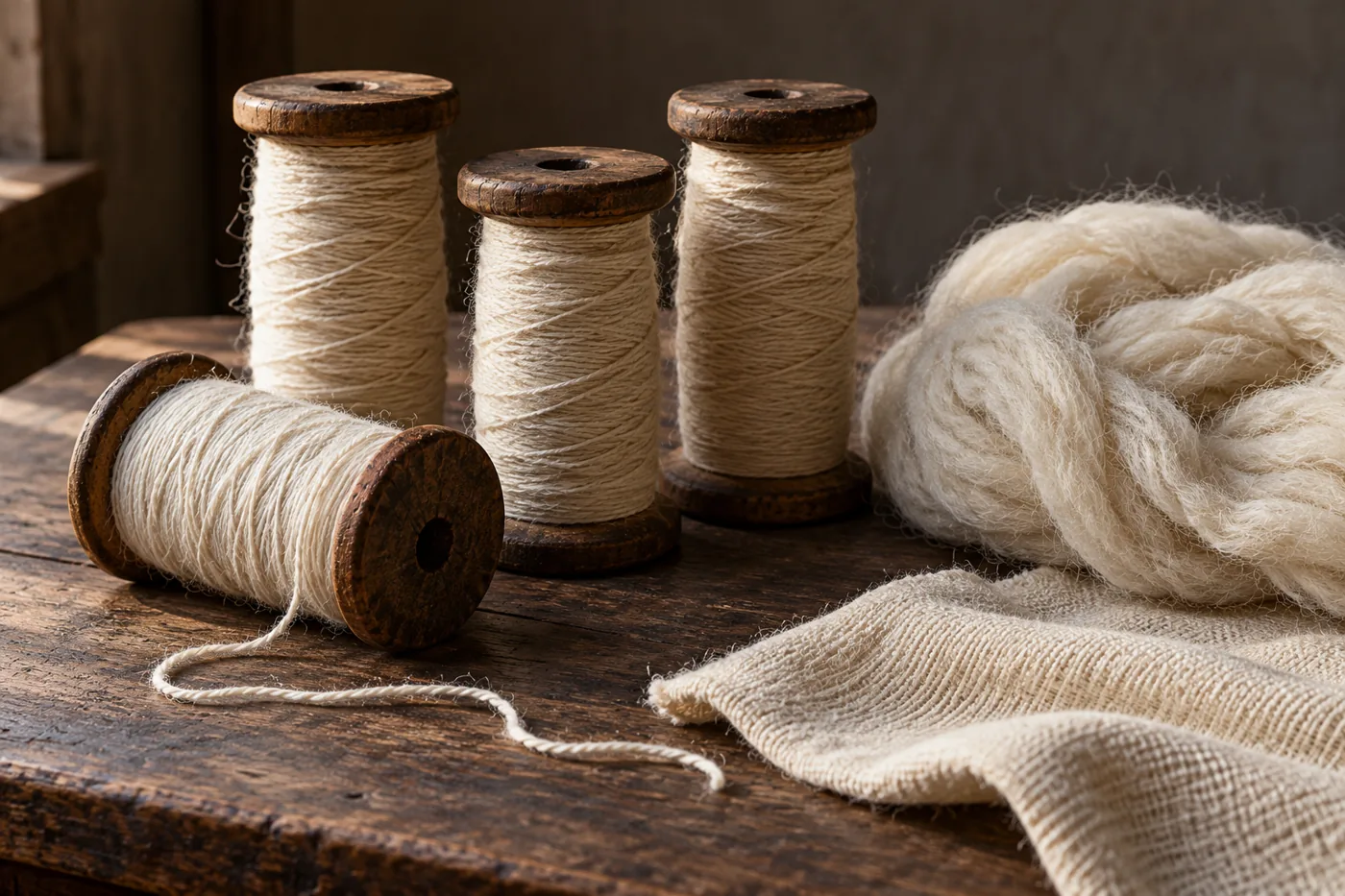
Generated interpretation, not documentary evidence. AI-generated material interpretation of spinning and textile work; not Hargreaves’s machine, a museum reconstruction or a 3D scan.
Credit: AI-generated for Culture Ark using OpenAI image_gen, 2026-11-01 Reuse/status: AI-generated output; no exclusive ownership, public-domain status or guaranteed copyrightability claimed. Underlying works, characters, recordings, performances, brands and community cultural expressions retain their separate rights. The bobbins, fibers and swatch are invented. They do not demonstrate a jenny's output, scale or mechanism; the swatch is not identified as a historically accurate weave or fabric sample.
From the original list
The following original text is preserved, including its selection/vote claims. Preservation is not independent verification of every assertion.
Why: Began the factory age of textiles.
What to preserve: Hargreaves machine: high-resolution images or 3D scans, plus its making, meaning and history
Year and origin: 1764 · United Kingdom
Vote: 4/9 (historian 2 · future kid 1 · curator 1)
Learn more: Spinning jenny on Wikipedia
Supplemental context
The spinning jenny belongs to the history of work as well as the history of invention. The Science Museum Group describes it as a hand-powered machine for spinning multiple threads and identifies the object in its record as a reconstruction based on Hargreaves's circa 1766 original. That distinction matters when a polished model is used to explain a past technology. Culture Ark could preserve a documented machine or reconstruction alongside accounts of textile labor, household production and changes in skill. A scan would record shape, but it would not by itself reveal the rhythms of work or the consequences people experienced around the machine.
Creator/community: James Hargreaves and other textile makers and workers; later reconstructors have separate authorship Place/era: Britain, eighteenth-century development; the cited museum object is explicitly a reconstruction based on a circa 1766 original
Context and limits
The original 1764 is retained, but the cited record does not securely resolve an exact invention year; its date header and reconstruction description differ. 'Began the factory age' compresses a much wider history. No original machine, high-resolution reference or 3D scan is supplied, and no manufacturing or operation instructions are given.
Where to learn more
- https://apiarybee.com/community/reading/biggie-nu-series-008-noahs-ark-set-d-culture-2000
- https://collection.sciencemuseumgroup.org.uk/objects/co44855
- https://en.wikipedia.org/wiki/Spinning_jenny
Apiary library | Original Culture Ark article
Public ID and individual routes: pending publisher allocation. Internal source ID: D-1369
Part of the Culture Ark: 2,000 things people should still be able to see in 2,000 years, picked by AI research teams. This page keeps the original list entry for D-1369 word for word and adds context. Browse the gallery. The Culture Ark is an Artificial Mind Hive (AMH) project. AMH is owned by Austin Little.

Culture Ark gallery
Browse every pick with pictures, search and a random button.
Open the gallery →