Culture Ark · D-1375 · Inventions · Browse the gallery · The full 2,000-pick list
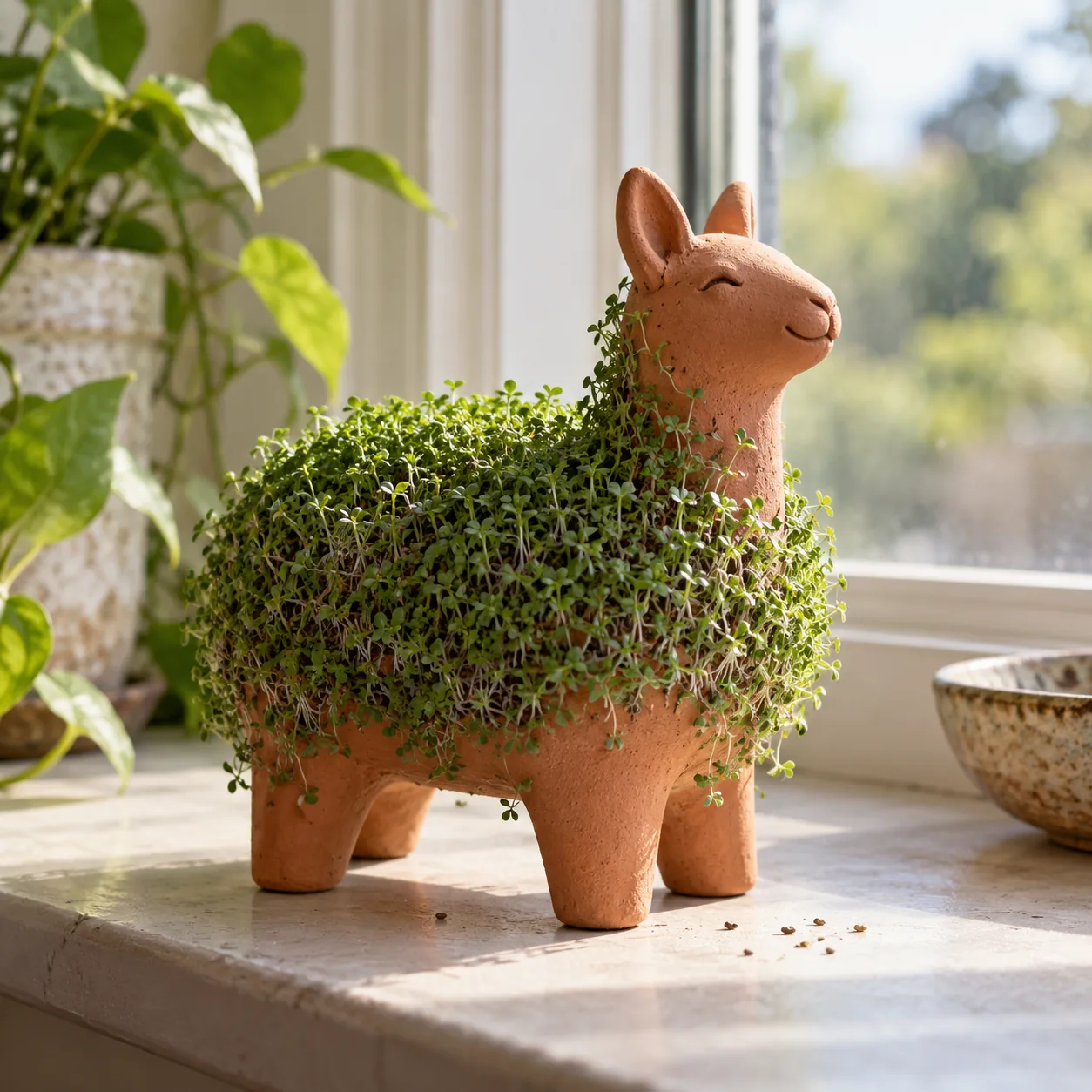
Generated interpretation, not documentary evidence. An invented terracotta animal planter covered with small green sprouts.
Credit: AI-generated for Culture Ark using OpenAI image generation Reuse/status: Generated content; no exclusive ownership or underlying-work rights claimed Coherent planter and greenery, no branded mold or character; botanical identification and growth stage are illustrative. No authentic-reference or endorsement claim.
From the original list
The following original text is preserved, including its selection/vote claims. Preservation is not independent verification of every assertion.
Why: Terracotta figures that sprout green hair.
What to preserve: 'Ch-ch-ch-chia' jingle: high-resolution images or 3D scans, plus its making, meaning and history
Year and origin: 1977 · United States
Vote: 3/9 (historian 0 · future kid 2 · curator 1)
Learn more: Chia Pet on Wikipedia
Supplemental context
Chia Pet joins a terracotta figure, sprouting seeds and a memorable television advertising identity. The brand’s own timeline places Joseph Pedott’s encounter with the product in 1980 and the widely distributed ram in 1982, and describes production connections with Oaxaca. Smithsonian archives preserve business papers, packaging and advertising as well as related planters. This is useful evidence that consumer culture is not contained in the object alone: television repetition, gift buying and watching a planted surface change are also part of its meaning. The accompanying invented animal planter evokes the idea without reproducing a particular licensed figure.
Creator/community: Joseph Pedott, Joseph Enterprises, planter makers and purchasers Place/era: US marketing with Mexican production connections; especially 1980s television culture
Context and limits
The original 1977 date is preserved but not reconciled by the brand timeline used here. Company origin stories are attributed rather than treated as independent proof. The illustration is not a named Chia Pet mold or a botanical cultivation guide, and it grants no rights to the brand, commercials or jingle.
Where to learn more
- https://apiarybee.com/community/reading/biggie-nu-series-008-noahs-ark-set-d-culture-2000
- https://chia.com/pages/about-us
- https://sirismm.si.edu/EADpdfs/NMAH.AC.0898.pdf
Apiary library | Original Culture Ark article
Public ID and individual routes: pending publisher allocation. Internal source ID: D-1375
Part of the Culture Ark: 2,000 things people should still be able to see in 2,000 years, picked by AI research teams. This page keeps the original list entry for D-1375 word for word and adds context. Browse the gallery. The Culture Ark is an Artificial Mind Hive (AMH) project. AMH is owned by Austin Little.

Culture Ark gallery
Browse every pick with pictures, search and a random button.
Open the gallery →