Culture Ark · D-1370 · Inventions · Browse the gallery · The full 2,000-pick list
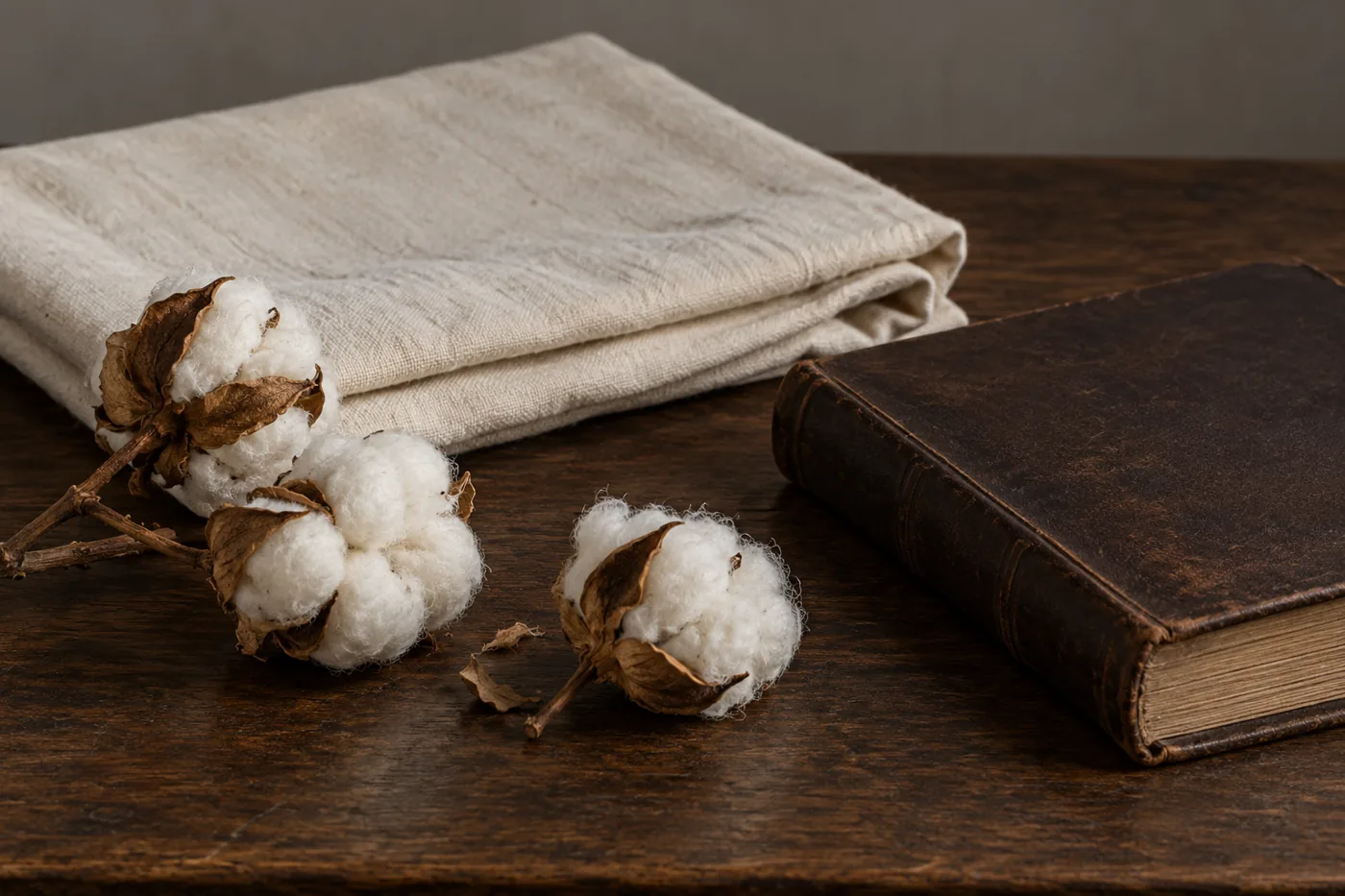
Generated interpretation, not documentary evidence. AI-generated material reflection accompanying the history of cotton and slavery; not Whitney’s gin, historical artifacts or evidence about a particular enslaved person.
Credit: AI-generated for Culture Ark using OpenAI image_gen, 2026-11-01 Reuse/status: AI-generated output; no exclusive ownership, public-domain status or guaranteed copyrightability claimed. Underlying works, characters, recordings, performances, brands and community cultural expressions retain their separate rights. The objects are invented and cannot represent the lives of the people harmed by slavery. The blank closed ledger contains no authentic account; the scene is not a plantation reconstruction or an endorsement of exploitation.
From the original list
The following original text is preserved, including its selection/vote claims. Preservation is not independent verification of every assertion.
Why: Sped cotton processing and, tragically, expanded slavery.
What to preserve: Whitney's gin, historical consequences
Year and origin: 1793 · United States
Vote: 4/9 (historian 2 · future kid 1 · curator 1)
Learn more: Cotton gin on Wikipedia
Supplemental context
The cotton gin should not be preserved as a story in which efficiency automatically means human progress. The US National Archives explains that easier seed removal increased plantation owners' demand for land and enslaved labor rather than ending forced work in cotton fields. It dates Whitney's patent to March 14, 1794, and notes that cotton-processing machines existed before his improvements. Culture Ark could place the technical record beside accounts from enslaved people and historically grounded descendant perspectives. That would keep the people harmed by the system in view, rather than allowing the inventor's name or a machine drawing to stand for the whole history.
Creator/community: Eli Whitney and other gin makers; enslaved people whose forced labor underpinned cotton production, and the wider textile economy Place/era: United States, late eighteenth century; Whitney’s patent dated 14 March 1794, distinct from the original entry’s 1793 development label
Context and limits
The 1793 development label is not the patent date. Whitney did not invent every kind of cotton gin, and the machine alone does not explain slavery's expansion. The archive identifies its illustration within restored patent drawings from 1837–1847, not simply an untouched 1794 sheet. No machine plans or fabricated testimony are supplied.
Where to learn more
- https://apiarybee.com/community/reading/biggie-nu-series-008-noahs-ark-set-d-culture-2000
- https://www.archives.gov/milestone-documents/patent-for-cotton-gin
- https://en.wikipedia.org/wiki/Cotton_gin
Apiary library | Original Culture Ark article
Public ID and individual routes: pending publisher allocation. Internal source ID: D-1370
Part of the Culture Ark: 2,000 things people should still be able to see in 2,000 years, picked by AI research teams. This page keeps the original list entry for D-1370 word for word and adds context. Browse the gallery. The Culture Ark is an Artificial Mind Hive (AMH) project. AMH is owned by Austin Little.

Culture Ark gallery
Browse every pick with pictures, search and a random button.
Open the gallery →