Culture Ark · D-1366 · Inventions · Browse the gallery · The full 2,000-pick list
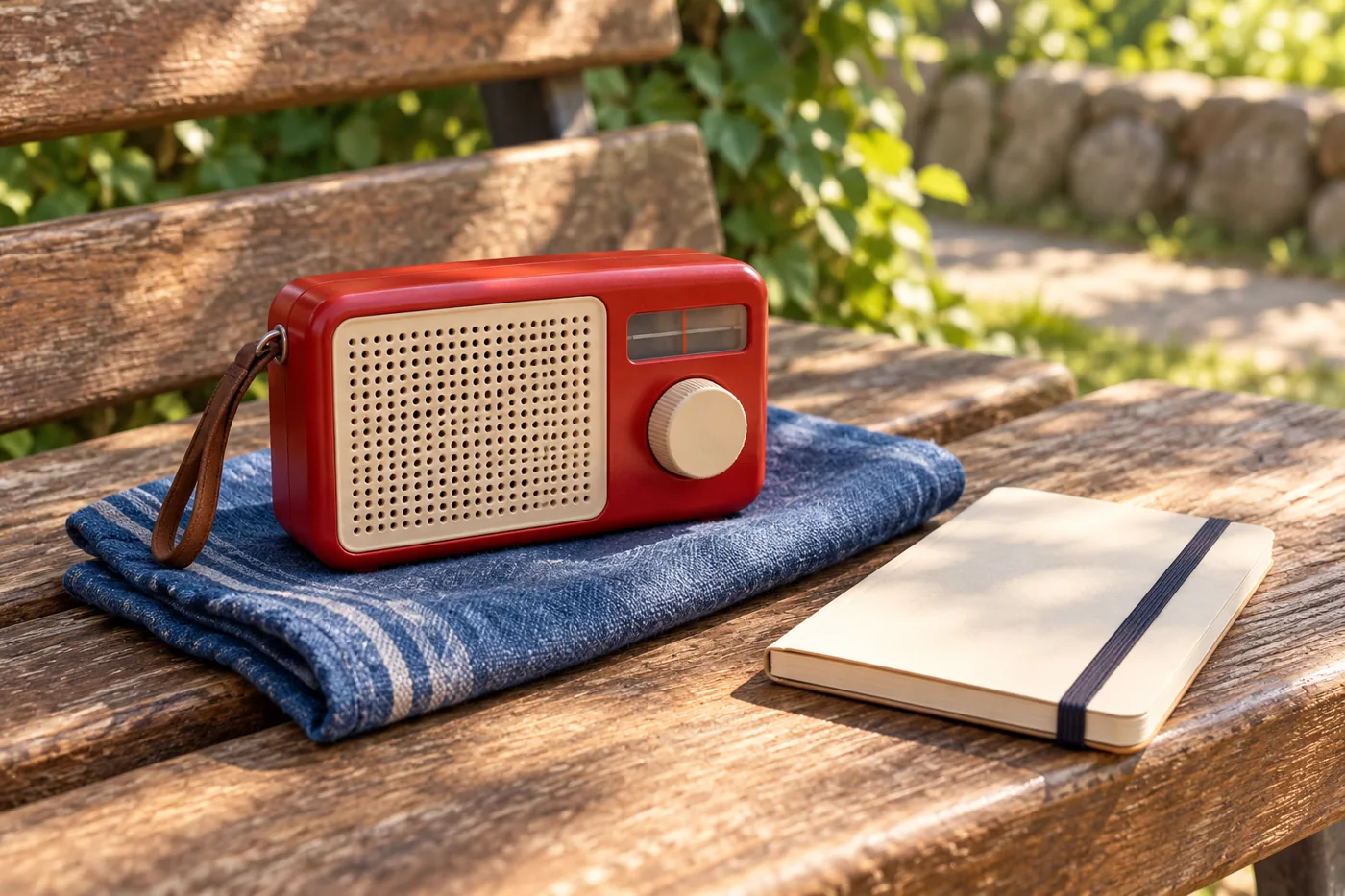
Generated interpretation, not documentary evidence. AI-generated interpretation of portable listening; not an exact Regency TR-1, Sony TR-55 or historical listener's photograph.
Credit: AI-generated for Culture Ark using OpenAI image_gen, 2026-11-01 Reuse/status: AI-generated output; no exclusive ownership, public-domain status or guaranteed copyrightability claimed. Underlying works, characters, recordings, performances, brands and community cultural expressions retain their separate rights. The case, tuning window and wrist strap are invented. No readable frequency or broadcast content is provided, and the picture does not demonstrate that the receiver works.
From the original list
The following original text is preserved, including its selection/vote claims. Preservation is not independent verification of every assertion.
Why: Pocket music for teenagers and news for remote villages.
What to preserve: Regency TR-1, Sony TR-55
Year and origin: 1954 · United States
Vote: 4/9 (historian 2 · future kid 1 · curator 1)
Learn more: Transistor radio on Wikipedia
Supplemental context
A portable radio can change where listening happens, but the particular receiver still matters. The Computer History Museum dates the Regency TR-1's introduction to 1954 and credits IDEA Corporation and Texas Instruments. Sony's own history dates its TR-55 to 1955, distinguishing that Japanese product from the American model named beside it. Culture Ark could preserve both with their dimensions, controls and a listener's account, rather than reducing portability to a slogan. A small receiver might accompany solitude or shared company; a record of the station, language, place and time would explain an actual listening experience better than the object alone could.
Creator/community: IDEA Corporation and Texas Instruments for Regency TR-1; Tokyo Tsushin Kogyo, later Sony, for TR-55; broadcasters and listeners Place/era: United States, Regency TR-1 introduced in 1954; Japan, TR-55 production and sales in 1955
Context and limits
The original 1954 label should not be assigned to the TR-55, and the transistor's development is a separate history from these radios. Teenage and remote-village uses require specific evidence, not a universal listener stereotype. No broadcast was auditioned, and no current reception, battery or technical construction claim is made.
Where to learn more
- https://apiarybee.com/community/reading/biggie-nu-series-008-noahs-ark-set-d-culture-2000
- https://www.computerhistory.org/revolution/artifact/273/1373
- https://www.sony.com/en/SonyInfo/CorporateInfo/History/sonyhistory-b.html
- https://en.wikipedia.org/wiki/Transistor_radio
Apiary library | Original Culture Ark article
Public ID and individual routes: pending publisher allocation. Internal source ID: D-1366
Part of the Culture Ark: 2,000 things people should still be able to see in 2,000 years, picked by AI research teams. This page keeps the original list entry for D-1366 word for word and adds context. Browse the gallery. The Culture Ark is an Artificial Mind Hive (AMH) project. AMH is owned by Austin Little.

Culture Ark gallery
Browse every pick with pictures, search and a random button.
Open the gallery →