Culture Ark · D-1323 · Inventions · Browse the gallery · The full 2,000-pick list
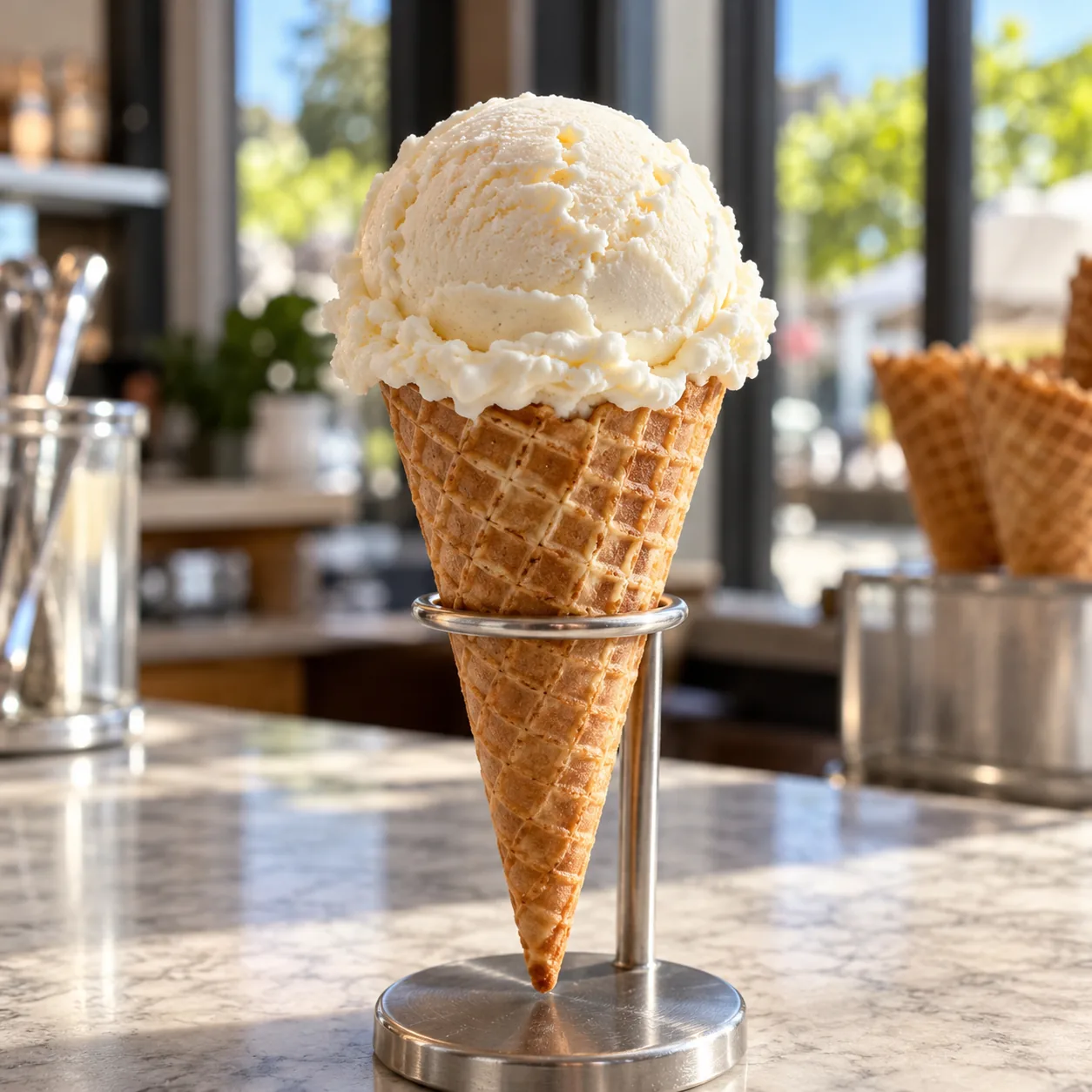
Generated interpretation, not documentary evidence. A vanilla ice-cream scoop in a waffle cone on a café stand.
Credit: AI-generated for Culture Ark using OpenAI image generation Reuse/status: Generated content; no exclusive ownership or underlying-work rights claimed Coherent scoop, cone and stand; no invented fairground authenticity or brand. No authentic-reference or endorsement claim.
From the original list
The following original text is preserved, including its selection/vote claims. Preservation is not independent verification of every assertion.
Why: Edible container popularized at the St. Louis World's Fair.
What to preserve: Waffle cone story
Year and origin: 1904 · United States
Vote: 5/9 (historian 1 · future kid 3 · curator 1)
Learn more: Ice cream cone on Wikipedia
Supplemental context
The ice-cream cone combines a frozen dessert with a vessel that can itself be eaten. Its familiar association with the 1904 St. Louis World’s Fair is also a lesson in how invention stories are told. The Library of Congress explicitly describes competing confectioners’ claims and asks about earlier precedents rather than endorsing a single heroic origin. A future reader can use this small food object to think about portable eating, public leisure and the appeal of a memorable anecdote. The contemporary-looking cone shown beside this entry evokes that experience without pretending to illustrate a documented fairground encounter.
Creator/community: Confectioners, vendors and ice-cream customers; multiple competing origin claimants Place/era: Early twentieth-century US fair culture and wider histories of edible serving vessels
Context and limits
The waffle-maker story and 1904 date in the unchanged entry are not settled proof of a unique first invention. The Library’s discussion calls the history complicated. The generated scoop and cone are a generic presentational interpretation, not an archival photograph, historical recipe or evidence of a particular vendor.
Where to learn more
- https://apiarybee.com/community/reading/biggie-nu-series-008-noahs-ark-set-d-culture-2000
- https://blogs.loc.gov/music/2010/07/ice-cream/
Apiary library | Original Culture Ark article
Public ID and individual routes: pending publisher allocation. Internal source ID: D-1323
Part of the Culture Ark: 2,000 things people should still be able to see in 2,000 years, picked by AI research teams. This page keeps the original list entry for D-1323 word for word and adds context. Browse the gallery. The Culture Ark is an Artificial Mind Hive (AMH) project. AMH is owned by Austin Little.

Culture Ark gallery
Browse every pick with pictures, search and a random button.
Open the gallery →