Culture Ark · D-1322 · Inventions · Browse the gallery · The full 2,000-pick list
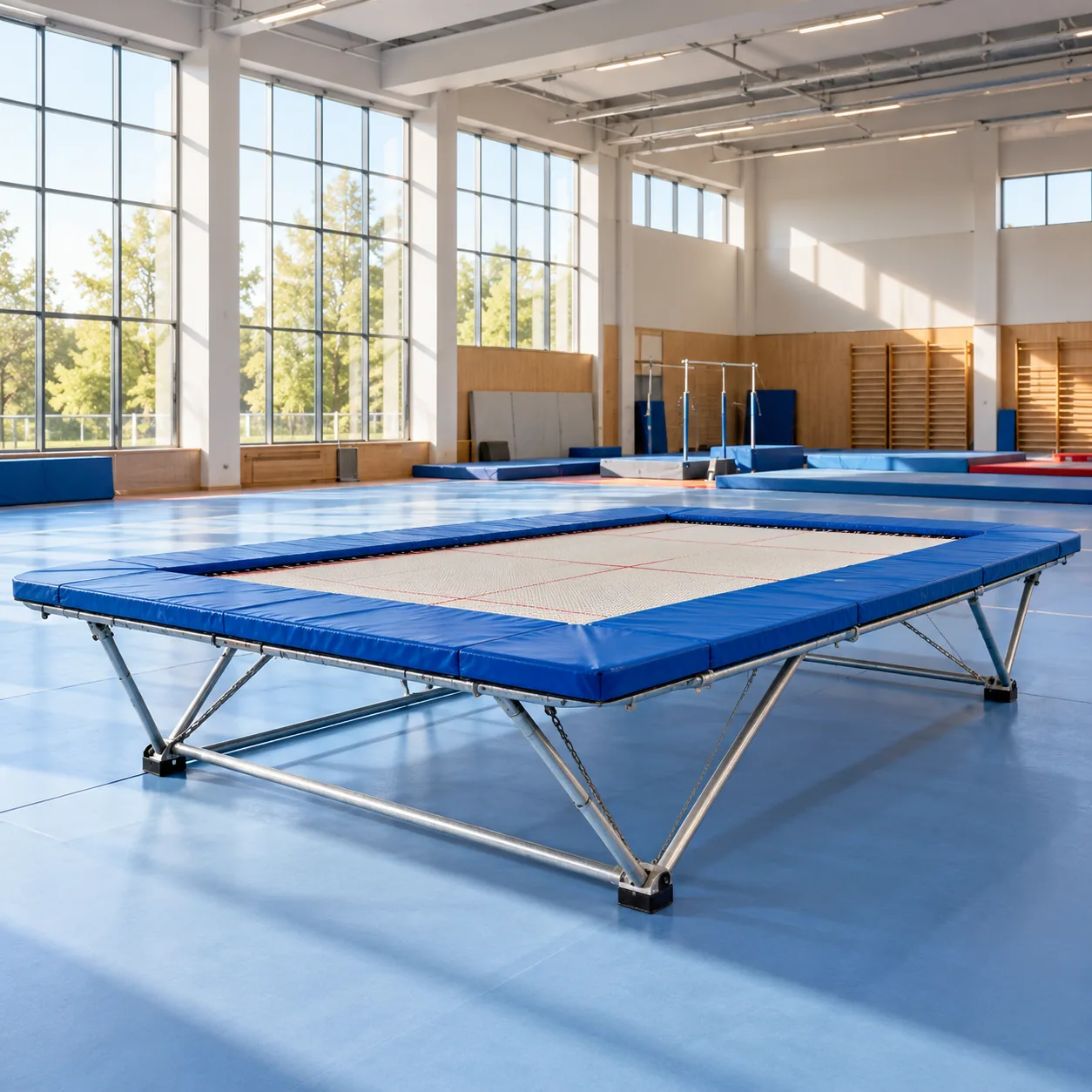
Generated interpretation, not documentary evidence. An invented rectangular trampoline in a bright gym, without athletes.
Credit: AI-generated for Culture Ark using OpenAI image generation Reuse/status: Generated content; no exclusive ownership or underlying-work rights claimed Coherent padded rectangular bed and gym setting; simplified frame, no authentic equipment or safety-layout claim. No authentic-reference or endorsement claim.
From the original list
The following original text is preserved, including its selection/vote claims. Preservation is not independent verification of every assertion.
Why: Bouncing for fun and Olympic sport.
What to preserve: Nissen's design: high-resolution images or 3D scans, plus its making, meaning and history
Year and origin: 1936 · United States
Vote: 5/9 (historian 1 · future kid 3 · curator 1)
Learn more: Trampoline on Wikipedia
Supplemental context
The international gymnastics federation traces George Nissen’s trampoline prototype to 1934, inspired by the nets used beneath circus aerialists. Its history describes a canvas bed and rubber supports, followed by the development of organized competition, including the first world championships in London in 1964. This makes the trampoline a useful cultural bridge between circus entertainment, recreational bouncing and regulated sport. The selected object is not merely a machine: its meaning changes with the room, audience and rules surrounding it. The illustration presents an empty gym apparatus so that no invented athlete or performance is mistaken for historical evidence.
Creator/community: George Nissen and subsequent gymnastics communities Place/era: United States, 1930s; international competition thereafter
Context and limits
The archived 1936 date should not be read as the earliest prototype: the federation gives 1934. This contextual image is not a reconstruction of Nissen’s apparatus, an equipment specification or a safety-certified installation. Different recreational and competitive forms must not be collapsed into one standard.
Where to learn more
- https://apiarybee.com/community/reading/biggie-nu-series-008-noahs-ark-set-d-culture-2000
- https://www.gymnastics.sport/site/pages/disciplines/tra-history.php
Apiary library | Original Culture Ark article
Public ID and individual routes: pending publisher allocation. Internal source ID: D-1322
Part of the Culture Ark: 2,000 things people should still be able to see in 2,000 years, picked by AI research teams. This page keeps the original list entry for D-1322 word for word and adds context. Browse the gallery. The Culture Ark is an Artificial Mind Hive (AMH) project. AMH is owned by Austin Little.

Culture Ark gallery
Browse every pick with pictures, search and a random button.
Open the gallery →