Culture Ark · D-1327 · Inventions · Browse the gallery · The full 2,000-pick list
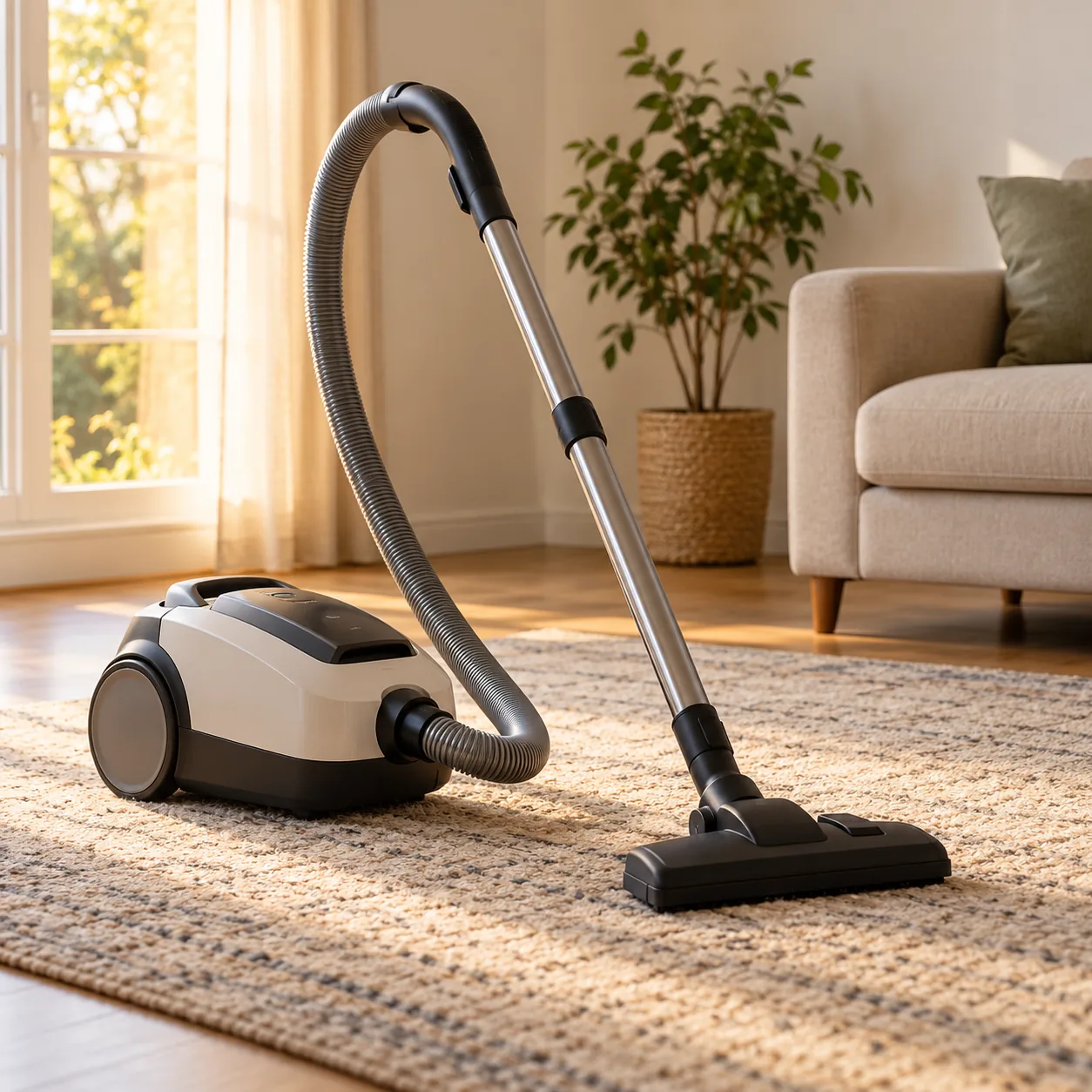
Generated interpretation, not documentary evidence. An invented canister vacuum cleaner beside a household rug.
Credit: AI-generated for Culture Ark using OpenAI image generation Reuse/status: Generated content; no exclusive ownership or underlying-work rights claimed Coherent hose and floor head; unbranded contextual prop, not a certified functional design or Booth reconstruction. No authentic-reference or endorsement claim.
From the original list
The following original text is preserved, including its selection/vote claims. Preservation is not independent verification of every assertion.
Why: Suction made dust a solvable problem.
What to preserve: Booth's horse-drawn Puffing Billy, upright and robot models
Year and origin: 1901 · United Kingdom
Vote: 4/9 (historian 1 · future kid 2 · curator 1)
Learn more: Vacuum cleaner on Wikipedia
Supplemental context
The Science Museum describes Booth’s early vacuum-cleaning business as a large horse-drawn machine brought to customers, with hoses reaching into buildings. It was initially a conspicuous and expensive service rather than a small appliance owned by every household. Smaller powered cleaners followed, but costs and electricity access limited adoption. This history helps future readers avoid assuming that an invention immediately transformed everyone’s daily life. A vacuum cleaner is also evidence of changing expectations about dust, domestic work and modernity. The illustration shows a generic portable canister machine to signal the later household category, not Booth’s original apparatus.
Creator/community: Hubert Cecil Booth and other cleaner designers, domestic workers and household users Place/era: London, 1901; wider twentieth-century household adoption
Context and limits
The archived 1901 milestone should not imply that Booth alone created every preceding or later suction cleaner. The museum discusses competing inventions and unequal access. No health benefit, universal labour saving or engineering adequacy is claimed. The generated appliance is not the horse-drawn machine or an authentic manufacturer model.
Where to learn more
- https://apiarybee.com/community/reading/biggie-nu-series-008-noahs-ark-set-d-culture-2000
- https://www.sciencemuseum.org.uk/objects-and-stories/everyday-wonders/invention-vacuum-cleaner
Apiary library | Original Culture Ark article
Public ID and individual routes: pending publisher allocation. Internal source ID: D-1327
Part of the Culture Ark: 2,000 things people should still be able to see in 2,000 years, picked by AI research teams. This page keeps the original list entry for D-1327 word for word and adds context. Browse the gallery. The Culture Ark is an Artificial Mind Hive (AMH) project. AMH is owned by Austin Little.

Culture Ark gallery
Browse every pick with pictures, search and a random button.
Open the gallery →