Culture Ark · D-1326 · Inventions · Browse the gallery · The full 2,000-pick list
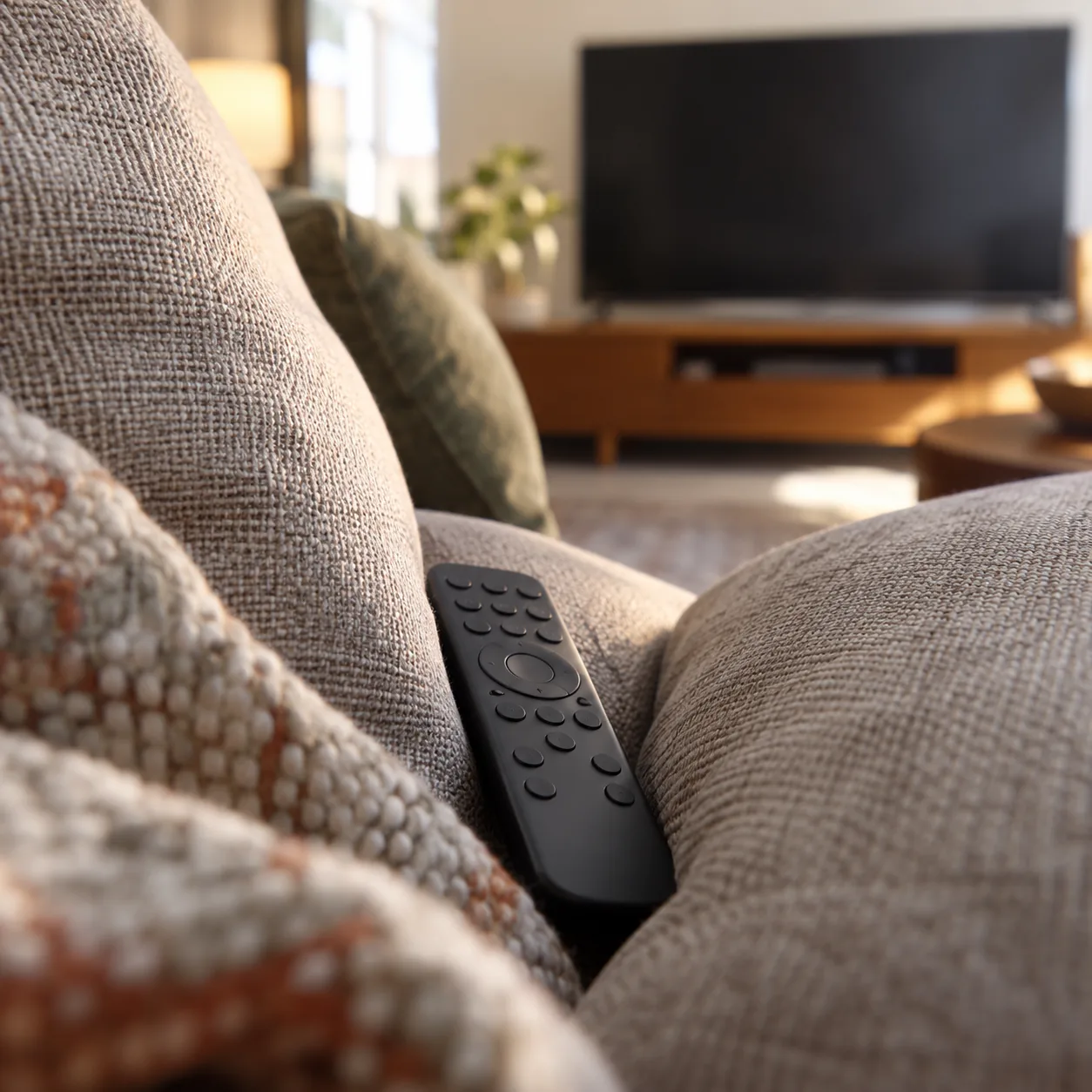
Generated interpretation, not documentary evidence. An invented unbranded television remote partly tucked into sofa cushions.
Credit: AI-generated for Culture Ark using OpenAI image generation Reuse/status: Generated content; no exclusive ownership or underlying-work rights claimed Coherent handset and sofa; blank television and buttons avoid fabricated programmes or authentic interface claims. No authentic-reference or endorsement claim.
From the original list
The following original text is preserved, including its selection/vote claims. Preservation is not independent verification of every assertion.
Why: Let people command a machine from the couch: the birth of channel surfing.
What to preserve: Zenith Flash-Matic, button layouts, the lost-remote phenomenon
Year and origin: 1955 · United States
Vote: 4/9 (historian 1 · future kid 2 · curator 1)
Learn more: Remote control on Wikipedia
Supplemental context
Zenith’s own history distinguishes several stages that a simple invention date can obscure: a wired television control in 1950, Polley’s light-operated Flash-Matic in 1955 and the ultrasonic Space Command in 1956. The Flash-Matic allowed viewers to control functions without a connecting cable, but sunlight could interfere with its operation. These changes concern more than electronics. They altered the relation between seated viewer and television, making household choices about sound and channels accessible from a distance. The ordinary remote can therefore preserve the culture of domestic media use alongside the much more conspicuous programmes people watched.
Creator/community: Eugene Polley, Robert Adler and Zenith engineering teams; television audiences Place/era: US television controls, 1950s; later international domestic use
Context and limits
The 1955 date concerns a particular wireless television product, not the invention of every kind of remote control. Zenith’s account is a manufacturer’s heritage source. The generated blank-button handset is an invented later-looking prop, not Flash-Matic, a usable interface or an exact commercial design.
Where to learn more
- https://apiarybee.com/community/reading/biggie-nu-series-008-noahs-ark-set-d-culture-2000
- https://zenith.com/heritage/remote-background/
Apiary library | Original Culture Ark article
Public ID and individual routes: pending publisher allocation. Internal source ID: D-1326
Part of the Culture Ark: 2,000 things people should still be able to see in 2,000 years, picked by AI research teams. This page keeps the original list entry for D-1326 word for word and adds context. Browse the gallery. The Culture Ark is an Artificial Mind Hive (AMH) project. AMH is owned by Austin Little.

Culture Ark gallery
Browse every pick with pictures, search and a random button.
Open the gallery →