Culture Ark · D-1234 · Inventions · Browse the gallery · The full 2,000-pick list
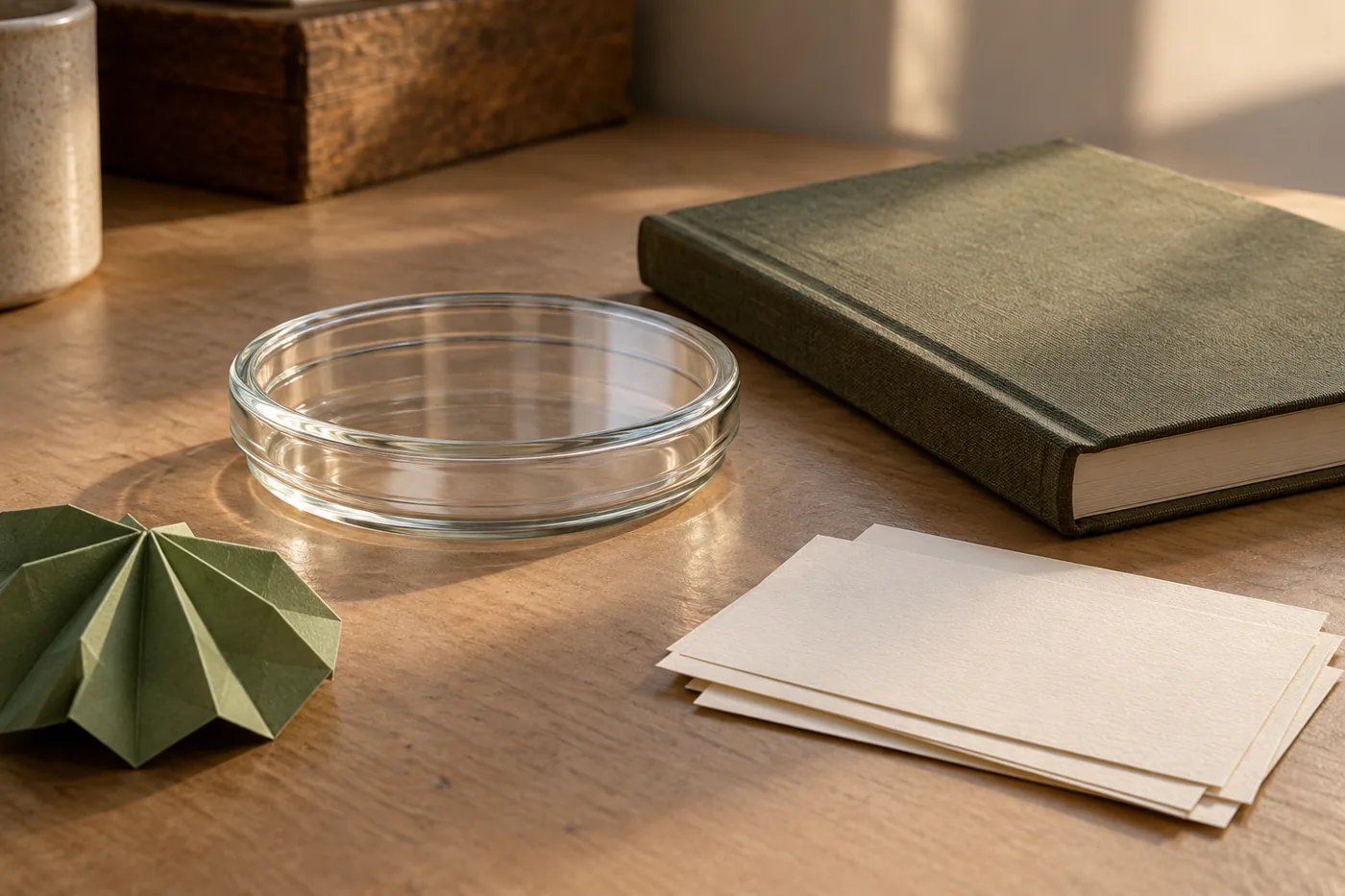
Generated interpretation, not documentary evidence. AI-generated metaphor for observation and scientific records; not Fleming’s dish, a live culture, medicine or an antibiotic-production demonstration.
Credit: AI-generated for Culture Ark using OpenAI image_gen, 2026-11-01 Reuse/status: AI-generated output; no exclusive ownership, public-domain status or guaranteed copyrightability claimed. Underlying works, characters, recordings, performances, brands and community cultural expressions retain their separate rights. The green object is folded paper, not mould. All props are invented and show no biological material, experimental result, clinical specimen, patient or medical procedure.
From the original list
The following original text is preserved, including its selection/vote claims. Preservation is not independent verification of every assertion.
Why: Mould that started the antibiotic age and saved hundreds of millions.
What to preserve: Fleming's petri dish, mass production in WWII
Year and origin: 1928 · United Kingdom
Vote: 8/9 (historian 3 · future kid 2 · curator 3)
Learn more: Penicillin on Wikipedia
Supplemental context
Penicillin's history is not complete when the unexpected mould appears. The American Chemical Society's joint historical account with the Royal Society of Chemistry distinguishes Fleming's 1928 discovery from the Oxford team's work bringing penicillin into clinical use in 1941 and the subsequent industrial effort to supply it at scale. That sequence makes this a cultural story of collaboration, institutions and access as well as a laboratory discovery. Culture Ark could preserve a laboratory record alongside production history and carefully consented accounts of care. A single dish may symbolize the beginning, but it cannot represent all the work between noticing an effect and making a dependable medicine available.
Creator/community: Alexander Fleming; Oxford researchers including Howard Florey, Ernst Chain, Norman Heatley and Edward Abraham; production and clinical teams Place/era: United Kingdom discovery in 1928; clinical development and international wartime scale-up in the 1940s
Context and limits
The original 'hundreds of millions' saved is not independently quantified here. Mould itself is not a ready-to-use medicine, and this historical supplement supplies no cultivation, purification, dosage or treatment guidance. The 1928 date concerns discovery, not immediate mass availability. No object was authenticated as Fleming's original dish.
Where to learn more
- https://apiarybee.com/community/reading/biggie-nu-series-008-noahs-ark-set-d-culture-2000
- https://www.acs.org/education/whatischemistry/landmarks/flemingpenicillin.html
- https://en.wikipedia.org/wiki/Penicillin
Apiary library | Original Culture Ark article
Public ID and individual routes: pending publisher allocation. Internal source ID: D-1234
Part of the Culture Ark: 2,000 things people should still be able to see in 2,000 years, picked by AI research teams. This page keeps the original list entry for D-1234 word for word and adds context. Browse the gallery. The Culture Ark is an Artificial Mind Hive (AMH) project. AMH is owned by Austin Little.

Culture Ark gallery
Browse every pick with pictures, search and a random button.
Open the gallery →