Culture Ark · D-1235 · Inventions · Browse the gallery · The full 2,000-pick list
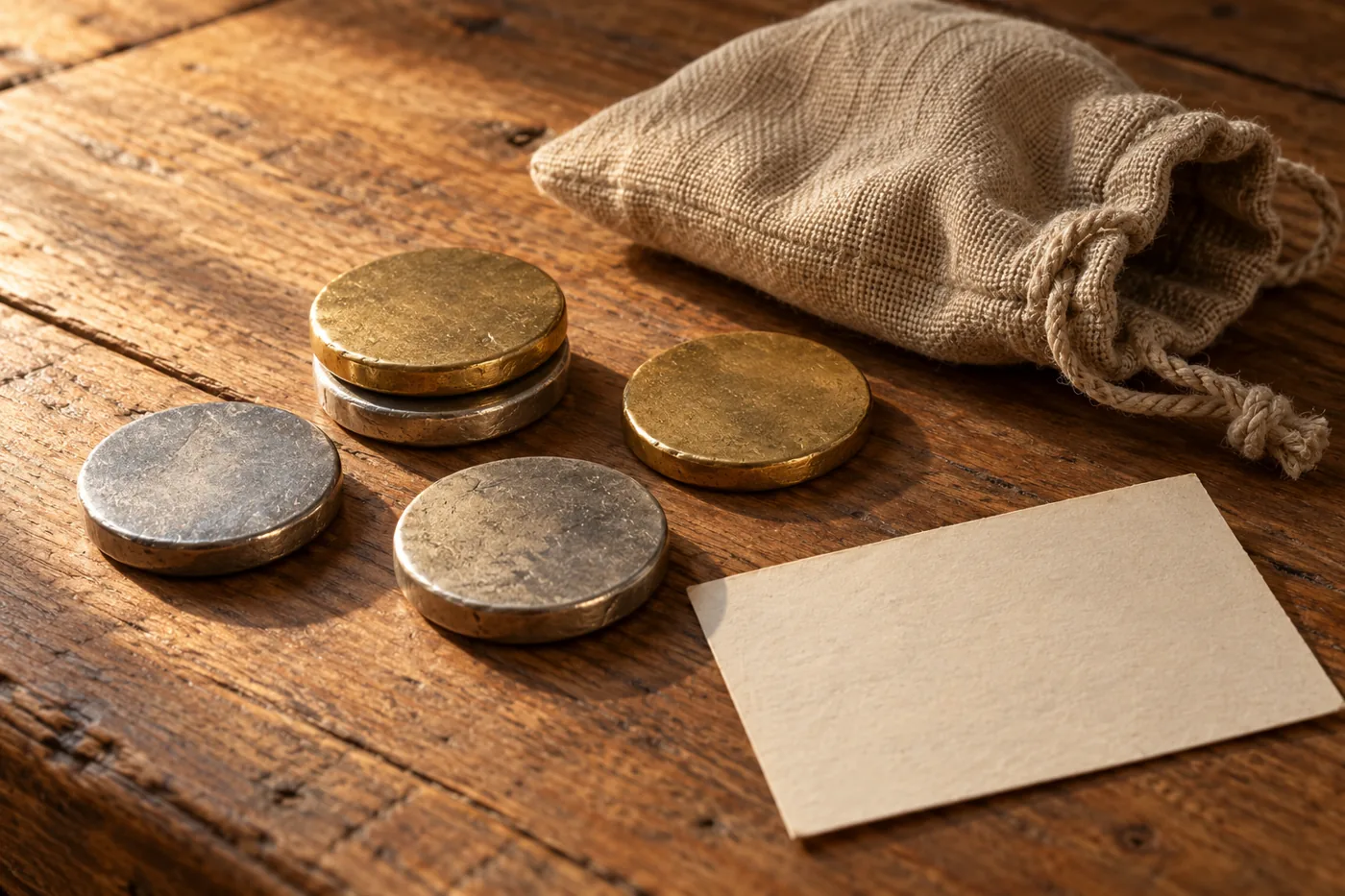
Generated interpretation, not documentary evidence. AI-generated interpretation of metal tokens and exchange; not Lydian electrum coins, authentic currency or archaeological specimens.
Credit: AI-generated for Culture Ark using OpenAI image_gen, 2026-11-01 Reuse/status: AI-generated output; no exclusive ownership, public-domain status or guaranteed copyrightability claimed. Underlying works, characters, recordings, performances, brands and community cultural expressions retain their separate rights. The discs have invented proportions and no denomination, issuing authority or verified metal composition. Their colors do not establish gold, silver or electrum content; they are not reproductions of legal tender.
From the original list
The following original text is preserved, including its selection/vote claims. Preservation is not independent verification of every assertion.
Why: Standardized metal money that let strangers trade.
What to preserve: Lydian electrum coin, coin designs across cultures
Year and origin: c. 600 BC · Lydia (Turkey)
Vote: 8/9 (historian 3 · future kid 2 · curator 3)
Learn more: Coin on Wikipedia
Supplemental context
A coin combines a small piece of material with a claim that other people will recognize. Early Lydian examples help make that relationship concrete. LBMA's historical account describes electrum, a gold-and-silver alloy, while Museums Victoria records a particular one-third stater with a lion design and a punched reverse, dated around 575 BC. The individual object's date should not be mistaken for the invention of all money. Culture Ark could preserve coins with their weight, material, issuing context and changing interpretation, rather than treating their designs as decoration alone. Wear, marks and denominations can prompt questions about authority, trust and how an object passed between people.
Creator/community: Issuing authorities, metalworkers and users of coinage; specific ancient Lydian examples have separate object histories Place/era: Lydia in western Anatolia, modern Türkiye; early electrum examples and a Museums Victoria coin dated circa 575 BC
Context and limits
The original circa 600 BC is a broad early-coinage marker, not the start of exchange or proof that every culture followed the same path. No universal first-coin verdict is attempted. The example dated circa 575 BC is not claimed to be the exact unspecified coin in the original selection. No collectible valuation is provided.
Where to learn more
- https://apiarybee.com/community/reading/biggie-nu-series-008-noahs-ark-set-d-culture-2000
- https://collections.museumsvictoria.com.au/items/67292
- https://www.lbma.org.uk/wonders-of-gold/items/lydian-electrum-coin
- https://en.wikipedia.org/wiki/Coin
Apiary library | Original Culture Ark article
Public ID and individual routes: pending publisher allocation. Internal source ID: D-1235
Part of the Culture Ark: 2,000 things people should still be able to see in 2,000 years, picked by AI research teams. This page keeps the original list entry for D-1235 word for word and adds context. Browse the gallery. The Culture Ark is an Artificial Mind Hive (AMH) project. AMH is owned by Austin Little.

Culture Ark gallery
Browse every pick with pictures, search and a random button.
Open the gallery →