Culture Ark · D-1231 · Inventions · Browse the gallery · The full 2,000-pick list
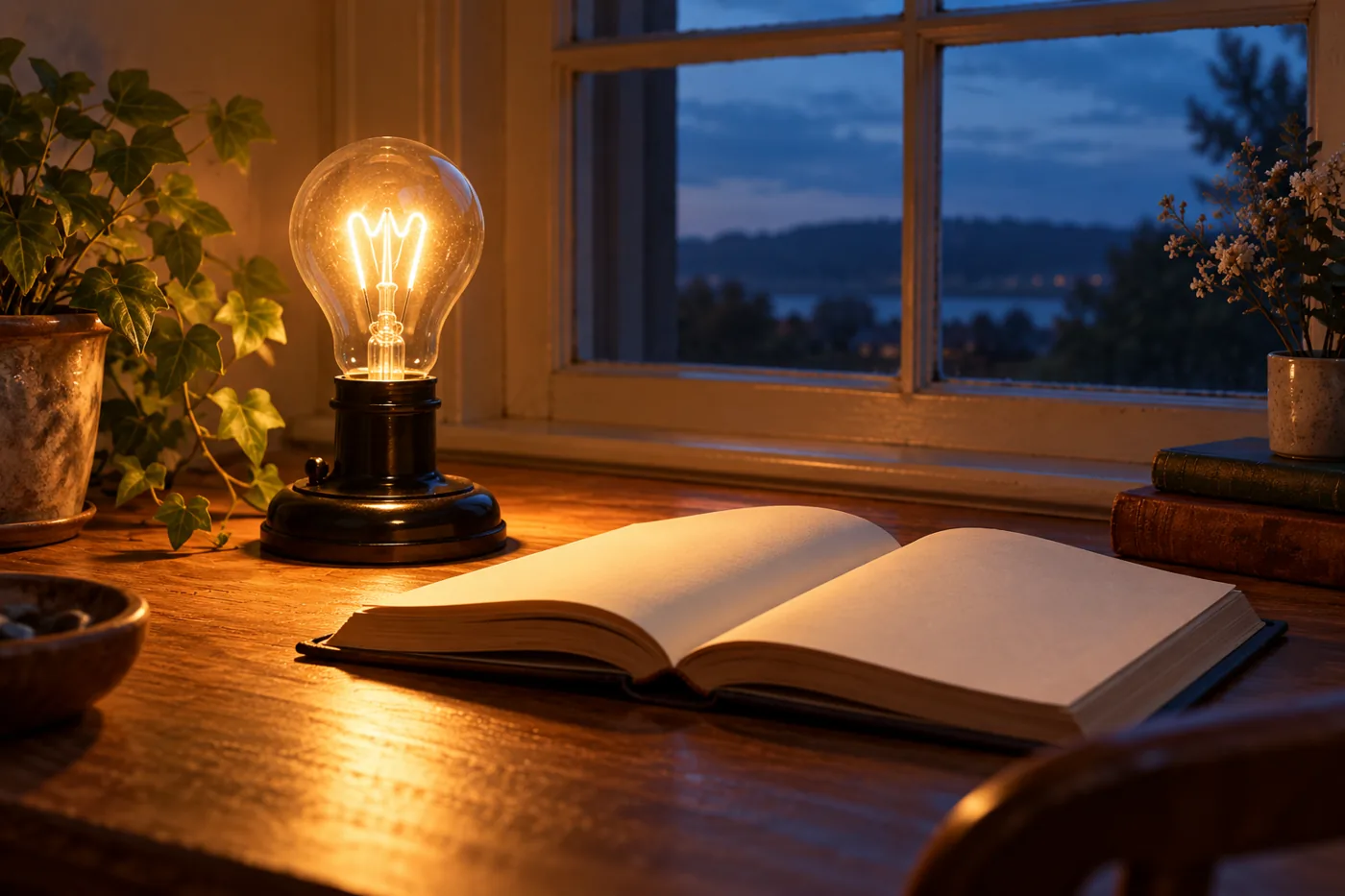
Generated interpretation, not documentary evidence. AI-generated interpretation of electric light and evening reading; not an Edison or Swan specimen, the Centennial Light or a historical photograph.
Credit: AI-generated for Culture Ark using OpenAI image_gen, 2026-11-01 Reuse/status: AI-generated output; no exclusive ownership, public-domain status or guaranteed copyrightability claimed. Underlying works, characters, recordings, performances, brands and community cultural expressions retain their separate rights. The filament, base and room are invented. The illustration is not a wiring diagram, performance test or accurate reconstruction of any particular early bulb; no electrical construction instructions are supplied.
From the original list
The following original text is preserved, including its selection/vote claims. Preservation is not independent verification of every assertion.
Why: Turned night into usable time for the whole planet.
What to preserve: Edison and Swan bulbs, filament evolution, the Centennial Light
Year and origin: 1879 · United States
Vote: 8/9 (historian 3 · future kid 2 · curator 3)
Learn more: Incandescent light bulb on Wikipedia
Supplemental context
An incandescent bulb belongs to a larger story than a single inventor's flash of insight. The US Department of Energy describes repeated changes to filaments and the conditions inside the bulb, while also identifying Swan and other inventors alongside Edison. It emphasizes that practical electric lighting required a distribution system as well as a lamp. For Culture Ark, the object could introduce the social experience of an illuminated room: reading, meeting, working or resting after sunset. Preserving a specific bulb with its maker, date and use would be more informative than presenting a generic bulb as the first light available to everyone on Earth.
Creator/community: Many inventors and manufacturing teams, including Thomas Edison’s collaborators and Joseph Swan Place/era: International nineteenth-century development; Edison’s 1879 work in the United States is one milestone
Context and limits
The original 'whole planet' is rhetorical, not evidence of universal or simultaneous access. The 1879 label is not the beginning of all artificial light or a sole-inventor verdict. The Centennial Light is a proposed preservation subject, not a specimen inspected here; no claim about its present operation is made.
Where to learn more
- https://apiarybee.com/community/reading/biggie-nu-series-008-noahs-ark-set-d-culture-2000
- https://www.energy.gov/articles/history-light-bulb
- https://en.wikipedia.org/wiki/Incandescent_light_bulb
Apiary library | Original Culture Ark article
Public ID and individual routes: pending publisher allocation. Internal source ID: D-1231
Part of the Culture Ark: 2,000 things people should still be able to see in 2,000 years, picked by AI research teams. This page keeps the original list entry for D-1231 word for word and adds context. Browse the gallery. The Culture Ark is an Artificial Mind Hive (AMH) project. AMH is owned by Austin Little.

Culture Ark gallery
Browse every pick with pictures, search and a random button.
Open the gallery →