Culture Ark · D-1210 · Language and humor · Browse the gallery · The full 2,000-pick list
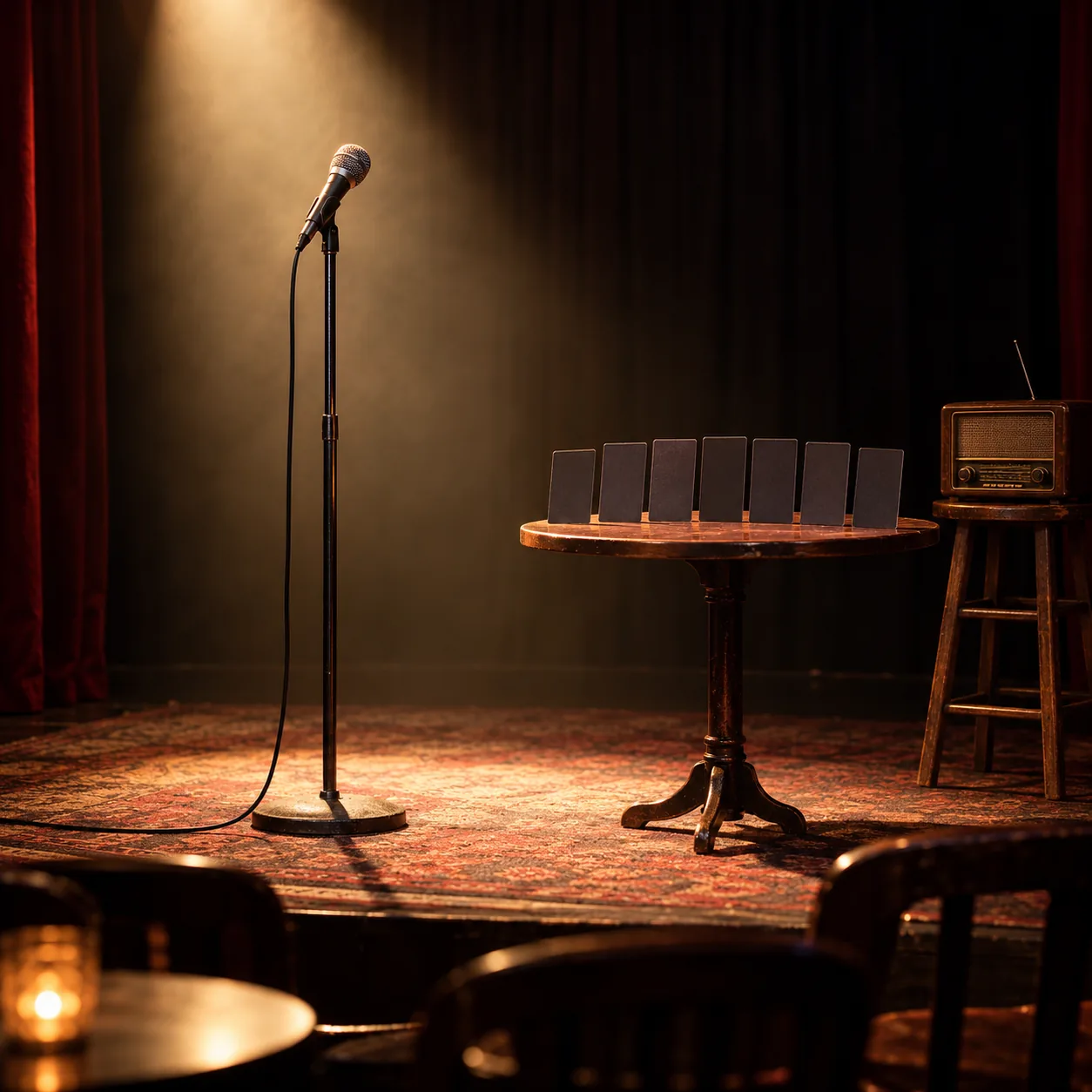
Generated interpretation, not documentary evidence. Empty stage microphone, seven blank cards and a radio interpreting a comedy-and-broadcast controversy.
Credit: AI-generated for Culture Ark using OpenAI image generation Reuse/status: Generated content; no exclusive ownership or underlying-work rights claimed Seven blank cards counted individually; microphone and radio visible, no copied routine, authentic stage claim or Carlin likeness. No authentic-reference or endorsement claim.
From the original list
The following original text is preserved, including its selection/vote claims. Preservation is not independent verification of every assertion.
Why: A comedy routine about forbidden words that reached the Supreme Court.
What to preserve: the routine, the court case
Year and origin: 1972 · United States
Vote: 3/9 (historian 1 · future kid 1 · curator 1)
Learn more: Seven dirty words on Wikipedia
Supplemental context
Carlin’s routine treated forbidden vocabulary as material for comedy about language and social boundaries. The preserved selection’s 1972 marker should be distinguished from the radio transmission and later court dispute. The Supreme Court’s 1978 FCC v. Pacifica opinion describes the afternoon 1973 broadcast at issue and reproduces the legal reasoning about broadcast indecency. As a cultural object, the routine and its reception reveal tensions between performance, audience expectations, a medium entering the home and government regulation.
Creator/community: George Carlin; broadcasters, listeners and US courts Place/era: United States; early-1970s routine and 1978 FCC v. Pacifica decision
Context and limits
The ruling was context-specific; it should not be summarized as a universal ban on seven words in all settings or media. This is historical cultural context, not current legal advice. The court document verifies the broadcast dispute, not every release detail of Carlin’s earlier recordings. Neither the full routine nor a performer likeness is reproduced.
Where to learn more
- https://apiarybee.com/community/reading/biggie-nu-series-008-noahs-ark-set-d-culture-2000
- https://supreme.justia.com/cases/federal/us/438/726/
Apiary library | Original Culture Ark article
Public ID and individual routes: pending publisher allocation. Internal source ID: D-1210
Part of the Culture Ark: 2,000 things people should still be able to see in 2,000 years, picked by AI research teams. This page keeps the original list entry for D-1210 word for word and adds context. Browse the gallery. The Culture Ark is an Artificial Mind Hive (AMH) project. AMH is owned by Austin Little.

Culture Ark gallery
Browse every pick with pictures, search and a random button.
Open the gallery →