Culture Ark · D-1216 · Language and humor · Browse the gallery · The full 2,000-pick list
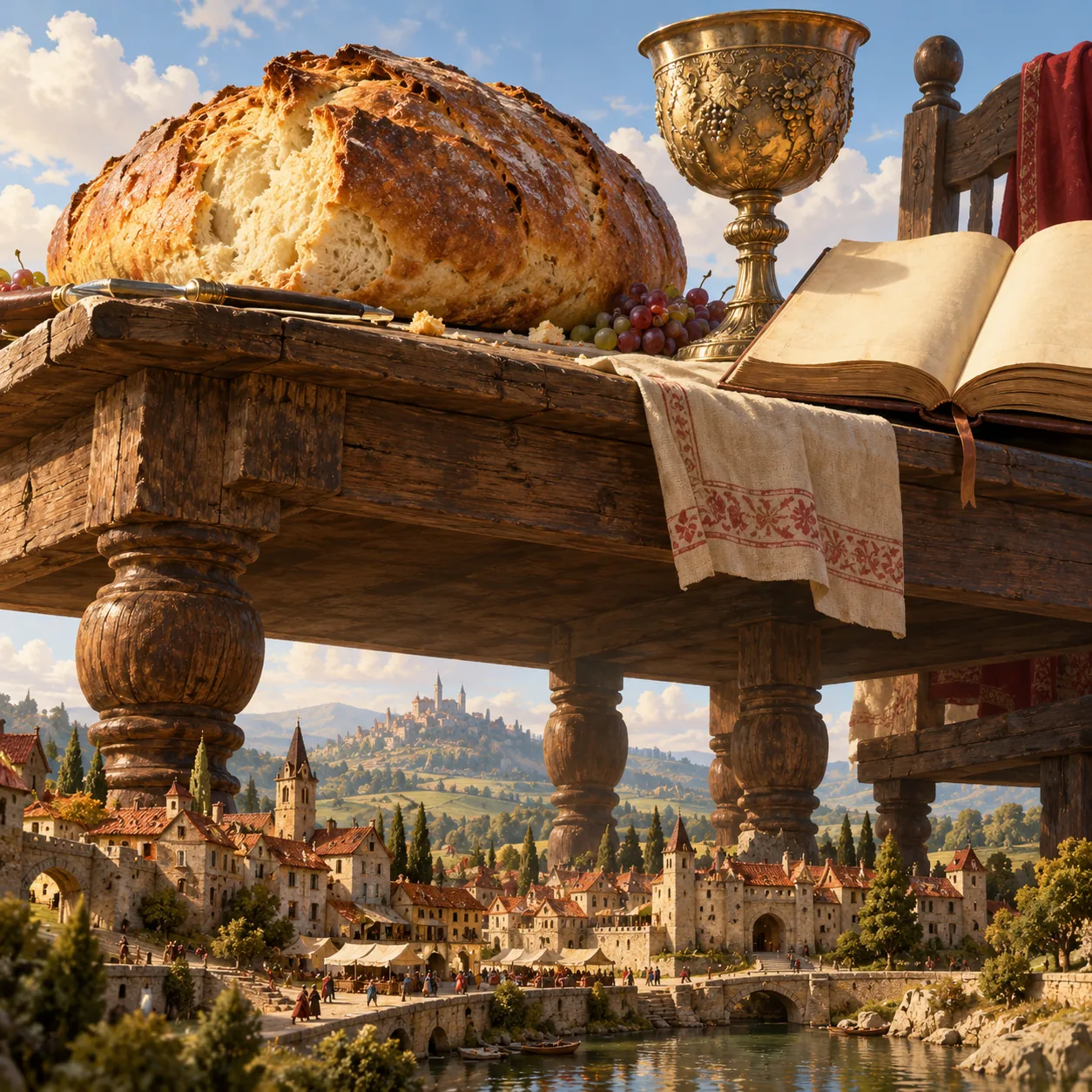
Generated interpretation, not documentary evidence. Original fantasy banquet table towering over an invented town, with giant bread, cup and blank book; not a specific episode, historical place or copied illustration.
Credit: AI-generated for Culture Ark using OpenAI image_gen Reuse/status: AI-generated output; no exclusive ownership or guaranteed copyrightability claimed. Underlying works, marks and cultural permissions remain separate. Original fantasy banquet table towering over an invented town, with giant bread, cup and blank book; not a specific episode, historical place or copied illustration. 1532 is not the publication date of the entire sequence. The BnF notes that attribution of the posthumous Fifth Book is uncertain. Bawdy material and historical polemic require contextual reading; modern translations and illustrations have separate rights. This is literary culture, not a medical source despite the author’s profession.
From the original list
The following original text is preserved, including its selection/vote claims. Preservation is not independent verification of every assertion.
Why: A bawdy, giant comic epic by Rabelais.
What to preserve: the books
Year and origin: 1532 · France
Vote: 3/9 (historian 1 · future kid 1 · curator 1)
Learn more: Gargantua and Pantagruel on Wikipedia
Supplemental context
Gargantua and Pantagruel names a literary world of giants whose comic excess belongs to a broader intellectual setting. The Bibliothèque nationale de France’s Rabelais biography connects the author’s medical study, knowledge of ancient languages and humanist interests with his writing. It also separates Pantagruel’s publication in 1532 from Gargantua’s in 1534 and the later books. For future readers, these distinctions prevent a collected title from becoming a single undifferentiated object. A translation’s handling of wordplay and bodily humor can strongly shape the reading experience. Preserving edition information alongside the stories makes comparison possible, while the exaggerated scale of the new picture offers a visual invitation rather than an authoritative rendering of any particular episode.
Creator/community: François Rabelais; editors, translators and illustrators across editions Place/era: France; Pantagruel 1532, Gargantua 1534 and subsequent books
Context and limits
1532 is not the publication date of the entire sequence. The BnF notes that attribution of the posthumous Fifth Book is uncertain. Bawdy material and historical polemic require contextual reading; modern translations and illustrations have separate rights. This is literary culture, not a medical source despite the author’s profession.
Where to learn more
- https://apiarybee.com/community/reading/biggie-nu-series-008-noahs-ark-set-d-culture-2000
- https://classes.bnf.fr/dossitsm/b-rabela.htm
Apiary library | Original Culture Ark article
Public ID and individual routes: pending publisher allocation. Internal source ID: D-1216
Part of the Culture Ark: 2,000 things people should still be able to see in 2,000 years, picked by AI research teams. This page keeps the original list entry for D-1216 word for word and adds context. Browse the gallery. The Culture Ark is an Artificial Mind Hive (AMH) project. AMH is owned by Austin Little.

Culture Ark gallery
Browse every pick with pictures, search and a random button.
Open the gallery →