Culture Ark · D-1209 · Language and humor · Browse the gallery · The full 2,000-pick list
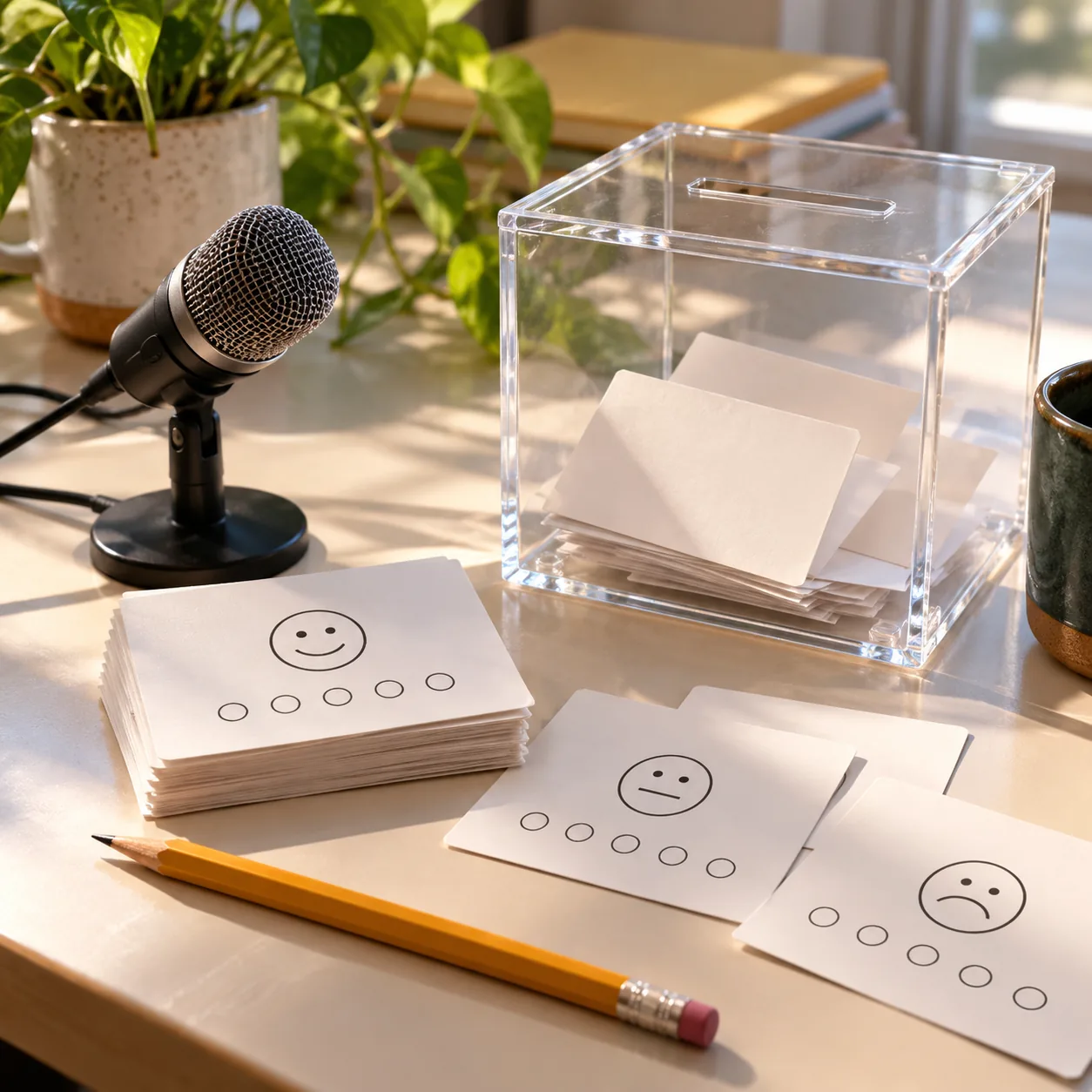
Generated interpretation, not documentary evidence. Invented survey cards, microphone and ballot box symbolizing the public rating of jokes.
Credit: AI-generated for Culture Ark using OpenAI image generation Reuse/status: Generated content; no exclusive ownership or underlying-work rights claimed Visible cards have generic faces and unfilled circles; not actual study forms, participant responses or results. No authentic-reference or endorsement claim.
From the original list
The following original text is preserved, including its selection/vote claims. Preservation is not independent verification of every assertion.
Why: An experiment to find the world's funniest joke.
What to preserve: the winning joke, results by country
Year and origin: 2001 · United Kingdom
Vote: 3/9 (historian 1 · future kid 1 · curator 1)
Learn more: World's funniest joke on Wikipedia
Supplemental context
LaughLab asked internet participants to submit jokes and rate randomly selected jokes on a five-point scale. Richard Wiseman’s retrospective describes the project’s June 2001 launch with the British Science Association and explains both its submission and rating procedures. Its cultural value lies partly in the attempt to turn an everyday judgment—what seems funny—into a public data-gathering exercise. The same account documents how a humorist’s appeal to readers influenced submissions, making the project a revealing example of how online participation can affect the evidence it creates.
Creator/community: Richard Wiseman, British Science Association and participating internet users Place/era: United Kingdom-led online project launched June 2001
Context and limits
‘World’s funniest joke’ is the project’s framing, not a timeless universal result. Volunteers with access to the website do not represent every language, culture or person. National comparisons should not become stereotypes. The winning joke is linked through the researcher’s account rather than copied in full, and the invented survey card illustration is not the real interface or data.
Where to learn more
- https://apiarybee.com/community/reading/biggie-nu-series-008-noahs-ark-set-d-culture-2000
- https://richardwiseman.wordpress.com/2018/04/17/laughlab/
Apiary library | Original Culture Ark article
Public ID and individual routes: pending publisher allocation. Internal source ID: D-1209
Part of the Culture Ark: 2,000 things people should still be able to see in 2,000 years, picked by AI research teams. This page keeps the original list entry for D-1209 word for word and adds context. Browse the gallery. The Culture Ark is an Artificial Mind Hive (AMH) project. AMH is owned by Austin Little.

Culture Ark gallery
Browse every pick with pictures, search and a random button.
Open the gallery →