Culture Ark · D-1027 · Language and humor · Browse the gallery · The full 2,000-pick list
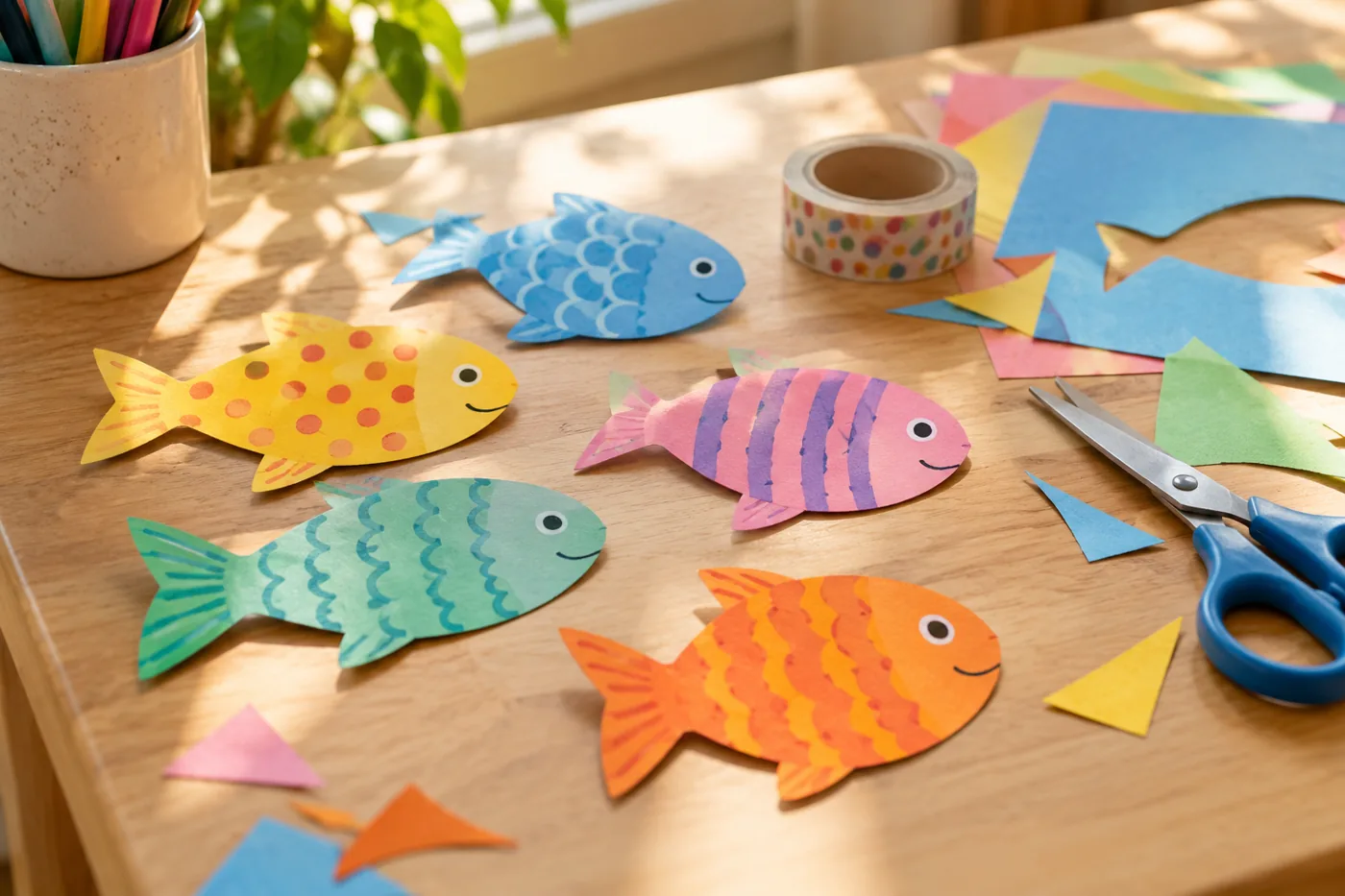
Generated interpretation, not documentary evidence. AI-generated paper fish and simple craft supplies, illustrating one April Fools tradition rather than a universal custom.
Credit: AI-generated for Culture Ark using OpenAI image generation Reuse/status: Generated content; no exclusive ownership or underlying-work rights claimed Five paper fish and scissors, tape and offcuts coherent; cheerful craft scene without prank victim or historical-artifact claim. No authentic-reference or endorsement claim.
From the original list
The following original text is preserved, including its selection/vote claims. Preservation is not independent verification of every assertion.
Why: A day for pranks and hoaxes around the world.
What to preserve: famous hoaxes, poisson d'avril
Year and origin: 1561 · Europe
Vote: 9/9 (historian 3 · future kid 3 · curator 3)
Learn more: April Fools' Day on Wikipedia
Supplemental context
April Fools' Day permits a temporary play with credibility, but its history is less settled than a single origin date suggests. The Library of Congress discusses a clear 1561 Flemish reference to fruitless errands and treats popular calendar-change explanations cautiously. It also distinguishes evidence for customs from later stories about their beginnings. For future readers, this is a lesson in researching folklore: the story people tell about a tradition can itself become another tradition. Paper fish are one recognizable practice within this larger field, not a universal activity performed everywhere on 1 April.
Creator/community: Communities observing April Fools' customs Place/era: Multiple European and international traditions; early modern attestations and later practices
Context and limits
1561 is a documented reference, not proof that the custom was invented then. Practices and boundaries vary between communities. Pranks can cause distress or waste resources; this entry does not encourage dangerous deception, harassment or false emergencies. The generated paper fish are illustrative craft props, not historical artifacts.
Where to learn more
- https://apiarybee.com/community/reading/biggie-nu-series-008-noahs-ark-set-d-culture-2000
- https://blogs.loc.gov/folklife/2016/03/april-fools/
Apiary library | Original Culture Ark article
Public ID and individual routes: pending publisher allocation. Internal source ID: D-1027
Part of the Culture Ark: 2,000 things people should still be able to see in 2,000 years, picked by AI research teams. This page keeps the original list entry for D-1027 word for word and adds context. Browse the gallery. The Culture Ark is an Artificial Mind Hive (AMH) project. AMH is owned by Austin Little.

Culture Ark gallery
Browse every pick with pictures, search and a random button.
Open the gallery →