Culture Ark · D-1029 · Language and humor · Browse the gallery · The full 2,000-pick list
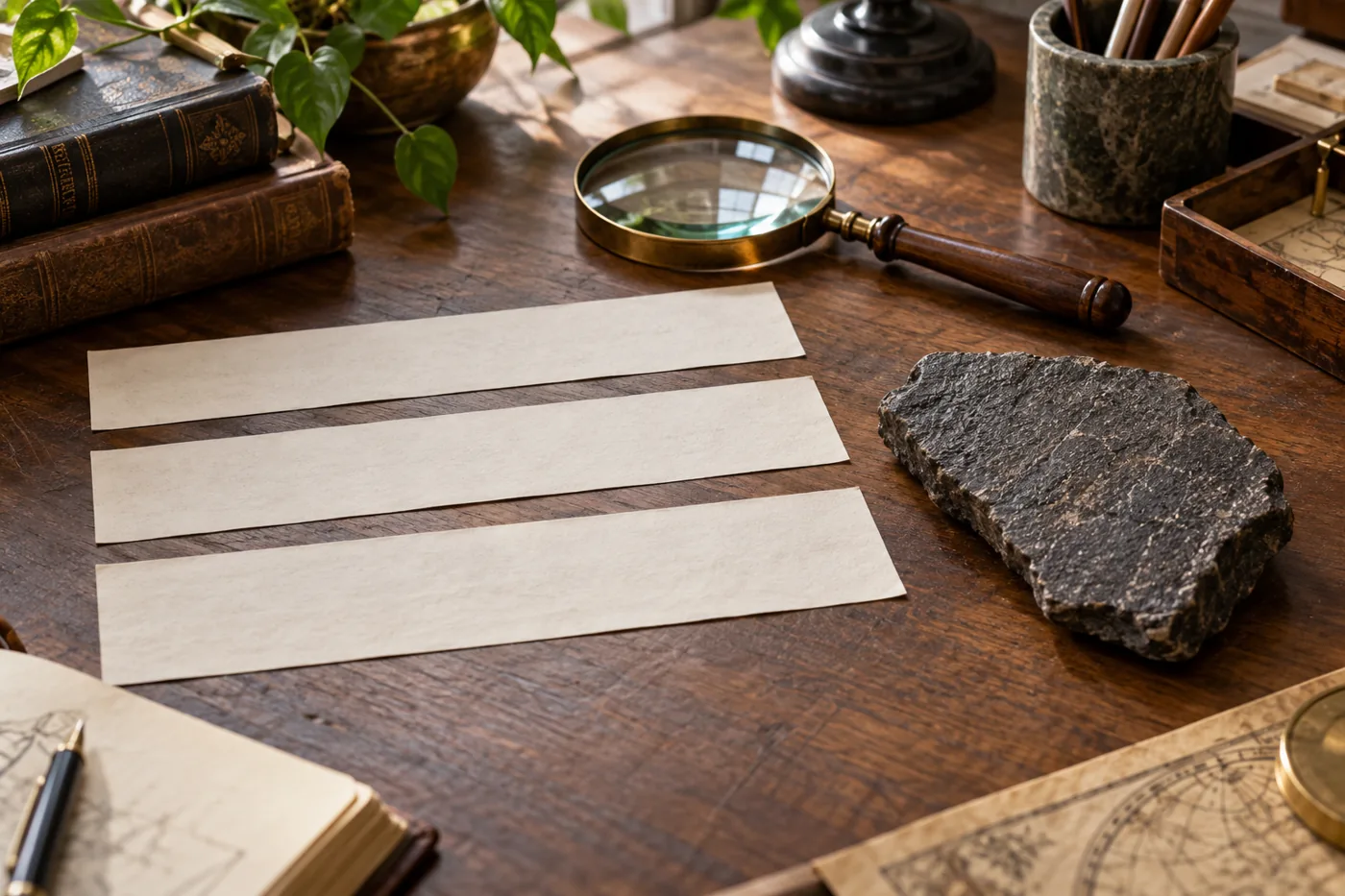
Generated interpretation, not documentary evidence. AI-generated blank stone fragment and parallel papers, evoking comparative decipherment without fabricating a Rosetta inscription.
Credit: AI-generated for Culture Ark using OpenAI image generation Reuse/status: Generated content; no exclusive ownership or underlying-work rights claimed Three blank parallel strips, uninscribed stone and magnifier coherent; no counterfeit inscription, exact artifact outline or actual decipherment evidence. No authentic-reference or endorsement claim.
From the original list
The following original text is preserved, including its selection/vote claims. Preservation is not independent verification of every assertion.
Why: The stone that unlocked Egyptian hieroglyphs.
What to preserve: the inscription, its decipherment
Year and origin: 196 BC · Ancient Egypt
Vote: 9/9 (historian 3 · future kid 3 · curator 3)
Learn more: Rosetta Stone on Wikipedia
Supplemental context
The Rosetta Stone bears versions of a decree in hieroglyphs, demotic and ancient Greek. Cambridge University Library's account uses the history of its own cast to explain how copies helped scholars study the inscription. That wider story matters: decipherment depended on comparison and the circulation of records, not a stone instantly translating itself. For future readers, the object connects ancient political communication with modern scholarly work and the movement of Egyptian heritage during European military campaigns. A study of it should keep the original stone, casts, printed copies and later interpretations distinct.
Creator/community: Ancient Egyptian priestly decree-makers; later decipherers and institutions Place/era: Egypt; Ptolemaic decree, later military seizure and nineteenth-century decipherment
Context and limits
The Cambridge account distinguishes European discovery in 1799 from the object's ancient existence and discusses its transfer after military defeat. Three scripts should not be casually described as three unrelated languages. The image is a symbolic blank stone and papers, not the Rosetta Stone, a cast, an inscription or a decipherment key.
Where to learn more
- https://apiarybee.com/community/reading/biggie-nu-series-008-noahs-ark-set-d-culture-2000
- https://specialcollections-blog.lib.cam.ac.uk/?p=23794
Apiary library | Original Culture Ark article
Public ID and individual routes: pending publisher allocation. Internal source ID: D-1029
Part of the Culture Ark: 2,000 things people should still be able to see in 2,000 years, picked by AI research teams. This page keeps the original list entry for D-1029 word for word and adds context. Browse the gallery. The Culture Ark is an Artificial Mind Hive (AMH) project. AMH is owned by Austin Little.

Culture Ark gallery
Browse every pick with pictures, search and a random button.
Open the gallery →