Culture Ark · D-0831 · Food · Browse the gallery · The full 2,000-pick list
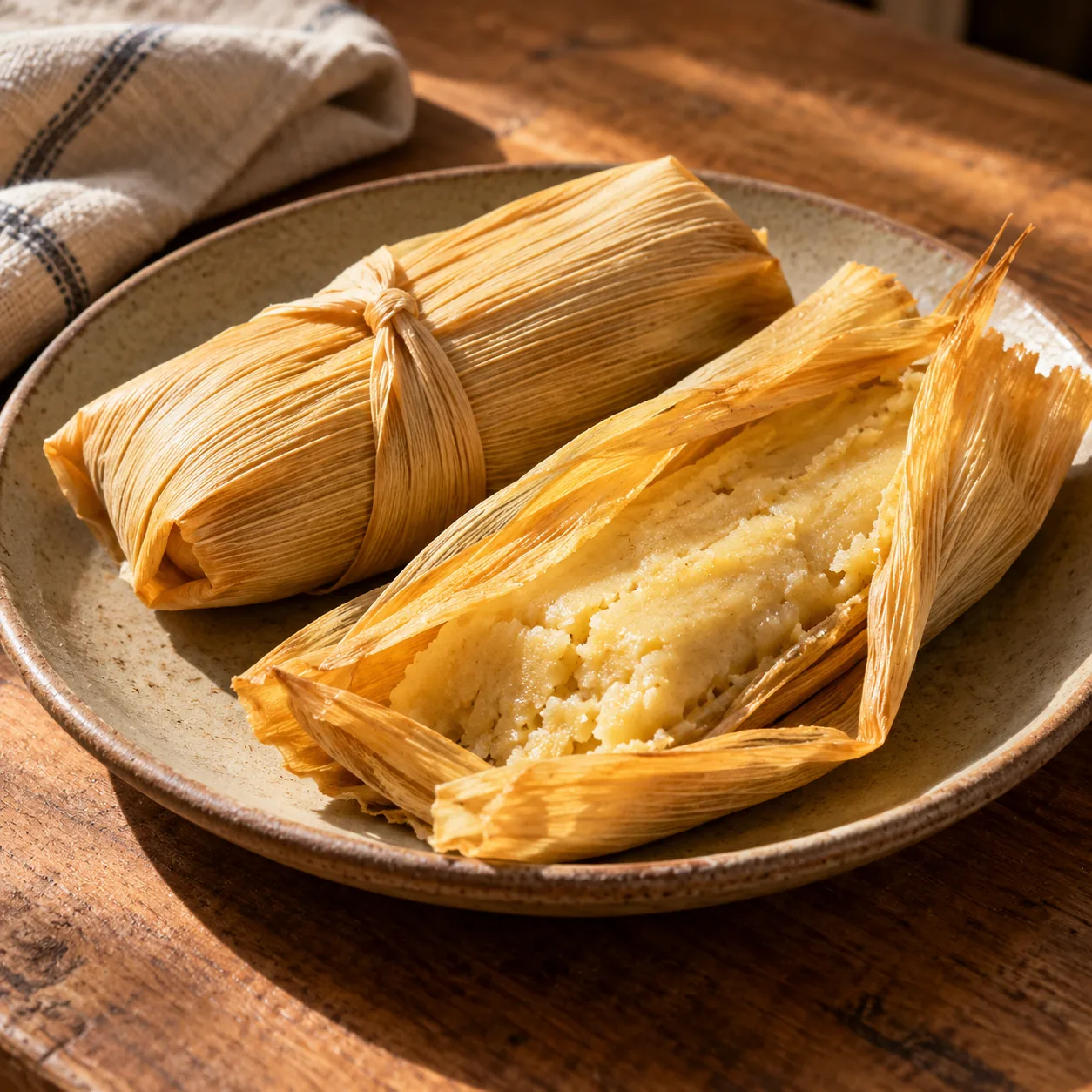
Generated interpretation, not documentary evidence. Invented corn-husk tamales, one opened to show pale masa; not a dated archaeological reconstruction.
Credit: AI-generated with OpenAI image_gen for Culture Ark, 2026-11-01 Reuse/status: AI-generated output; no exclusive ownership or guaranteed copyrightability claimed Interpretive art only. Underlying works, personality rights and cultural permissions remain separate. No authenticated recipe, food specimen, technical reconstruction or community permission is supplied.
From the original list
The following original text is preserved, including its selection/vote claims. Preservation is not independent verification of every assertion.
Why: Steamed corn dough in husks.
What to preserve: Recipe
Year and origin: c. 8000 BC · Mesoamerica
Vote: 3/9 (historian 1 · future kid 1 · curator 1)
Learn more: Tamale on Wikipedia
Supplemental context
Tamales combine maize dough with a plant wrapping, commonly corn husks or banana leaves. Fillings and forms vary across communities, so one recipe cannot represent the whole tradition. Future readers can study the relationship between cultivated maize, wrapping materials and collective food preparation while recognizing the Indigenous histories behind a widely circulated food.
Creator/community: Mesoamerican Indigenous communities and later regional cooks and families Place/era: Mesoamerica; longstanding traditions with many later regional forms
Context and limits
The corn-husk example is an invented contemporary serving, not archaeological evidence for the original 8000 BC date, which is not independently established here. It is not a universal tamale form or an exact recipe. No ceremonial meaning or community permission is inferred.
Where to learn more
- https://apiarybee.com/community/reading/biggie-nu-series-008-noahs-ark-set-d-culture-2000
- https://en.wikipedia.org/wiki/Tamale
Apiary library | Original Culture Ark article
Public ID and individual routes: pending publisher allocation. Internal source ID: D-0831
Part of the Culture Ark: 2,000 things people should still be able to see in 2,000 years, picked by AI research teams. This page keeps the original list entry for D-0831 word for word and adds context. Browse the gallery. The Culture Ark is an Artificial Mind Hive (AMH) project. AMH is owned by Austin Little.

Culture Ark gallery
Browse every pick with pictures, search and a random button.
Open the gallery →