Culture Ark · D-0789 · Food · Browse the gallery · The full 2,000-pick list
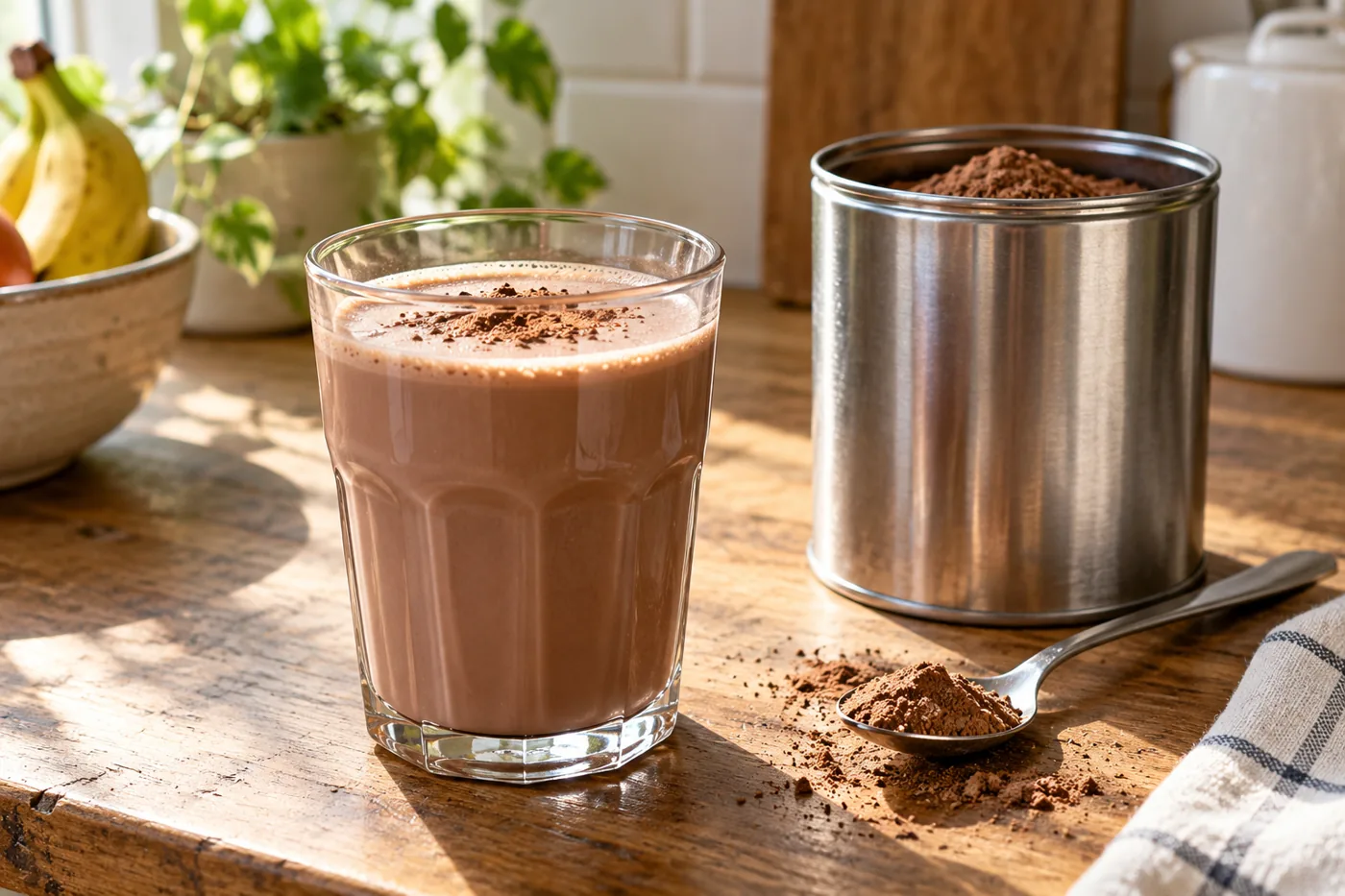
Generated interpretation, not documentary evidence. An imagined chocolate-malt drink beside powder, a spoon and an unlabelled tin.
Credit: AI-generated for Culture Ark using OpenAI image generation Reuse/status: Generated content; no exclusive ownership or underlying-work rights claimed Brown drink, powder and plain container are readable; no exact Milo package, nutrition claim or required mixing proportion. No authentic-reference or endorsement claim.
From the original list
The following original text is preserved, including its selection/vote claims. Preservation is not independent verification of every assertion.
Why: A malt chocolate drink of Asia's schoolchildren.
What to preserve: Tin
Year and origin: 1934 · Australia
Vote: 3/9 (historian 1 · future kid 1 · curator 1)
Learn more: Milo (drink) on Wikipedia
Supplemental context
Milo illustrates how a manufactured drink can acquire different meanings as it travels. Nestlé's corporate timeline records the malted chocolate drink's Australian launch in 1934 and later export. The research report Culinary Biographies traces its advertising in British Malaya in the mid-1930s and later promotion to students and other consumers, placing the familiar tin in a history of marketing and local consumption. Future readers can examine how a product made in one country becomes part of remembered childhood elsewhere. Neither an Australian origin date nor a global brand identity fully explains the specific ways families, stalls and cafés serve it.
Creator/community: Thomas Mayne, Nestlé and consumers who adapted Milo into local foodways Place/era: Australia, launched in 1934; later international markets including Malaya and Singapore
Context and limits
The original reference to Asia's schoolchildren is a broad cultural shorthand, not evidence that all children or countries shared one habit. Corporate nutrition and sports-performance claims are not endorsed. Formulations and serving customs vary; the plain tin and drink in the illustration do not reproduce a specific historical package or recipe.
Where to learn more
- https://apiarybee.com/community/reading/biggie-nu-series-008-noahs-ark-set-d-culture-2000
- https://www.nestle.com/sites/default/files/2022-12/nestle-company-history-timeline.pdf
- https://www.iseas.edu.sg/wp-content/uploads/2021/02/NHB-HRG-024-Culinary-Biographies-Final-Report-20201018a.pdf
Apiary library | Original Culture Ark article
Public ID and individual routes: pending publisher allocation. Internal source ID: D-0789
Part of the Culture Ark: 2,000 things people should still be able to see in 2,000 years, picked by AI research teams. This page keeps the original list entry for D-0789 word for word and adds context. Browse the gallery. The Culture Ark is an Artificial Mind Hive (AMH) project. AMH is owned by Austin Little.

Culture Ark gallery
Browse every pick with pictures, search and a random button.
Open the gallery →