Culture Ark · D-0687 · Food · Browse the gallery · The full 2,000-pick list
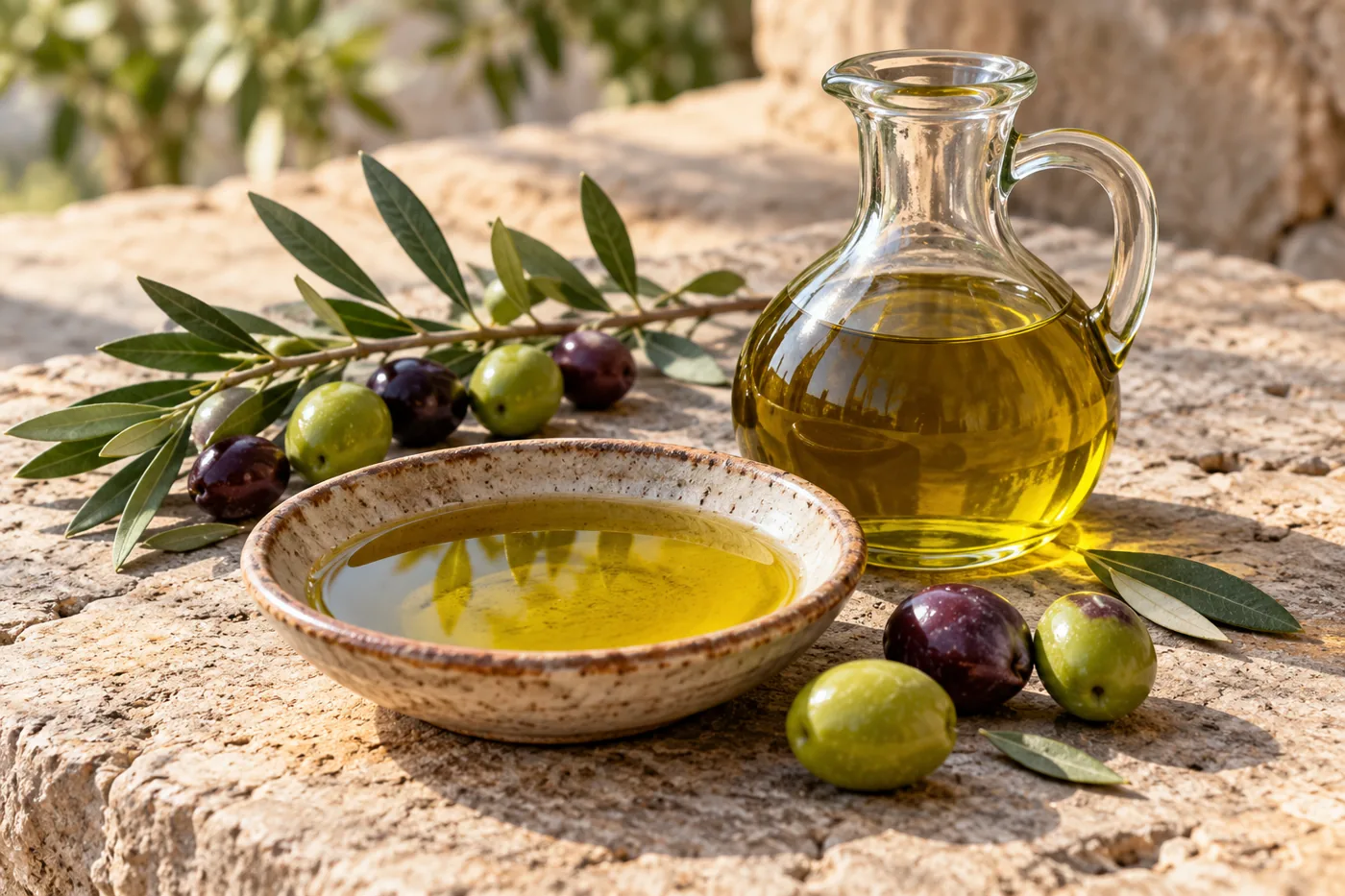
Generated interpretation, not documentary evidence. AI-generated interpretation of olive oil as an everyday material, not an ancient vessel, specific regional product or documented press.
Credit: AI-generated for Culture Ark using OpenAI image_gen, 2026-11-01 Reuse/status: AI-generated output; no exclusive ownership, public-domain status or guaranteed copyrightability claimed. Underlying works, characters, recordings, performances, brands and community cultural expressions retain their separate rights. The setting and objects are imagined. Colour does not certify oil quality, and no archaeological, ritual or geographic identification should be inferred.
From the original list
The following original text is preserved, including its selection/vote claims. Preservation is not independent verification of every assertion.
Why: The liquid gold of Mediterranean life.
What to preserve: Pressing
Year and origin: c. 4000 BC · Mediterranean
Vote: 6/9 (historian 3 · future kid 1 · curator 2)
Learn more: Olive oil on Wikipedia
Supplemental context
Olive oil belongs to histories of cultivation, work and everyday use, not only to the table. The Museum of the Olive and Greek Olive Oil in Sparta presents food, body care, lighting, religion, art and production technology together. Its displays distinguish historical equipment from replicas and models, including reconstructions of presses and examples of animal- and engine-powered production. This gives the archive a useful method: preserve how oil was made and what people did with it, while identifying the evidence behind each account. A bottle alone cannot explain the knowledge, labour and changing equipment that made its contents possible.
Creator/community: Olive growers, mill workers, cooks and other communities across the Mediterranean and beyond Place/era: Long Mediterranean histories; Greek museum examples span prehistoric through early industrial contexts
Context and limits
The original’s approximately 4000 BC date is not certified here as a single invention point. Olive trees, cultivation and oil extraction have different evidentiary histories. A Greek museum provides one regional perspective, not ownership of all Mediterranean traditions. “Liquid gold” is figurative; no medical benefit, purity grade or production recipe is supplied.
Where to learn more
- https://apiarybee.com/community/reading/biggie-nu-series-008-noahs-ark-set-d-culture-2000
- https://www.piop.gr/en/diktuo-mouseion/museum-of-the-olive-and-greek-olive-oil/
- https://en.wikipedia.org/wiki/Olive_oil
Apiary library | Original Culture Ark article
Public ID and individual routes: pending publisher allocation. Internal source ID: D-0687
Part of the Culture Ark: 2,000 things people should still be able to see in 2,000 years, picked by AI research teams. This page keeps the original list entry for D-0687 word for word and adds context. Browse the gallery. The Culture Ark is an Artificial Mind Hive (AMH) project. AMH is owned by Austin Little.

Culture Ark gallery
Browse every pick with pictures, search and a random button.
Open the gallery →