Culture Ark · D-0685 · Food · Browse the gallery · The full 2,000-pick list
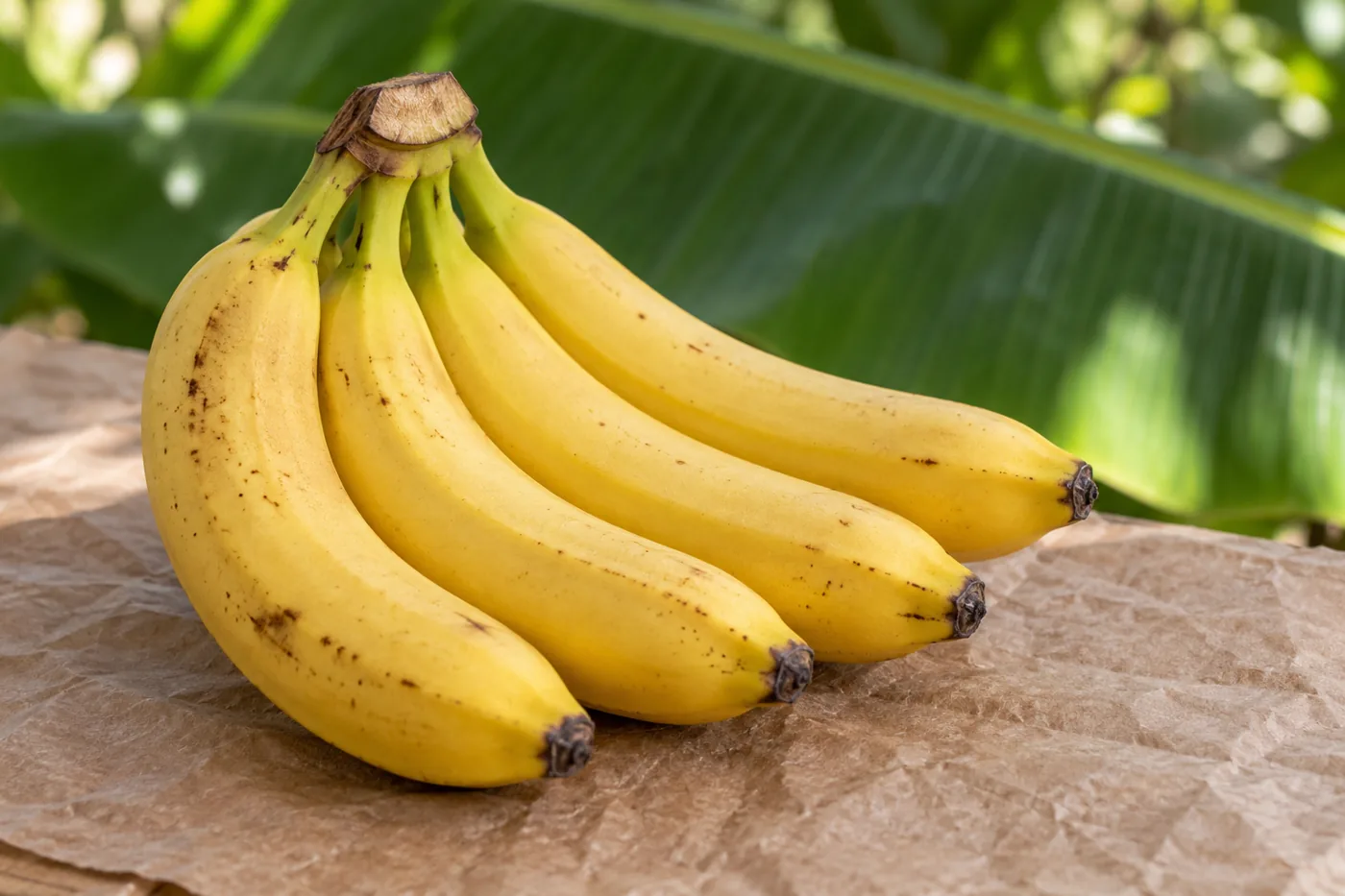
Generated interpretation, not documentary evidence. AI-generated interpretation of familiar dessert bananas; appearance alone cannot authenticate a Cavendish cultivar or its genetics.
Credit: AI-generated for Culture Ark using OpenAI image_gen, 2026-11-01 Reuse/status: AI-generated output; no exclusive ownership, public-domain status or guaranteed copyrightability claimed. Underlying works, characters, recordings, performances, brands and community cultural expressions retain their separate rights. The fruit is invented, not a botanical voucher, diseased plant, historic Chatsworth specimen or proof of genetic identity.
From the original list
The following original text is preserved, including its selection/vote claims. Preservation is not independent verification of every assertion.
Why: A banana grown as a single clone.
What to preserve: Plants, Panama disease
Year and origin: 1830s · United Kingdom (from Southeast Asia)
Vote: 6/9 (historian 2 · future kid 2 · curator 2)
Learn more: Cavendish banana on Wikipedia
Supplemental context
Cavendish is a subgroup of related banana cultivars, not literally one unchanging clone. ProMusa identifies varieties such as Grande Naine and Williams and explains how selected somatic variants add diversity within the subgroup. Its disease account distinguishes resistance to one Fusarium-wilt race from susceptibility to another. Chatsworth records that Joseph Paxton obtained a plant imported from Mauritius in 1830. That is a documented British horticultural episode, not the beginning of banana domestication. The curatorial lesson is that a familiar supermarket fruit carries both human selection and vulnerable production systems; resemblance on a shelf does not reveal the full biological or cultural story.
Creator/community: Generations of banana growers and selectors; Joseph Paxton in the Chatsworth naming history Place/era: Older cultivated-banana histories; nineteenth-century British greenhouse connection; later international cultivation
Context and limits
The original “single clone” phrase is an oversimplification; the 1830s British association is not an ultimate geographic origin. This page does not forecast extinction, diagnose plants or give disease-control advice. “Preserve Panama disease” is understood here as preserving its history and records, not collecting, moving or maintaining a pathogen.
Where to learn more
- https://apiarybee.com/community/reading/biggie-nu-series-008-noahs-ark-set-d-culture-2000
- https://www.promusa.org/Cavendish%2Bsubgroup
- https://www.chatsworth.org/news-media/news-blogs-press-releases/the-chatsworth-banana/
- https://en.wikipedia.org/wiki/Cavendish_banana
Apiary library | Original Culture Ark article
Public ID and individual routes: pending publisher allocation. Internal source ID: D-0685
Part of the Culture Ark: 2,000 things people should still be able to see in 2,000 years, picked by AI research teams. This page keeps the original list entry for D-0685 word for word and adds context. Browse the gallery. The Culture Ark is an Artificial Mind Hive (AMH) project. AMH is owned by Austin Little.

Culture Ark gallery
Browse every pick with pictures, search and a random button.
Open the gallery →