Culture Ark · D-0684 · Food · Browse the gallery · The full 2,000-pick list
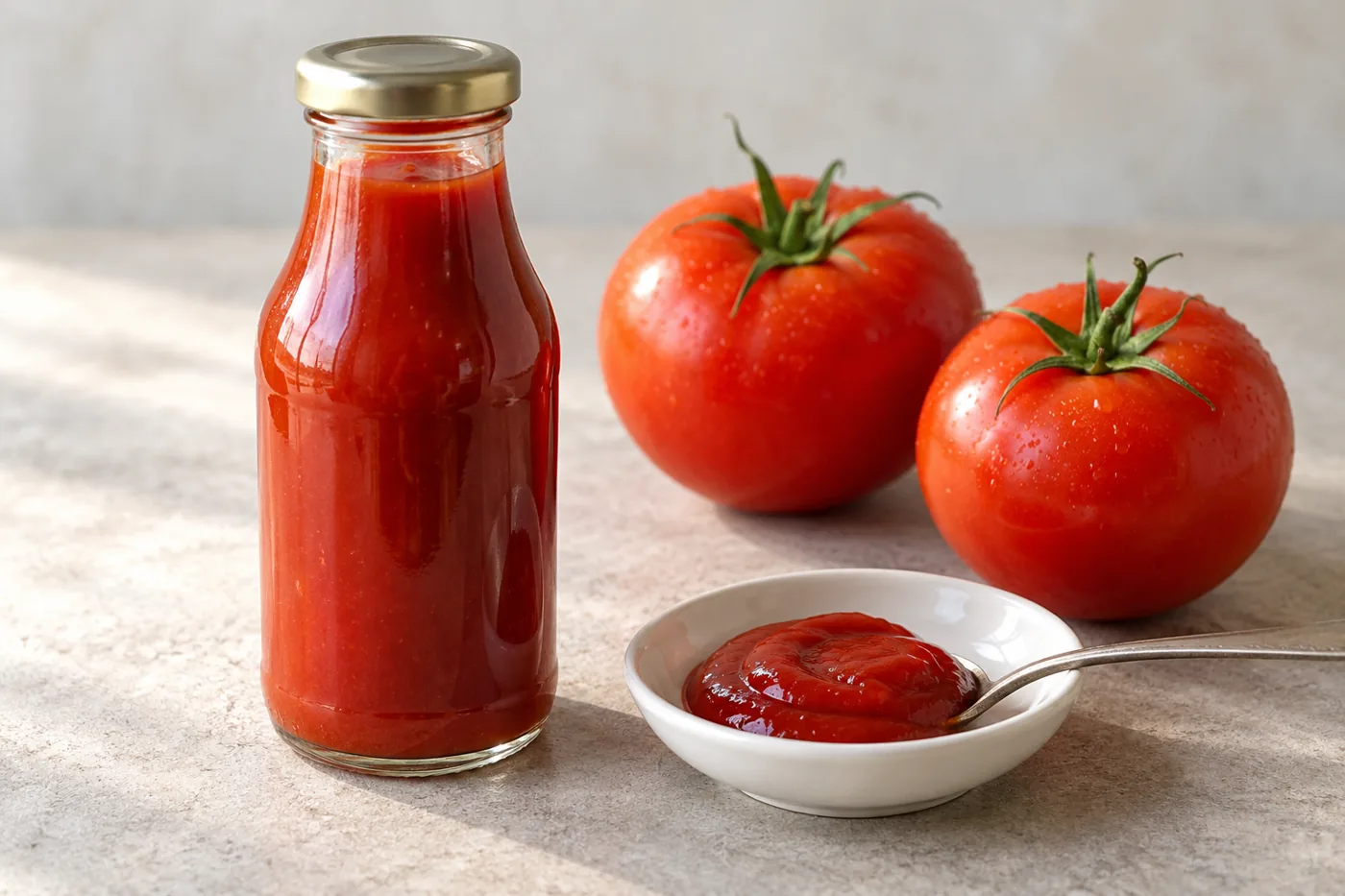
Generated interpretation, not documentary evidence. AI-generated interpretation of contemporary tomato ketchup, deliberately narrower than the wider history of ketchups.
Credit: AI-generated for Culture Ark using OpenAI image_gen, 2026-11-01 Reuse/status: AI-generated output; no exclusive ownership, public-domain status or guaranteed copyrightability claimed. Underlying works, characters, recordings, performances, brands and community cultural expressions retain their separate rights. The unbranded bottle and sauce are imagined, not an 1812 artifact, an ingredient list or a verified recipe; bottle design is not offered as trademark clearance.
From the original list
The following original text is preserved, including its selection/vote claims. Preservation is not independent verification of every assertion.
Why: A sauce from fish brine to tomato.
What to preserve: Recipe
Year and origin: 1812 · Southeast Asia / United States
Vote: 6/9 (historian 2 · future kid 2 · curator 2)
Learn more: Ketchup on Wikipedia
Supplemental context
Ketchup names a history of changing sauces rather than one timeless tomato recipe. The Exploratorium traces connections with fish brines in Chinese and Malaysian food traditions, British mushroom and walnut condiments, and later American tomato versions. Its account gives commercial sweetened tomato ketchup a larger role in the nineteenth century. The cultural interest lies partly in this change of ingredients while a related name travels. A familiar red bottle can therefore be an entry point into translation and adaptation, provided it does not erase the other sauces. Preserving several attributed recipes would be more informative than treating one modern formula as the whole tradition.
Creator/community: Cooks, traders and condiment producers across Asian, British and American contexts Place/era: A long, changing condiment history; later tomato ketchup in the United States
Context and limits
The opened museum overview does not establish the original’s precise 1812 date. That date should not be read as the origin of all ketchup or as proof of a single linear invention story. No historical recipe is reproduced as a tested food-preservation method, and a modern tomato image cannot represent every earlier condiment.
Where to learn more
- https://apiarybee.com/community/reading/biggie-nu-series-008-noahs-ark-set-d-culture-2000
- https://annex.exploratorium.edu/cooking/pickles/ketchup.html
- https://en.wikipedia.org/wiki/Ketchup
Apiary library | Original Culture Ark article
Public ID and individual routes: pending publisher allocation. Internal source ID: D-0684
Part of the Culture Ark: 2,000 things people should still be able to see in 2,000 years, picked by AI research teams. This page keeps the original list entry for D-0684 word for word and adds context. Browse the gallery. The Culture Ark is an Artificial Mind Hive (AMH) project. AMH is owned by Austin Little.

Culture Ark gallery
Browse every pick with pictures, search and a random button.
Open the gallery →