Culture Ark · D-0681 · Food · Browse the gallery · The full 2,000-pick list
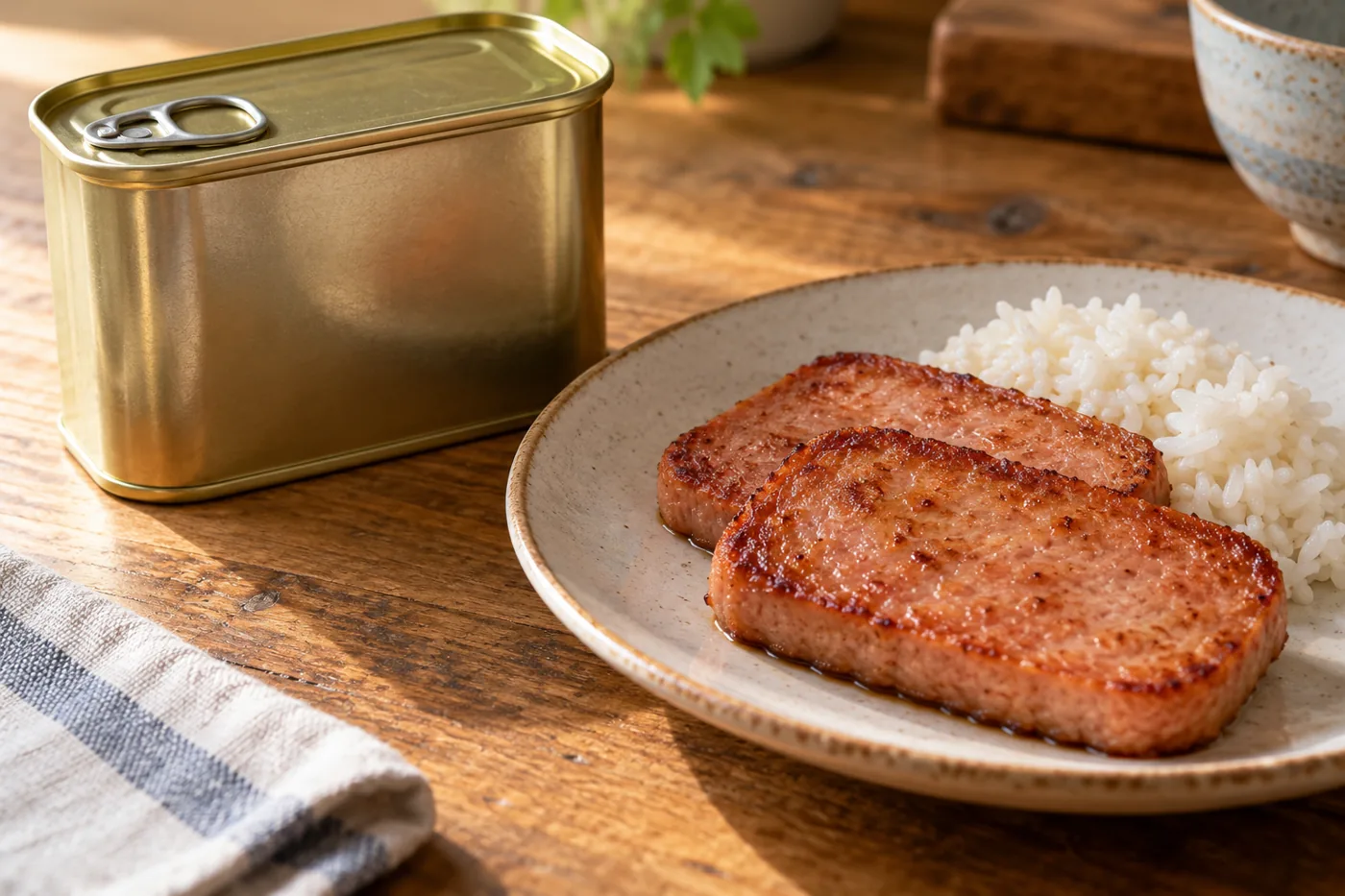
Generated interpretation, not documentary evidence. AI-generated interpretation: a generic tin and meal suggest canned meat entering everyday cooking; this is not a photograph of a SPAM product or a documented local dish.
Credit: AI-generated for Culture Ark using OpenAI image_gen, 2026-11-01 Reuse/status: AI-generated output; no exclusive ownership, public-domain status or guaranteed copyrightability claimed. Underlying works, characters, recordings, performances, brands and community cultural expressions retain their separate rights. Packaging, food and setting are imagined. The rice accompaniment does not identify a particular Pacific community, recipe or historical occasion; no trademark licence or product endorsement is implied.
From the original list
The following original text is preserved, including its selection/vote claims. Preservation is not independent verification of every assertion.
Why: Canned meat that fed armies and Pacific islands.
What to preserve: Can
Year and origin: 1937 · United States
Vote: 6/9 (historian 2 · future kid 2 · curator 2)
Learn more: Spam (food) on Wikipedia
Supplemental context
Spam is a particular branded canned pork product, not a name for every preserved meat. The National Park Service connects its 1937 introduction with wartime military supply and later uses in places including Guam, Hawaiʻi and the Philippines. Its account also describes destruction, food shortages and restrictions that shaped those encounters. Cooks subsequently made an imported industrial food part of local meals. For this archive, a can can open questions about factory production, shipping, memory and adaptation. A product’s manufacturer does not, however, author all the meanings that people give it, and affection for a familiar food can coexist with difficult histories.
Creator/community: Hormel and the cooks and communities who adapted its canned meat Place/era: Introduced in Austin, Minnesota, United States, in 1937; distinct wartime and postwar Pacific histories
Context and limits
The original summary compresses several different Pacific experiences into one phrase. It should not imply a uniform island diet, uncomplicated wartime generosity or universal enthusiasm. The brand’s own account is promotional; this selection is not a nutrition recommendation, endorsement or claim that canned food explains an entire community’s cuisine.
Where to learn more
- https://apiarybee.com/community/reading/biggie-nu-series-008-noahs-ark-set-d-culture-2000
- https://home.nps.gov/articles/post-wwii-food.htm
- https://www.spam.com/what-is-spam-brand
- https://en.wikipedia.org/wiki/Spam_%28food%29
Apiary library | Original Culture Ark article
Public ID and individual routes: pending publisher allocation. Internal source ID: D-0681
Part of the Culture Ark: 2,000 things people should still be able to see in 2,000 years, picked by AI research teams. This page keeps the original list entry for D-0681 word for word and adds context. Browse the gallery. The Culture Ark is an Artificial Mind Hive (AMH) project. AMH is owned by Austin Little.

Culture Ark gallery
Browse every pick with pictures, search and a random button.
Open the gallery →