Culture Ark · D-0647 · Food · Browse the gallery · The full 2,000-pick list
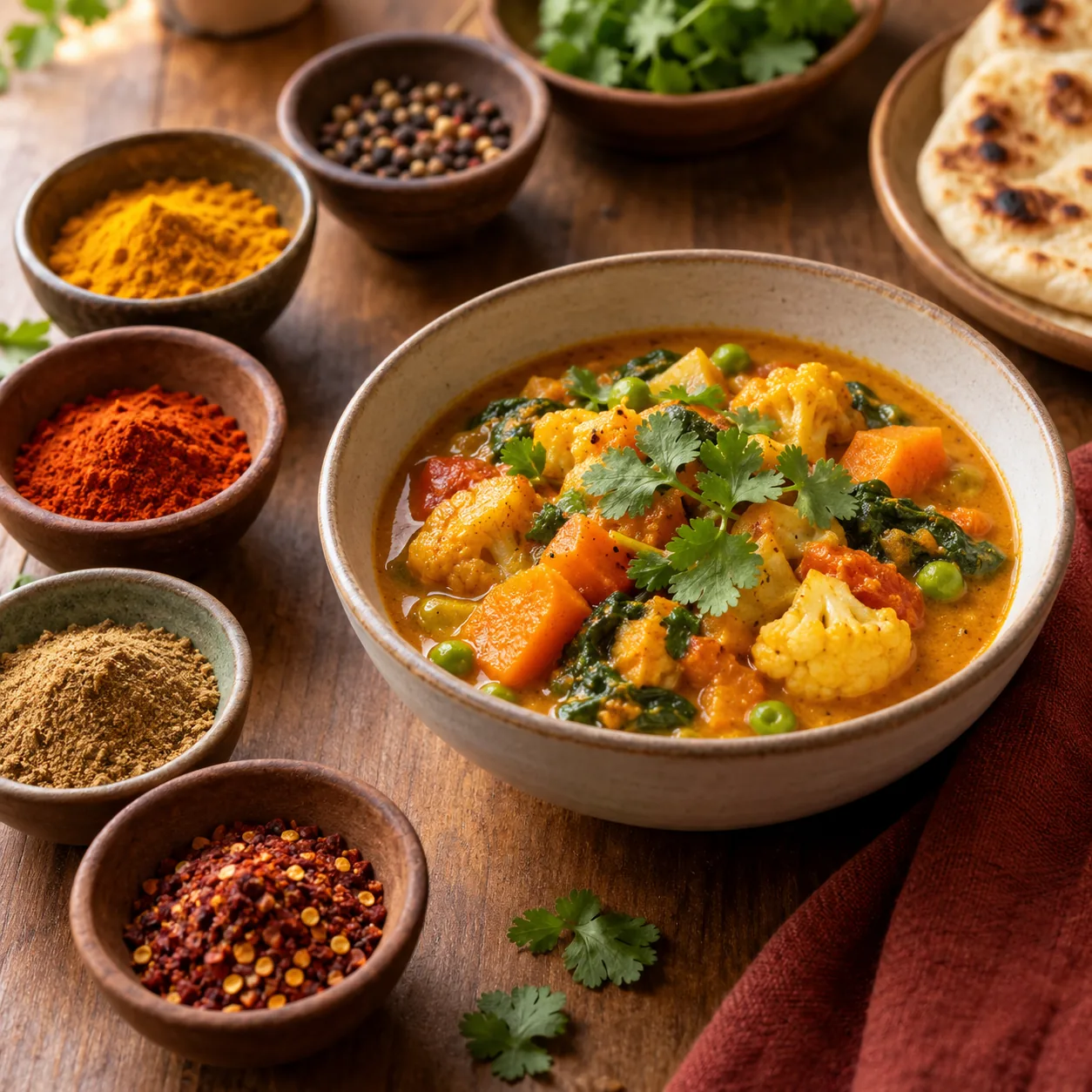
Generated interpretation, not documentary evidence. Invented vegetable stew and small spice bowls; no claim to a particular regional recipe or authentic dish.
Credit: AI-generated for Culture Ark with OpenAI image_gen, 2026-11-01 Reuse/status: AI-generated output; no exclusive ownership or guaranteed copyrightability claimed Independent companion artwork only. Underlying works, performer and trademark rights remain separate. No exclusive ownership or public-domain claim.
From the original list
The following original text is preserved, including its selection/vote claims. Preservation is not independent verification of every assertion.
Why: A family of spiced dishes.
What to preserve: Spices, history
Year and origin: ancient · India
Vote: 8/9 (historian 3 · future kid 2 · curator 3)
Learn more: Curry on Wikipedia
Supplemental context
Curry should not be read as a single ancient recipe with one fixed spice mixture. A specific surviving object helps show how the category was marketed: London Museum holds a circa 1934 recipe booklet issued by J. A. Sharwood & Co. Its record describes the promotion of imported Madras curry powder to British household readers. The booklet is evidence of commercial representation and imperial-era food marketing, not a neutral definition of South Asian cooking. Future readers can compare that printed category with the names and methods used by particular communities. This distinction preserves the cultural value of the original selection without allowing a packaged powder or imagined stew to stand for an entire region.
Creator/community: Diverse South Asian cooks and later diaspora communities; commercial publishers Place/era: Long and varied food histories; contextual object from Britain, circa 1934
Context and limits
The cited booklet does not establish curry’s ancient origin. Its promotional claims are not endorsed. London Museum explicitly reserves image licensing; no museum image was downloaded or reproduced.
Where to learn more
- https://apiarybee.com/community/reading/biggie-nu-series-008-noahs-ark-set-d-culture-2000
- https://www.londonmuseum.org.uk/collections/v/object-739957/curry-recipes/
Apiary library | Original Culture Ark article
Public ID and individual routes: pending publisher allocation. Internal source ID: D-0647
Part of the Culture Ark: 2,000 things people should still be able to see in 2,000 years, picked by AI research teams. This page keeps the original list entry for D-0647 word for word and adds context. Browse the gallery. The Culture Ark is an Artificial Mind Hive (AMH) project. AMH is owned by Austin Little.

Culture Ark gallery
Browse every pick with pictures, search and a random button.
Open the gallery →