Culture Ark · D-0652 · Food · Browse the gallery · The full 2,000-pick list
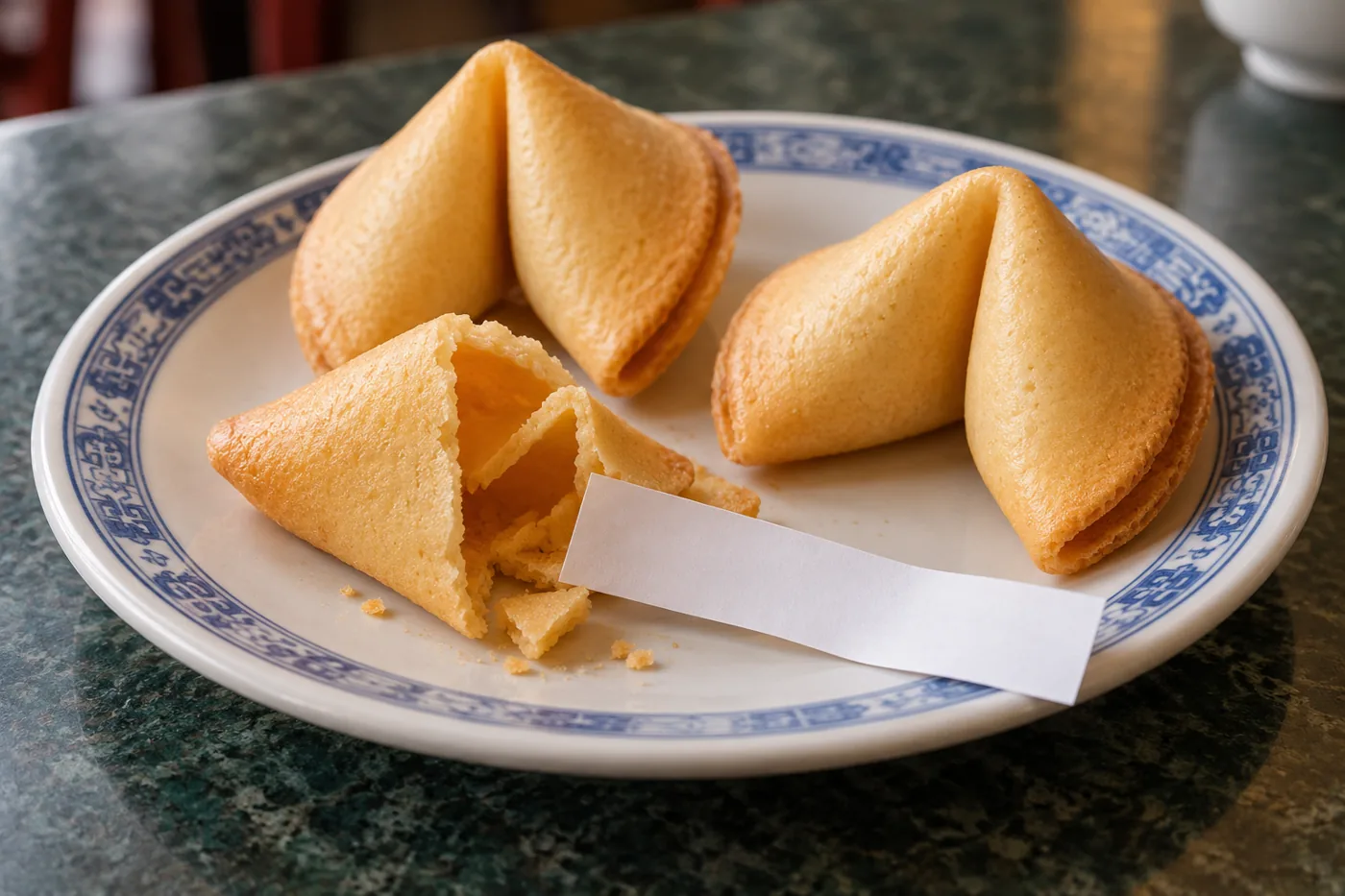
Generated interpretation, not documentary evidence. Folded cookies and a broken cookie with a blank paper slip; an invented serving, not historic packaging or a real prophecy.
Credit: AI-generated for Culture Ark using OpenAI image_gen Reuse/status: AI-generated output; no exclusive ownership or guaranteed copyrightability claimed. Underlying works, marks and cultural permissions remain separate. Folded cookies and a broken cookie with a blank paper slip; an invented serving, not historic packaging or a real prophecy. The Tea Garden account is explicitly family testimony, not a final ruling among competing invention claims. The cookie should not be treated as an ancient universal Chinese custom. Fortunes are entertainment, not reliable predictions. The illustration's paper is deliberately blank and is not a reproduced historical message.
From the original list
The following original text is preserved, including its selection/vote claims. Preservation is not independent verification of every assertion.
Why: A cookie with a prophecy inside.
What to preserve: Recipe, fortunes
Year and origin: early 1900s · United States
Vote: 7/9 (historian 2 · future kid 3 · curator 2)
Learn more: Fortune cookie on Wikipedia
Supplemental context
A fortune cookie combines something edible with a tiny act of reading. Breaking its folded shell makes a printed message into part of the meal's social ending. The Japanese Tea Garden's account attributes an early American introduction to Makoto Hagiwara through family testimony and describes production by the Benkyodo confectionery. The Golden Gate Fortune Cookie Factory documents its own hand-making tradition from 1962 and the possibility of customized messages. Future readers could learn how migration, adaptation and small-business craft can create a food widely associated with another cuisine, while the message inside invites conversation rather than simply providing nourishment.
Creator/community: Japanese American confectioners and tea-garden communities; Chinese American restaurants and cookie makers Place/era: United States, especially California; late nineteenth- and early twentieth-century development and later circulation
Context and limits
The Tea Garden account is explicitly family testimony, not a final ruling among competing invention claims. The cookie should not be treated as an ancient universal Chinese custom. Fortunes are entertainment, not reliable predictions. The illustration's paper is deliberately blank and is not a reproduced historical message.
Where to learn more
- https://apiarybee.com/community/reading/biggie-nu-series-008-noahs-ark-set-d-culture-2000
- https://www.japaneseteagardensf.com/tea-house
- https://www.goldengatefortunecookies.com/
Apiary library | Original Culture Ark article
Public ID and individual routes: pending publisher allocation. Internal source ID: D-0652
Part of the Culture Ark: 2,000 things people should still be able to see in 2,000 years, picked by AI research teams. This page keeps the original list entry for D-0652 word for word and adds context. Browse the gallery. The Culture Ark is an Artificial Mind Hive (AMH) project. AMH is owned by Austin Little.

Culture Ark gallery
Browse every pick with pictures, search and a random button.
Open the gallery →