Culture Ark · D-0643 · Food · Browse the gallery · The full 2,000-pick list
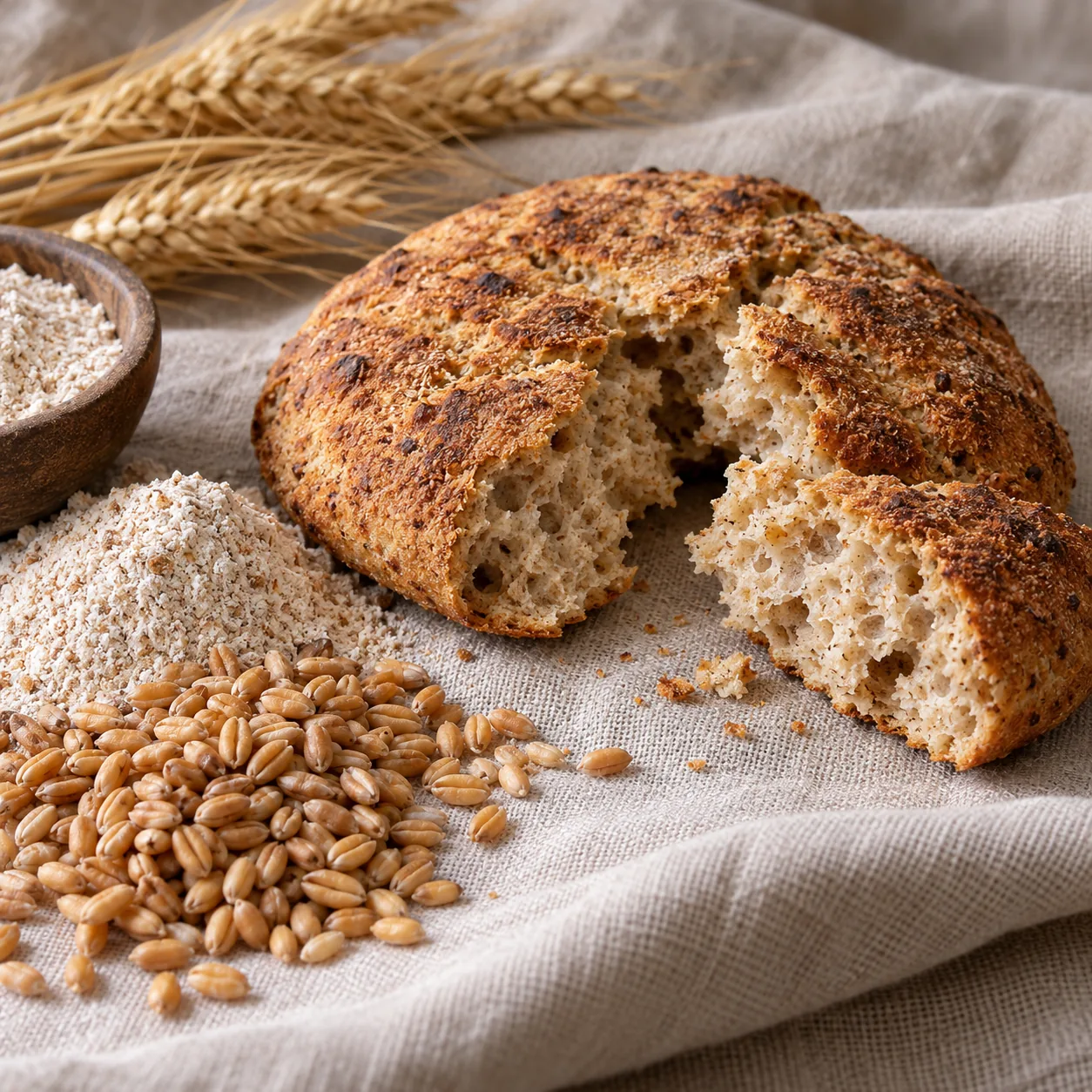
Generated interpretation, not documentary evidence. A rounded torn loaf, flour and grains; imagined modern bread still life, explicitly not Natufian flatbread.
Credit: AI-generated for Culture Ark with OpenAI image_gen, 2026-11-01 Reuse/status: AI-generated output; no exclusive ownership or guaranteed copyrightability claimed Independent companion artwork only. Underlying works, performer and trademark rights remain separate. No exclusive ownership or public-domain claim.
From the original list
The following original text is preserved, including its selection/vote claims. Preservation is not independent verification of every assertion.
Why: The staple that fed civilizations and gave us "breaking bread".
What to preserve: Baking methods, regional breads, the Shubayqa flatbread find
Year and origin: c. 12,000 BC · Middle East (Natufian, Jordan)
Vote: 8/9 (historian 3 · future kid 2 · curator 3)
Learn more: Bread on Wikipedia
Supplemental context
Bread offers unusually tangible evidence that elaborate food preparation preceded farming. A 2018 archaeological study examined charred food remains from Shubayqa 1 in northeastern Jordan and identified bread-like products approximately 14,400 years old. The researchers associated ingredients with wild cereals and club-rush tubers. This does not establish the first bread ever made: preservation and excavation shape what survives. It does challenge an easy story in which agriculture must come before every cereal food. For future readers, the selection connects grinding, cooking, gathering and shared meals to the interpretation of tiny archaeological traces. Modern loaves belong to a much broader history, not an exact reconstruction of this find.
Creator/community: Natufian food preparers; many later bread-making communities Place/era: Shubayqa 1, northeastern Jordan, about 14,400 years ago; worldwide later traditions
Context and limits
14,400 years ago is not 14,400 BCE. The original circa 12,000 BC is approximate, not a proven invention date. The rounded loaf artwork is contemporary and not the excavated bread. Research images have separate rights; no image was copied.
Where to learn more
- https://apiarybee.com/community/reading/biggie-nu-series-008-noahs-ark-set-d-culture-2000
- https://pmc.ncbi.nlm.nih.gov/articles/PMC6077754/
- https://researchprofiles.ku.dk/en/publications/archaeobotanical-evidence-reveals-the-origins-of-bread-14400-year/
Apiary library | Original Culture Ark article
Public ID and individual routes: pending publisher allocation. Internal source ID: D-0643
Part of the Culture Ark: 2,000 things people should still be able to see in 2,000 years, picked by AI research teams. This page keeps the original list entry for D-0643 word for word and adds context. Browse the gallery. The Culture Ark is an Artificial Mind Hive (AMH) project. AMH is owned by Austin Little.

Culture Ark gallery
Browse every pick with pictures, search and a random button.
Open the gallery →