Culture Ark · D-0641 · Food · Browse the gallery · The full 2,000-pick list
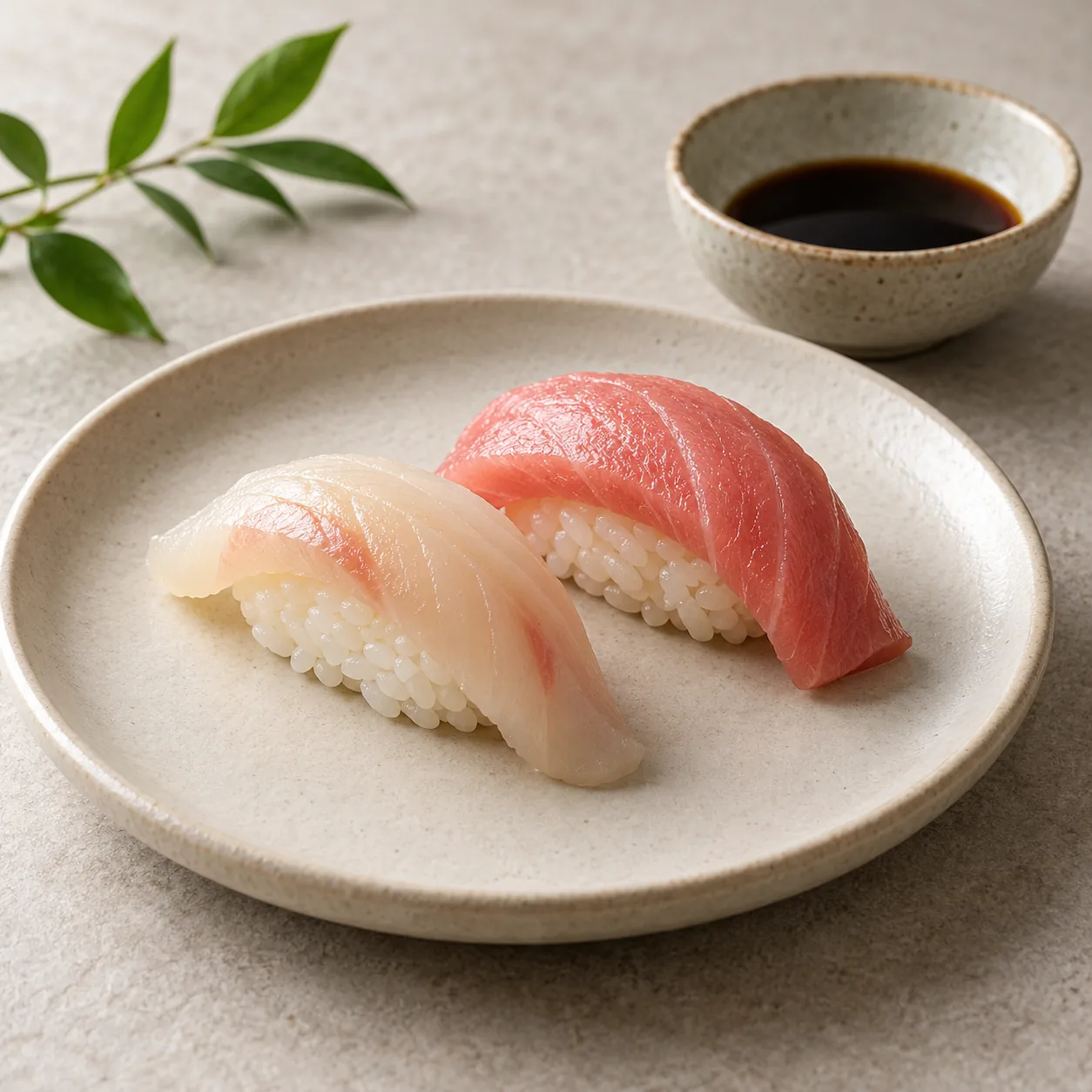
Generated interpretation, not documentary evidence. Two imagined nigiri pieces on a plain plate, with a small bowl; contemporary food interpretation, not an Edo reconstruction.
Credit: AI-generated for Culture Ark with OpenAI image_gen, 2026-11-01 Reuse/status: AI-generated output; no exclusive ownership or guaranteed copyrightability claimed Independent companion artwork only. Underlying works, performer and trademark rights remain separate. No exclusive ownership or public-domain claim.
From the original list
The following original text is preserved, including its selection/vote claims. Preservation is not independent verification of every assertion.
Why: Rice and fish raised to an art.
What to preserve: Nigiri method, fermentation origins
Year and origin: Edo period · Japan
Vote: 9/9 (historian 3 · future kid 3 · curator 3)
Learn more: Sushi on Wikipedia
Supplemental context
Sushi is a family of preparations rather than a synonym for raw fish. The Japanese agriculture ministry traces fermented fish-and-rice preparations before the development of faster styles, including pressed and hand-shaped forms. The original entry’s Edo-period emphasis is especially useful for thinking about nigiri, not for dating every form of sushi. Rice preparation, portioning, presentation and the relationship between preservation and immediate eating make this a rich cultural selection. For future readers, the useful question is how a practical food process became a recognizable meal and skilled service tradition. Regional variation should remain visible rather than being compressed into a single restaurant stereotype.
Creator/community: Japanese cooks and regional food communities Place/era: Japan; older fermentation traditions and Edo-period developments
Context and limits
The Edo date is not the origin date of all sushi. The generated fish toppings are unidentified and do not demonstrate safe preparation, a historical recipe or an authentic chef’s technique.
Where to learn more
- https://apiarybee.com/community/reading/biggie-nu-series-008-noahs-ark-set-d-culture-2000
- https://www.maff.go.jp/e/policies/market/k_ryouri/search_menu/1121/index.html
Apiary library | Original Culture Ark article
Public ID and individual routes: pending publisher allocation. Internal source ID: D-0641
Part of the Culture Ark: 2,000 things people should still be able to see in 2,000 years, picked by AI research teams. This page keeps the original list entry for D-0641 word for word and adds context. Browse the gallery. The Culture Ark is an Artificial Mind Hive (AMH) project. AMH is owned by Austin Little.

Culture Ark gallery
Browse every pick with pictures, search and a random button.
Open the gallery →