Culture Ark · D-0494 · Games · Browse the gallery · The full 2,000-pick list
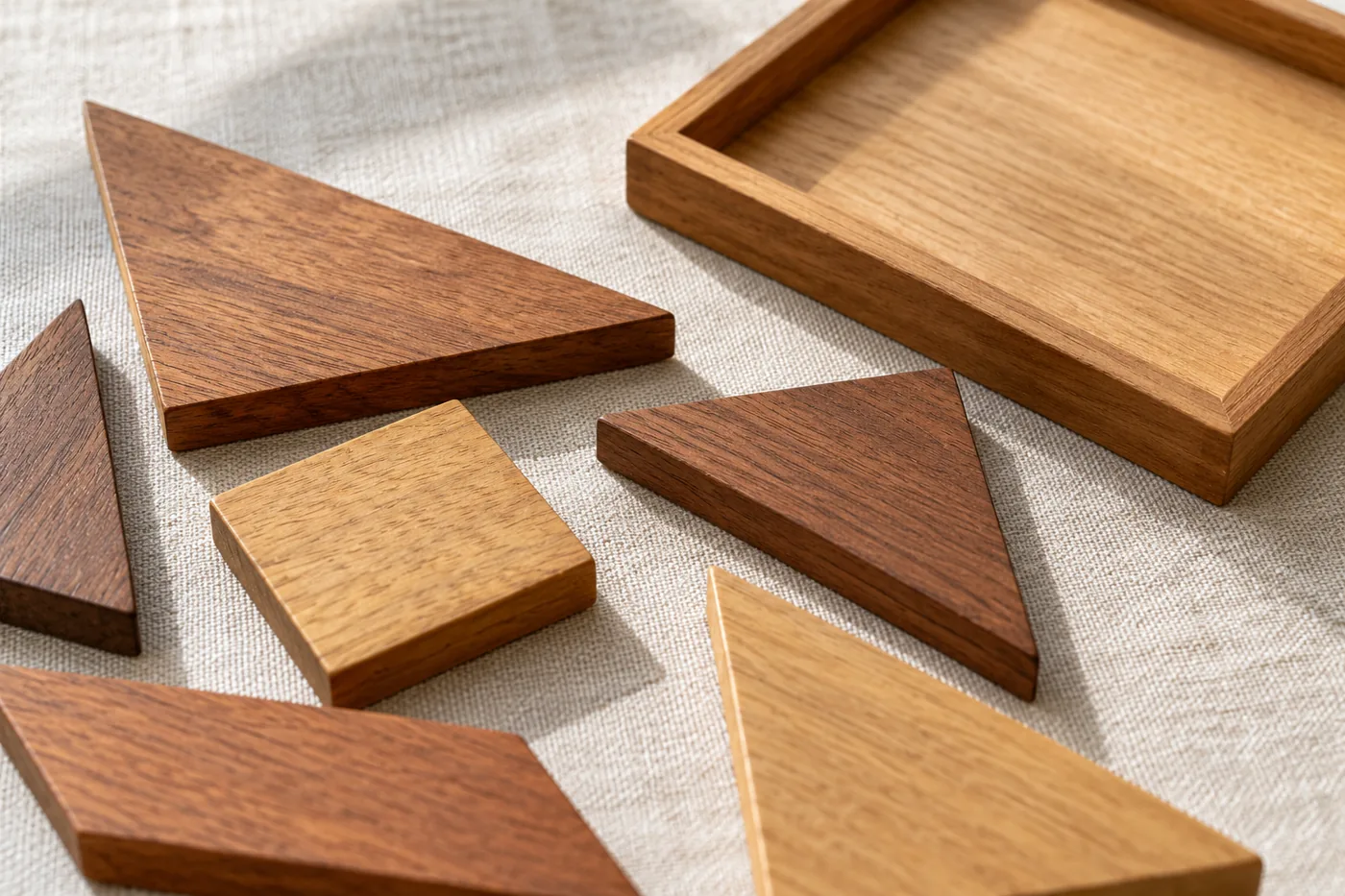
Generated interpretation, not documentary evidence. AI-generated geometric-play metaphor; not an antique tangram, a complete set or a verified solution.
Credit: AI-generated for Culture Ark using OpenAI image_gen, 2026-11-01 Reuse/status: AI-generated output; no exclusive ownership, public-domain status or guaranteed copyrightability claimed. Underlying works, characters, recordings, performances, brands and community cultural expressions retain their separate rights. The frame deliberately crops pieces. Exact angles, area ratios and piece count are not certified. The wood grain is invented, not evidence of Chinese or Tunbridge manufacture.
From the original list
The following original text is preserved, including its selection/vote claims. Preservation is not independent verification of every assertion.
Why: Seven shapes that form thousands of silhouettes.
What to preserve: A set, classic figures
Year and origin: c. 1800 · China
Vote: 6/9 (historian 2 · future kid 2 · curator 2)
Learn more: Tangram on Wikipedia
Supplemental context
The original selection presents tangram as a small set of shapes with many possible silhouettes. To preserve that idea, an archive needs both the pieces and the constraints governing how they may be used; attractive geometry alone is insufficient. A concrete material reference is the Science Museum Group’s Tunbridge Tangram puzzle, dated 1870. That surviving object is evidence of a particular example, not proof of the puzzle’s first invention. A future collection could compare dated sets and figure books while keeping the origin of each diagram visible, rather than treating every silhouette found online as anonymous traditional property.
Creator/community: Chinese puzzle makers and international makers, publishers and players Place/era: Chinese puzzle tradition; a separately documented Tunbridge example is dated 1870 by the Science Museum Group
Context and limits
The original c. 1800 China label is retained, not independently established by the 1870 object record. An earlier researched ETH source did not expose its exhibition text during this check, so it is not cited as newly opened evidence. No complete seven-piece inventory or solution is validated here.
Where to learn more
- https://apiarybee.com/community/reading/biggie-nu-series-008-noahs-ark-set-d-culture-2000
- https://collection.sciencemuseumgroup.org.uk/objects/co8238108/tunbridge-tangram-puzzle
- https://en.wikipedia.org/wiki/Tangram
Apiary library | Original Culture Ark article
Public ID and individual routes: pending publisher allocation. Internal source ID: D-0494
Part of the Culture Ark: 2,000 things people should still be able to see in 2,000 years, picked by AI research teams. This page keeps the original list entry for D-0494 word for word and adds context. Browse the gallery. The Culture Ark is an Artificial Mind Hive (AMH) project. AMH is owned by Austin Little.

Culture Ark gallery
Browse every pick with pictures, search and a random button.
Open the gallery →