Culture Ark · D-0498 · Games · Browse the gallery · The full 2,000-pick list
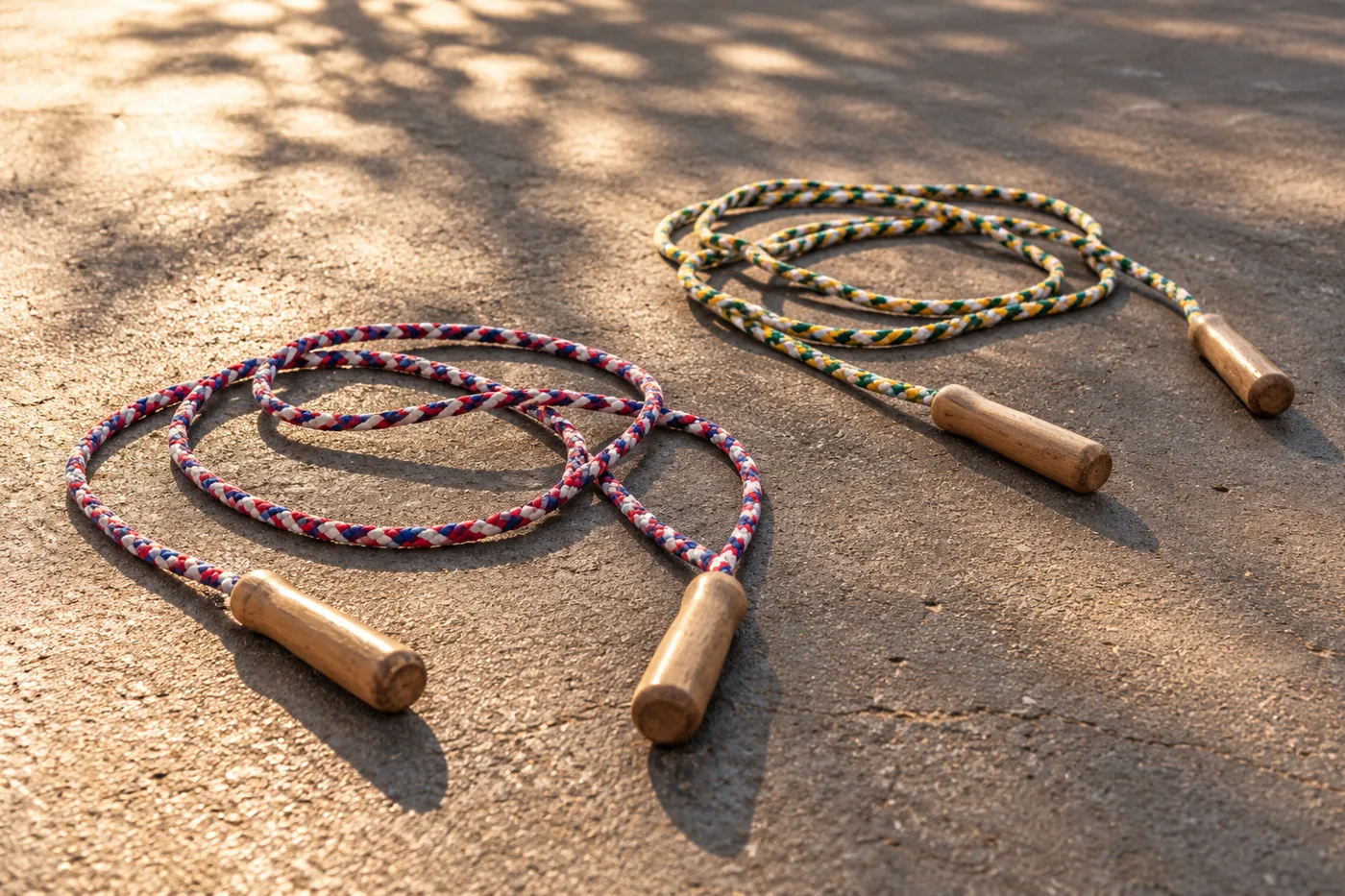
Generated interpretation, not documentary evidence. AI-generated rope-and-rhythm metaphor; not historical equipment, Double Dutch choreography or a recorded performance.
Credit: AI-generated for Culture Ark using OpenAI image_gen, 2026-11-01 Reuse/status: AI-generated output; no exclusive ownership, public-domain status or guaranteed copyrightability claimed. Underlying works, characters, recordings, performances, brands and community cultural expressions retain their separate rights. The ropes are resting, not demonstrating an action. Lengths, materials and handle designs are illustrative, not verified competition equipment or exercise guidance.
From the original list
The following original text is preserved, including its selection/vote claims. Preservation is not independent verification of every assertion.
Why: Jump-rope rhymes carry children's oral culture.
What to preserve: Rhymes, Double Dutch technique
Year and origin: ancient · Worldwide
Vote: 6/9 (historian 2 · future kid 2 · curator 2)
Learn more: Skipping rope on Wikipedia
Supplemental context
A skipping rope is only part of the cultural practice. The Library of Congress’s discussion of a 1978 classroom recording describes children explaining rhymes, games and the consequences of missing a turn. Its emphasis on children teaching other children is a reminder that oral culture can circulate outside formal instruction. For Culture Ark, a rhyme transcript should remain connected to its language, performers, collection circumstances and movement. The original selection’s Double Dutch proposal would likewise need a specifically sourced demonstration and practitioner context; two ropes in an illustration are not a preservation of the technique.
Creator/community: Children’s playing communities, rhyme transmitters and jump-rope practitioners Place/era: Transregional practices; a specific United States folklife collection documents children’s play in 1978
Context and limits
The original “ancient · Worldwide” label does not establish one origin or unchanged practice. The source article has inconsistent place labels within its account, so this supplement avoids assigning a precise locality. Only text was read; no child recording was played or copied. Consent and recording rights remain separate.
Where to learn more
- https://apiarybee.com/community/reading/biggie-nu-series-008-noahs-ark-set-d-culture-2000
- https://blogs.loc.gov/folklife/2020/06/kids-explain-their-rhymes-games-and-songs/
- https://en.wikipedia.org/wiki/Skipping_rope
Apiary library | Original Culture Ark article
Public ID and individual routes: pending publisher allocation. Internal source ID: D-0498
Part of the Culture Ark: 2,000 things people should still be able to see in 2,000 years, picked by AI research teams. This page keeps the original list entry for D-0498 word for word and adds context. Browse the gallery. The Culture Ark is an Artificial Mind Hive (AMH) project. AMH is owned by Austin Little.

Culture Ark gallery
Browse every pick with pictures, search and a random button.
Open the gallery →