Culture Ark · D-0484 · Games · Browse the gallery · The full 2,000-pick list
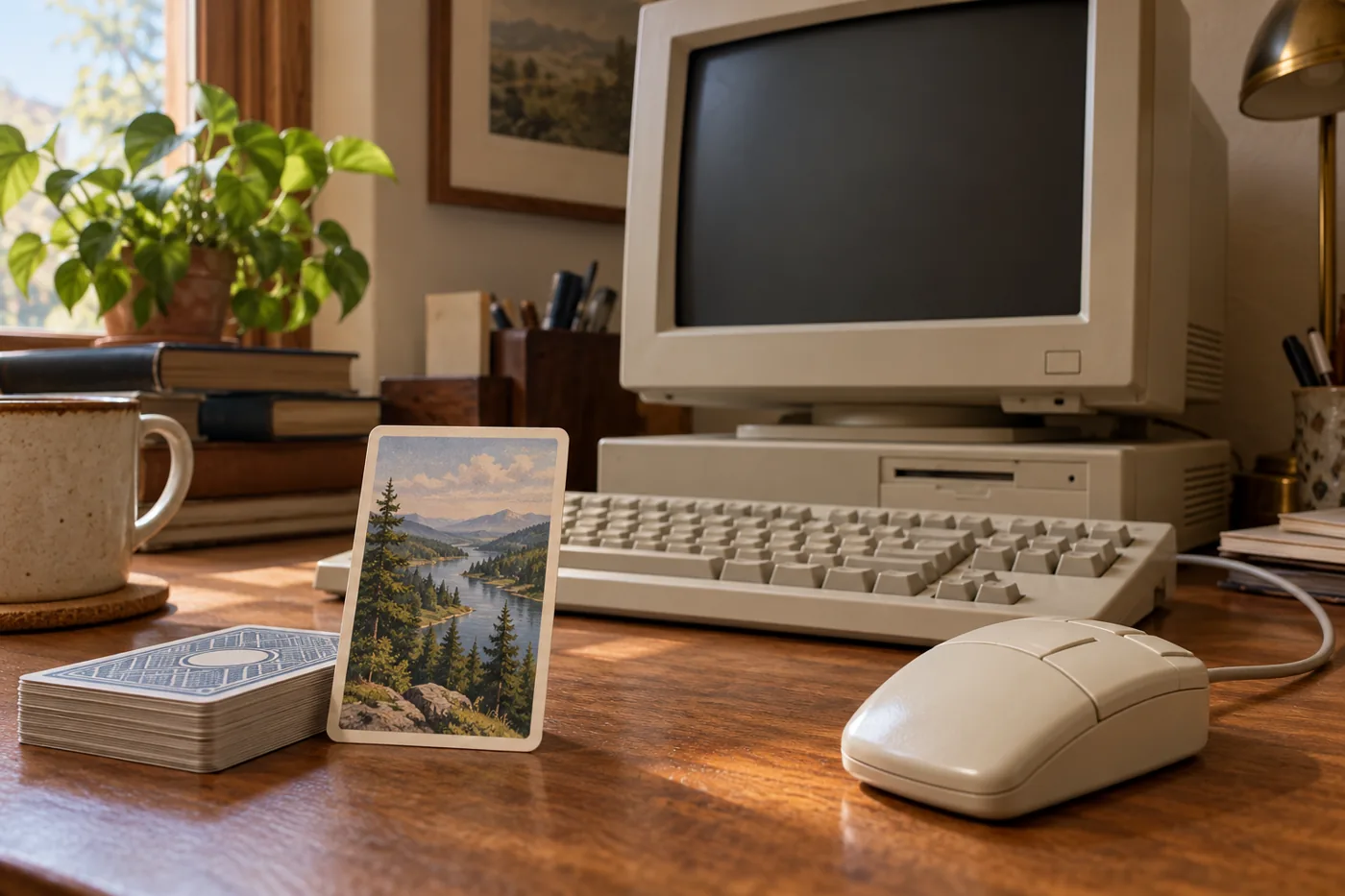
Generated interpretation, not documentary evidence. Invented beige computer, wired mouse and physical cards evoking early desktop solitaire.
Credit: AI-generated for Culture Ark using OpenAI image generation Reuse/status: Generated content; no exclusive ownership or underlying-work rights claimed Coherent retro computer and mouse with blank screen; upright landscape card is invented, not software card-back evidence. No authentic-reference or endorsement claim.
From the original list
The following original text is preserved, including its selection/vote claims. Preservation is not independent verification of every assertion.
Why: The bundled game that taught millions to use a mouse.
What to preserve: The program, card-back art, the bouncing-card win animation
Year and origin: 1990 · United States
Vote: 6/9 (historian 2 · future kid 2 · curator 2)
Learn more: Microsoft Solitaire on Wikipedia
Supplemental context
Microsoft Solitaire translated the Klondike card game into an everyday computer activity. The Strong credits the initial program to Wes Cherry and card-deck design to Susan Kare. Microsoft’s 2020 anniversary account identifies its Windows 3.0 arrival in 1990 and explains how dragging and dropping cards helped users become familiar with a mouse. The cultural object therefore includes gestures and interface feedback, not only rules. A future archive should distinguish the original program from later collections, devices and commercial arrangements.
Creator/community: Microsoft; programmer Wes Cherry and card designer Susan Kare Place/era: United States; Windows 3.0 release in 1990 and later versions
Context and limits
Microsoft did not invent solitaire itself. Historical corporate audience figures are dated promotional claims, not current independently audited totals. The generated computer has a dark screen and invented physical card art: it does not reproduce Susan Kare’s designs, the win animation or an authentic Windows interface. Software and original assets retain separate rights.
Where to learn more
- https://apiarybee.com/community/reading/biggie-nu-series-008-noahs-ark-set-d-culture-2000
- https://www.museumofplay.org/games/microsoft-solitaire/
- https://news.xbox.com/en-us/2020/05/22/celebrating-30-years-microsoft-solitaire/
Apiary library | Original Culture Ark article
Public ID and individual routes: pending publisher allocation. Internal source ID: D-0484
Part of the Culture Ark: 2,000 things people should still be able to see in 2,000 years, picked by AI research teams. This page keeps the original list entry for D-0484 word for word and adds context. Browse the gallery. The Culture Ark is an Artificial Mind Hive (AMH) project. AMH is owned by Austin Little.

Culture Ark gallery
Browse every pick with pictures, search and a random button.
Open the gallery →