Culture Ark · D-0488 · Games · Browse the gallery · The full 2,000-pick list
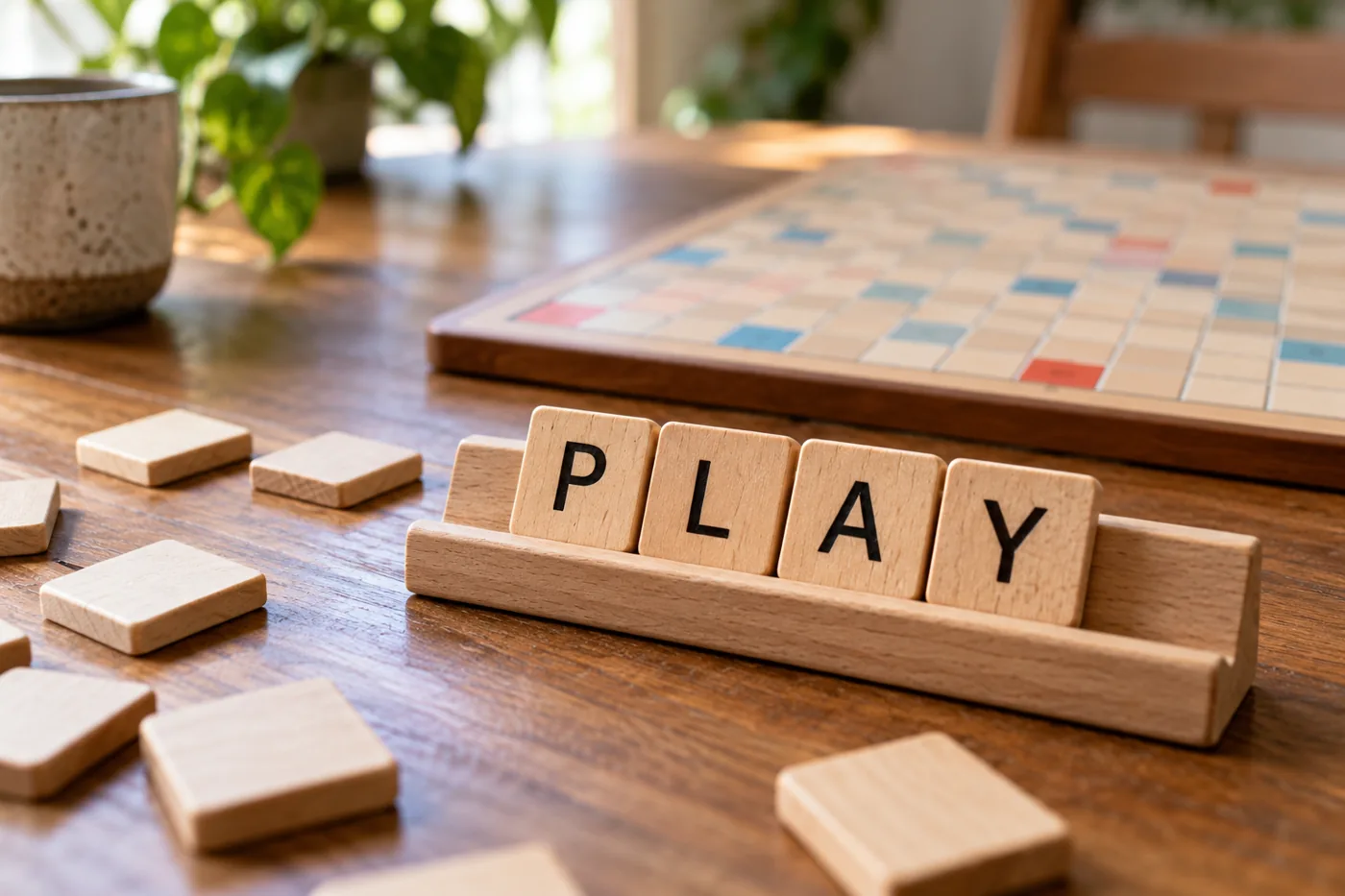
Generated interpretation, not documentary evidence. Invented wooden word-game rack spelling PLAY beside blank tiles and a blurred grid.
Credit: AI-generated for Culture Ark using OpenAI image generation Reuse/status: Generated content; no exclusive ownership or underlying-work rights claimed Four distinct tiles correctly spell PLAY; no official score values, lexicon claim or exact branded board reproduction. No authentic-reference or endorsement claim.
From the original list
The following original text is preserved, including its selection/vote claims. Preservation is not independent verification of every assertion.
Why: The crossword board game that made word lists a sport.
What to preserve: Board, tile distribution, official word lists, top scores
Year and origin: 1948 · United States
Vote: 6/9 (historian 2 · future kid 2 · curator 2)
Learn more: Scrabble on Wikipedia
Supplemental context
Scrabble links a crossword-like grid to the chance of drawing letter tiles. The Strong traces Butts’s early word-game designs and the 1948 licensing to James Brunot, who revised rules and design and introduced the Scrabble name. The game makes language both expressive material and a resource for competitive scoring. A future archive should preserve the chosen language, edition and accepted word list: a word’s eligibility in a tournament is not the same question as how people use it in ordinary conversation.
Creator/community: Alfred Mosher Butts; James Brunot; players and language communities Place/era: United States; earlier prototypes and 1948 Scrabble development
Context and limits
1948 marks a naming and development milestone rather than the start of all of Butts’s work. Tile distributions and authorized lexicons vary by language and competition, and records need dates and governing rules. The generated PLAY tiles have no point values and are symbolic, not a usable official board or full tile inventory.
Where to learn more
- https://apiarybee.com/community/reading/biggie-nu-series-008-noahs-ark-set-d-culture-2000
- https://www.museumofplay.org/toys/scrabble/
Apiary library | Original Culture Ark article
Public ID and individual routes: pending publisher allocation. Internal source ID: D-0488
Part of the Culture Ark: 2,000 things people should still be able to see in 2,000 years, picked by AI research teams. This page keeps the original list entry for D-0488 word for word and adds context. Browse the gallery. The Culture Ark is an Artificial Mind Hive (AMH) project. AMH is owned by Austin Little.

Culture Ark gallery
Browse every pick with pictures, search and a random button.
Open the gallery →