Culture Ark · D-0434 · Games · Browse the gallery · The full 2,000-pick list
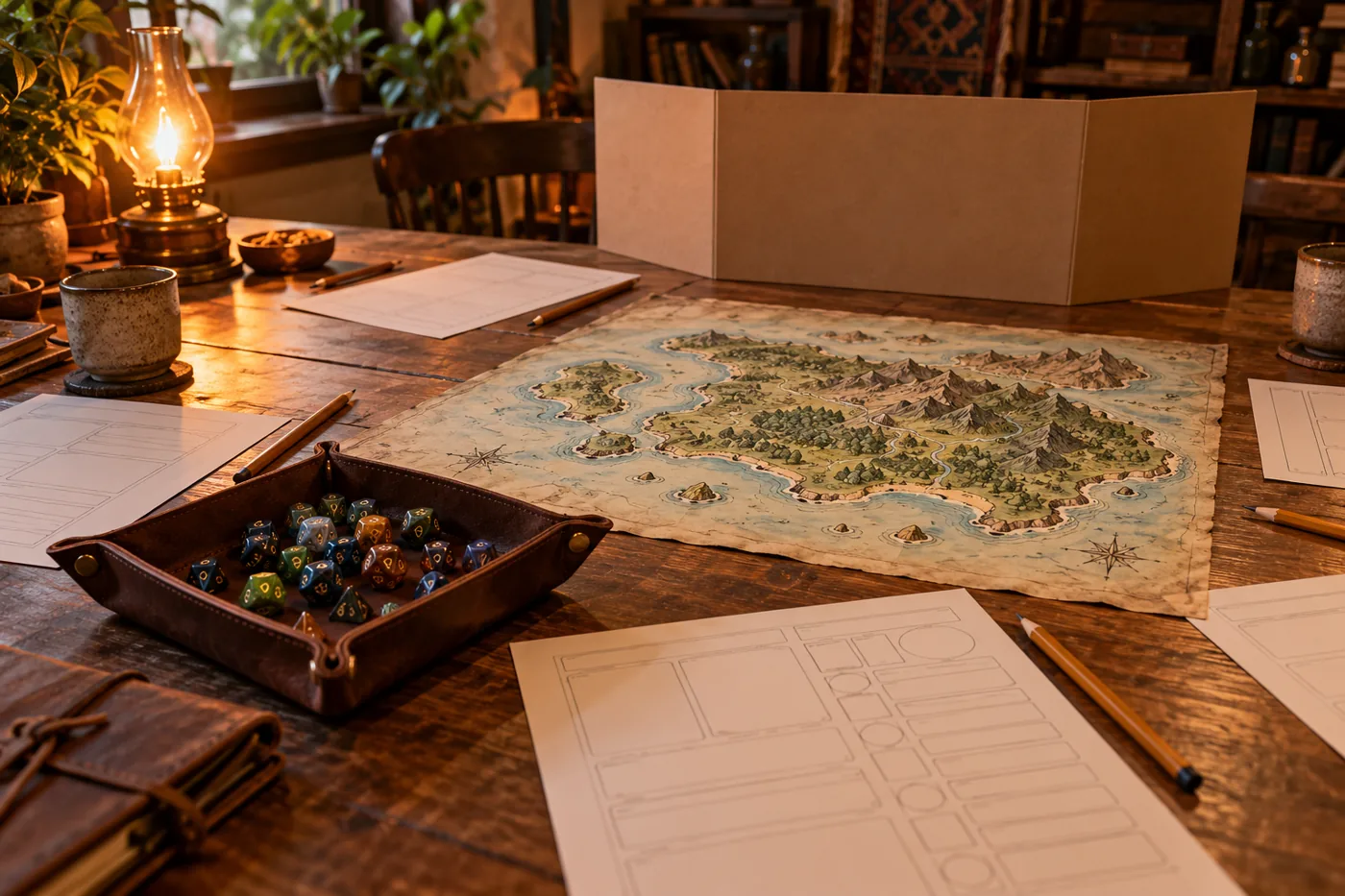
Generated interpretation, not documentary evidence. Invented role-playing table with polyhedral dice, blank sheets, an imaginary map and a plain game-master screen.
Credit: AI-generated for Culture Ark using OpenAI image generation Reuse/status: Generated content; no exclusive ownership or underlying-work rights claimed Coherent tabletop objects; map and sheet layouts are invented, dice are not a verified playable set or official rules diagram. No authentic-reference or endorsement claim.
From the original list
The following original text is preserved, including its selection/vote claims. Preservation is not independent verification of every assertion.
Why: The game that invented tabletop role-playing and shared storytelling.
What to preserve: Rulebooks, dice, character sheets, the 1980s moral panic
Year and origin: 1974 · United States
Vote: 9/9 (historian 3 · future kid 3 · curator 3)
Learn more: Dungeons & Dragons on Wikipedia
Supplemental context
Dungeons & Dragons turns a table into a shared imagined world. The Strong identifies Gygax and Arneson’s roots in war gaming and explains the division between player characters and the Dungeon Master, who narrates situations and responds to decisions. Dice help resolve uncertainty, but conversation and imagination are central materials. Preserving an edition’s books alone would miss how participants negotiate tone, take turns and create memorable stories together. Session accounts and consent-aware play records can complement rules without pretending that one group represents everyone.
Creator/community: Gary Gygax, Dave Arneson and successive role-playing communities Place/era: United States; 1970s origins and subsequent editions
Context and limits
The original 1974 date and strong invention claim remain archival text; the museum source supports 1970s development and named creators, not the invention of all shared storytelling. Editions and house rules differ. Original adventures, illustrations and characters retain separate rights; the card is generic tabletop context.
Where to learn more
- https://apiarybee.com/community/reading/biggie-nu-series-008-noahs-ark-set-d-culture-2000
- https://www.museumofplay.org/toys/dungeons-dragons/
Apiary library | Original Culture Ark article
Public ID and individual routes: pending publisher allocation. Internal source ID: D-0434
Part of the Culture Ark: 2,000 things people should still be able to see in 2,000 years, picked by AI research teams. This page keeps the original list entry for D-0434 word for word and adds context. Browse the gallery. The Culture Ark is an Artificial Mind Hive (AMH) project. AMH is owned by Austin Little.

Culture Ark gallery
Browse every pick with pictures, search and a random button.
Open the gallery →