Culture Ark · D-0440 · Games · Browse the gallery · The full 2,000-pick list
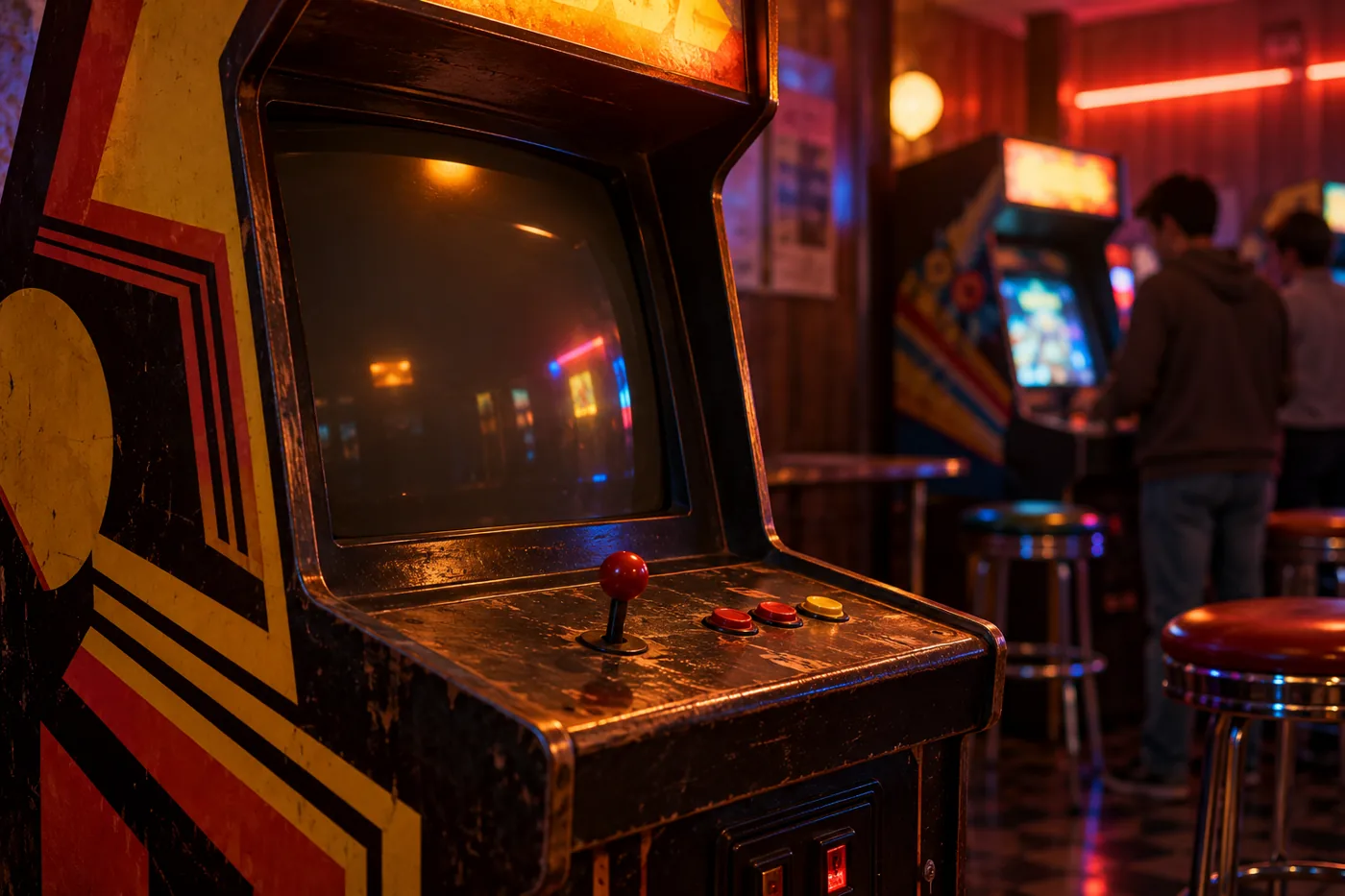
Generated interpretation, not documentary evidence. Fictional atmospheric arcade cabinet with dark screen, reused as contextual art for PAC-MAN.
Credit: AI-generated for Culture Ark using OpenAI image_gen Reuse/status: AI-generated output; no exclusive ownership or guaranteed copyrightability claimed Individually re-inspected: coherent cabinet, joystick and buttons with dark main screen; no authentic cabinet or playable maze claim. No authentic-reference or endorsement claim.
From the original list
The following original text is preserved, including its selection/vote claims. Preservation is not independent verification of every assertion.
Why: A hungry yellow circle became a pop icon.
What to preserve: Cabinet, ghost behavior, maze
Year and origin: 1980 · Japan
Vote: 9/9 (historian 3 · future kid 3 · curator 3)
Learn more: Pac-Man on Wikipedia
Supplemental context
PAC-MAN’s official chronology separates a May 22, 1980 focus test from its July Japanese public release and October United States arrival. It credits planning to Toru Iwatani, sound to Toshio Kai and programming to Shigeo Funaki. Those distinctions help preserve the game as collaborative audiovisual design rather than only a famous yellow icon. A useful archive would label the exact arcade or home version, controls and hardware, because a recognizable character does not guarantee an identical play experience.
Creator/community: Namco team: Toru Iwatani, Toshio Kai and Shigeo Funaki among credited contributors Place/era: Japan, 1980; subsequent international arcade and home versions
Context and limits
The May test date is not interchangeable with every regional release. Sequels, ports and later merchandise are distinct from the 1980 arcade game. The reused artwork fits arcade context but deliberately does not show an authentic PAC-MAN cabinet, maze or screenshot; game graphics, sound and marks have separate rights.
Where to learn more
- https://apiarybee.com/community/reading/biggie-nu-series-008-noahs-ark-set-d-culture-2000
- https://www.pacman.com/en/history/
Apiary library | Original Culture Ark article
Public ID and individual routes: pending publisher allocation. Internal source ID: D-0440
Part of the Culture Ark: 2,000 things people should still be able to see in 2,000 years, picked by AI research teams. This page keeps the original list entry for D-0440 word for word and adds context. Browse the gallery. The Culture Ark is an Artificial Mind Hive (AMH) project. AMH is owned by Austin Little.

Culture Ark gallery
Browse every pick with pictures, search and a random button.
Open the gallery →