Culture Ark · D-0433 · Games · Browse the gallery · The full 2,000-pick list
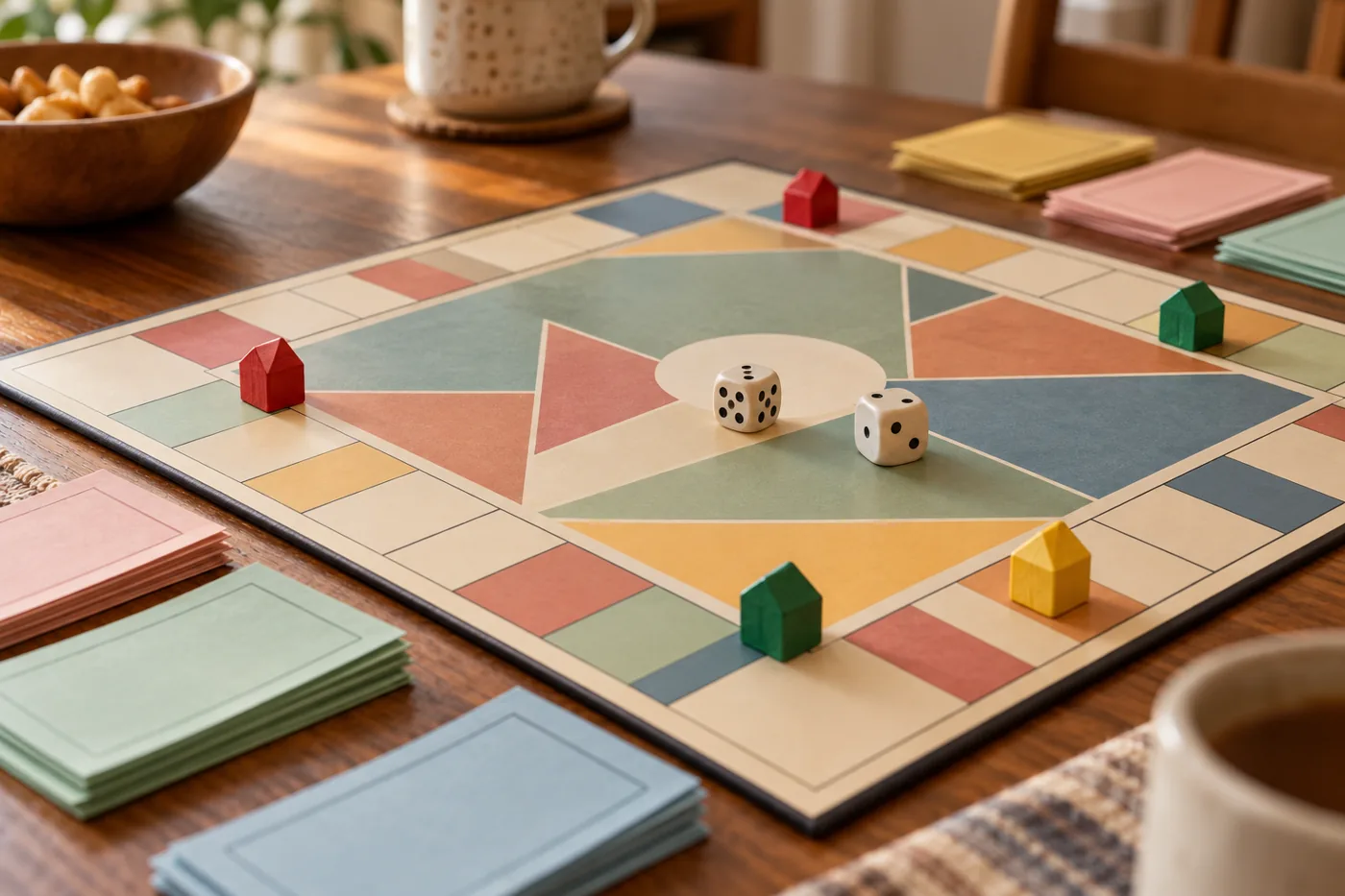
Generated interpretation, not documentary evidence. Invented property-game still life with wooden houses, dice and blank play money.
Credit: AI-generated for Culture Ark using OpenAI image generation Reuse/status: Generated content; no exclusive ownership or underlying-work rights claimed Coherent houses and geometric board; dice markings are illustrative, not rules evidence or an official Monopoly layout. No authentic-reference or endorsement claim.
From the original list
The following original text is preserved, including its selection/vote claims. Preservation is not independent verification of every assertion.
Why: The property-trading game that became a worldwide symbol of capitalism.
What to preserve: Board, money, pieces, Landlord's Game origins, regional editions
Year and origin: 1935 · United States
Vote: 9/9 (historian 3 · future kid 3 · curator 3)
Learn more: Monopoly (game) on Wikipedia
Supplemental context
Monopoly makes property, rent and financial elimination into family-table drama. The Strong traces its lineage to Elizabeth Magie’s 1904 Landlord’s Game, conceived to illustrate unequal wealth, and describes the game’s circulation and changes before Charles Darrow’s commercial production and Parker Brothers’ 1935 acquisition. An archive should retain that earlier critical purpose alongside the familiar competitive experience. Rules, house rules and regional editions can reveal how a commercial game becomes a local household custom.
Creator/community: Elizabeth Magie; later players, Charles Darrow and Parker Brothers Place/era: United States; early twentieth century, Parker Brothers acquisition 1935
Context and limits
1935 is a commercial milestone, not the beginning of the whole design lineage. The museum’s popularity and geographic totals are dated claims, not a newly audited worldwide ranking. The art uses invented board geometry and money rather than reproducing an edition.
Where to learn more
- https://apiarybee.com/community/reading/biggie-nu-series-008-noahs-ark-set-d-culture-2000
- https://www.museumofplay.org/toys/monopoly/
Apiary library | Original Culture Ark article
Public ID and individual routes: pending publisher allocation. Internal source ID: D-0433
Part of the Culture Ark: 2,000 things people should still be able to see in 2,000 years, picked by AI research teams. This page keeps the original list entry for D-0433 word for word and adds context. Browse the gallery. The Culture Ark is an Artificial Mind Hive (AMH) project. AMH is owned by Austin Little.

Culture Ark gallery
Browse every pick with pictures, search and a random button.
Open the gallery →