Culture Ark · D-0373 · Film and TV · Browse the gallery · The full 2,000-pick list
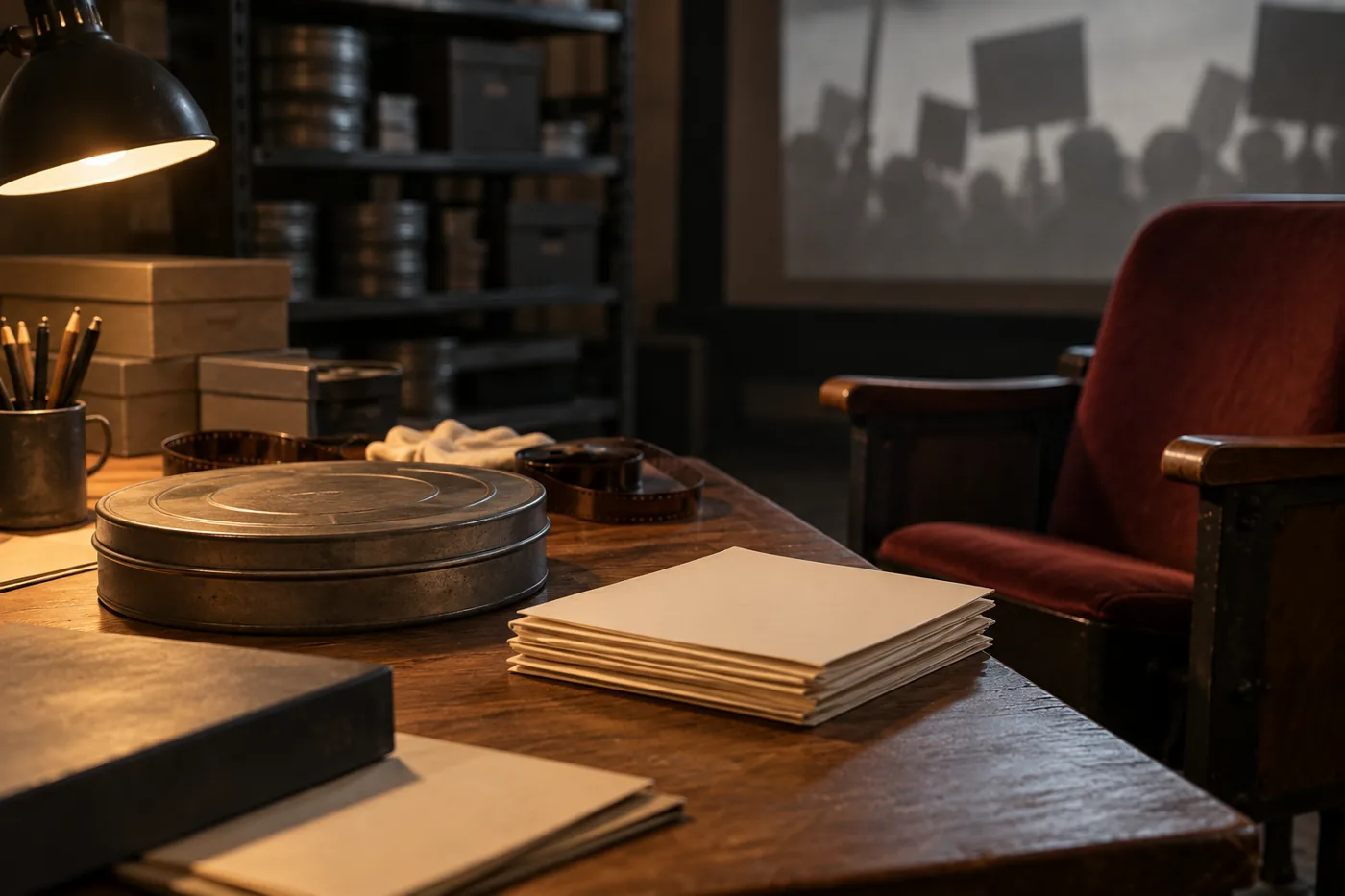
Generated interpretation, not documentary evidence. Invented archival table with film can, blank pamphlets and a fictional protest-shadow projection; critical study metaphor, not actual NAACP documents or historic protest footage.
Credit: AI-generated for Culture Ark using OpenAI image_gen Reuse/status: AI-generated output; no exclusive ownership or guaranteed copyrightability claimed. Underlying works, marks and cultural permissions remain separate. Invented archival table with film can, blank pamphlets and a fictional protest-shadow projection; critical study metaphor, not actual NAACP documents or historic protest footage. Contains racist caricature and white-supremacist propaganda; inclusion is not endorsement. The original revival-of-the-Klan claim requires wider historical evidence than a single film credit or protest record and should not be read as sole causation. Distinguish the 1915 film from unrelated later works with the same title.
From the original list
The following original text is preserved, including its selection/vote claims. Preservation is not independent verification of every assertion.
Why: A technically groundbreaking but racist film that revived the Ku Klux Klan, a warning.
What to preserve: The film, protest history
Year and origin: 1915 · United States
Vote: 4/9 (historian 2 · future kid 1 · curator 1)
Learn more: The Birth of a Nation on Wikipedia
Supplemental context
The Birth of a Nation should be preserved here as an object of critical study, inseparable from resistance to its racism. The Library of Congress’s NAACP exhibition explains that the film glorified the Ku Klux Klan and distorted Reconstruction, and documents a national campaign against it. That campaign involved pamphlets, appeals to officials and theater pickets. Future audiences need both the film and those responses to understand that its prejudices were challenged at the time, not simply accepted until later generations became wiser. Technical analysis cannot substitute for examining how persuasive images served racial domination.
Creator/community: D. W. Griffith and film production team; NAACP organizers and other critics in the essential protest history Place/era: United States, 1915; fictionalized Civil War and Reconstruction narrative
Context and limits
Contains racist caricature and white-supremacist propaganda; inclusion is not endorsement. The original revival-of-the-Klan claim requires wider historical evidence than a single film credit or protest record and should not be read as sole causation. Distinguish the 1915 film from unrelated later works with the same title.
Where to learn more
- https://apiarybee.com/community/reading/biggie-nu-series-008-noahs-ark-set-d-culture-2000
- https://loc.gov/exhibits/naacp/founding-and-early-years.html
- https://guides.loc.gov/chronicling-america-birth-of-a-nation
Apiary library | Original Culture Ark article
Public ID and individual routes: pending publisher allocation. Internal source ID: D-0373
Part of the Culture Ark: 2,000 things people should still be able to see in 2,000 years, picked by AI research teams. This page keeps the original list entry for D-0373 word for word and adds context. Browse the gallery. The Culture Ark is an Artificial Mind Hive (AMH) project. AMH is owned by Austin Little.

Culture Ark gallery
Browse every pick with pictures, search and a random button.
Open the gallery →