Culture Ark · D-0375 · Film and TV · Browse the gallery · The full 2,000-pick list
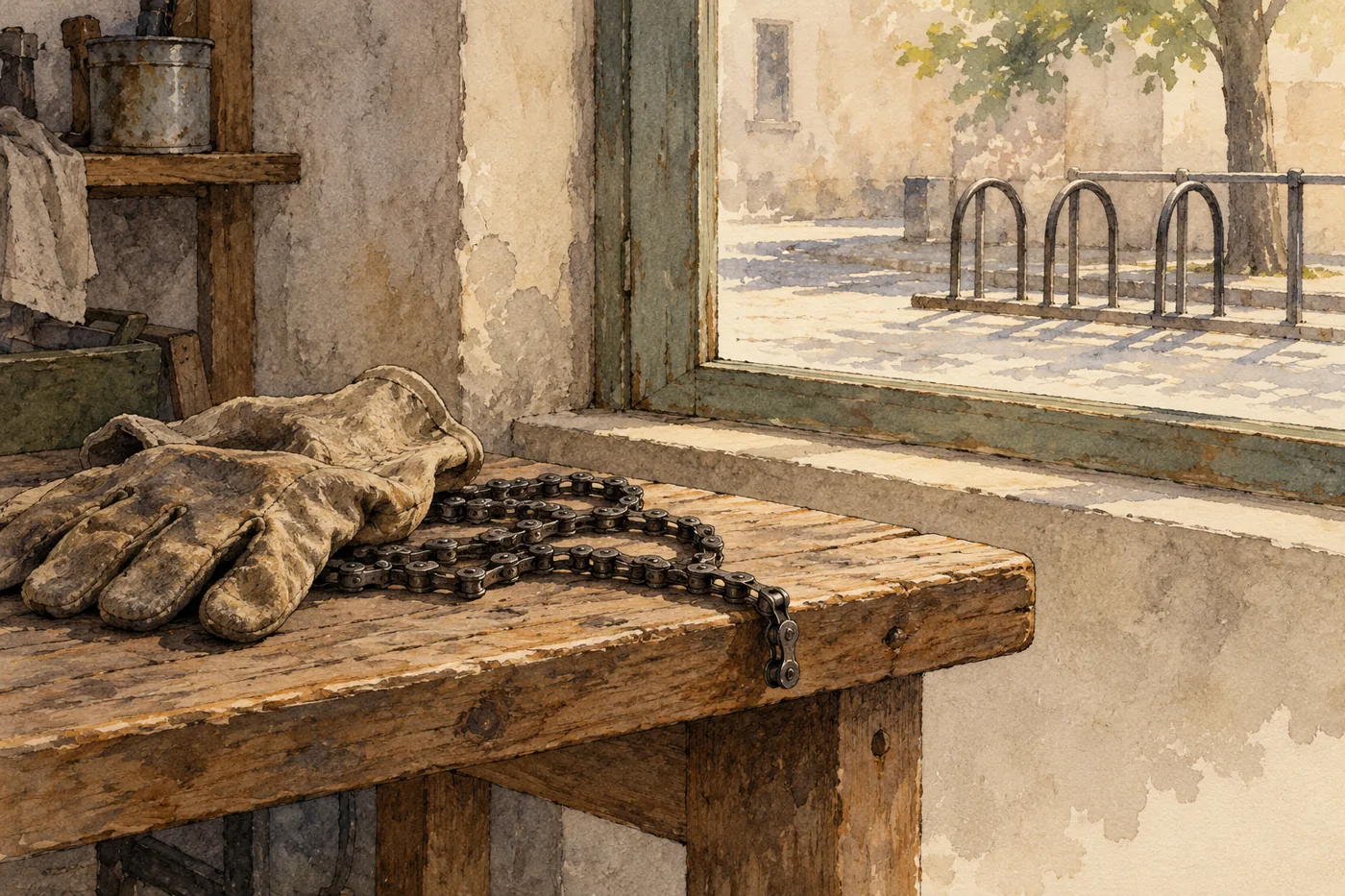
Generated interpretation, not documentary evidence. Reused original watercolor of work gloves, bicycle chain and empty rack; metaphor for work and absence, not an actual Bicycle Thieves scene, prop or location.
Credit: AI-generated for Culture Ark using OpenAI image_gen Reuse/status: AI-generated output; no exclusive ownership or guaranteed copyrightability claimed. Underlying works, marks and cultural permissions remain separate. Reused original watercolor of work gloves, bicycle chain and empty rack; metaphor for work and absence, not an actual Bicycle Thieves scene, prop or location. Neorealism is a filmmaking approach, not proof that every scene is unstaged documentary. The film does not represent every Italian family. Keep original-language sound and subtitle or dub information identifiable; Criterion’s edition offers an optional English dub.
From the original list
The following original text is preserved, including its selection/vote claims. Preservation is not independent verification of every assertion.
Why: Italian neorealism: a poor father searching for his stolen bicycle.
What to preserve: The film
Year and origin: 1948 · Italy
Vote: 4/9 (historian 2 · future kid 1 · curator 1)
Learn more: Bicycle Thieves on Wikipedia
Supplemental context
Bicycle Thieves makes a stolen everyday object central to a family’s hopes. Criterion’s account describes a man whose new job requires a bicycle and whose search after its theft brings his young son along. The film’s postwar Roman setting and its attention to precarious work place it within Italian neorealism. Future viewers could learn how a modest possession connects mobility, livelihood and dignity, while also examining the father–son relationship. Preserving the whole film would retain the accumulation of encounters and choices that a plot summary or isolated photograph cannot convey.
Creator/community: Vittorio De Sica, director; Cesare Zavattini and fellow writers; Lamberto Maggiorani, Enzo Staiola and ensemble Place/era: Italy, 1948; postwar Rome
Context and limits
Neorealism is a filmmaking approach, not proof that every scene is unstaged documentary. The film does not represent every Italian family. Keep original-language sound and subtitle or dub information identifiable; Criterion’s edition offers an optional English dub.
Where to learn more
- https://apiarybee.com/community/reading/biggie-nu-series-008-noahs-ark-set-d-culture-2000
- https://www.criterion.com/films/210-bicycle-thieves
Apiary library | Original Culture Ark article
Public ID and individual routes: pending publisher allocation. Internal source ID: D-0375
Part of the Culture Ark: 2,000 things people should still be able to see in 2,000 years, picked by AI research teams. This page keeps the original list entry for D-0375 word for word and adds context. Browse the gallery. The Culture Ark is an Artificial Mind Hive (AMH) project. AMH is owned by Austin Little.

Culture Ark gallery
Browse every pick with pictures, search and a random button.
Open the gallery →