Culture Ark · D-0376 · Film and TV · Browse the gallery · The full 2,000-pick list
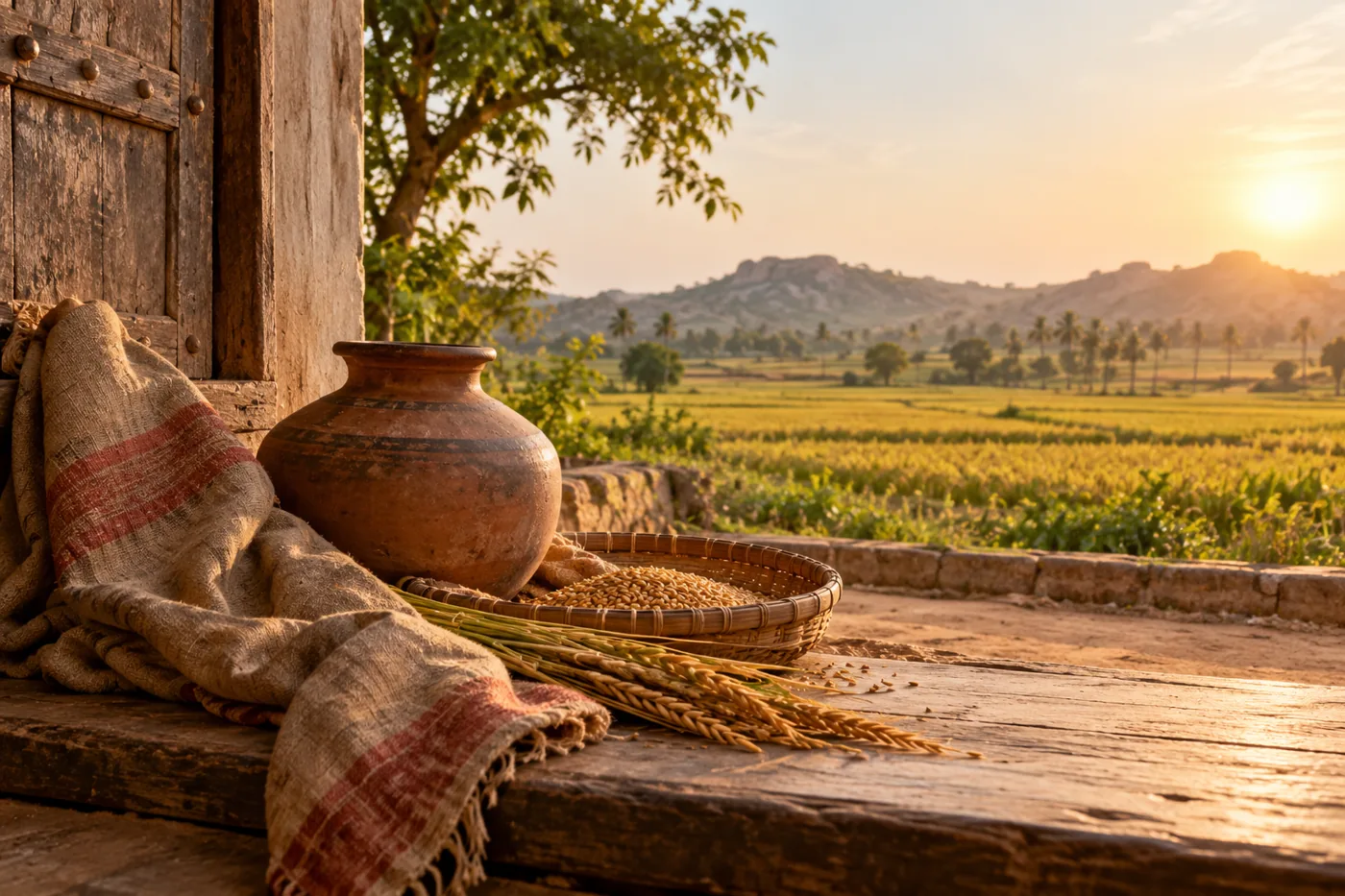
Generated interpretation, not documentary evidence. Invented cloth, clay pot and grain overlooking fields; rural work-and-endurance metaphor, not an actual Mother India location or universal household reconstruction.
Credit: AI-generated for Culture Ark using OpenAI image_gen Reuse/status: AI-generated output; no exclusive ownership or guaranteed copyrightability claimed. Underlying works, marks and cultural permissions remain separate. Invented cloth, clay pot and grain overlooking fields; rural work-and-endurance metaphor, not an actual Mother India location or universal household reconstruction. The linked source is the publisher’s account of a scholarly study, not a claim that the entire book was read. The film’s ideals and sacrifices should be discussed, not prescribed as universal obligations. Do not confuse the film’s 1957 production with every period represented in its story.
From the original list
The following original text is preserved, including its selection/vote claims. Preservation is not independent verification of every assertion.
Why: A landmark of Indian cinema about a peasant mother's sacrifice.
What to preserve: The film
Year and origin: 1957 · India
Vote: 4/9 (historian 2 · future kid 1 · curator 1)
Learn more: Mother India on Wikipedia
Supplemental context
Mother India places family struggle at the center of an epic screen narrative. The publisher’s description of Gayatri Chatterjee’s BFI study identifies Mehboob Khan’s 1957 film, its principal performers and the research undertaken in the studio archive. It situates the melodrama in the cultural questions of a newly independent country undergoing change. Future viewers can approach the film both as a performed story and as a source for examining the expectations placed on mothers, families and nationhood. Those are interpretive avenues, not a claim that one fictional mother stands for every woman in India.
Creator/community: Mehboob Khan, director; Nargis, Sunil Dutt, Rajendra Kumar and film collaborators Place/era: India, 1957; family melodrama in a rural setting and post-independence cultural context
Context and limits
The linked source is the publisher’s account of a scholarly study, not a claim that the entire book was read. The film’s ideals and sacrifices should be discussed, not prescribed as universal obligations. Do not confuse the film’s 1957 production with every period represented in its story.
Where to learn more
- https://apiarybee.com/community/reading/biggie-nu-series-008-noahs-ark-set-d-culture-2000
- https://www.bloomsbury.com/uk/mother-india-9781838719661/
Apiary library | Original Culture Ark article
Public ID and individual routes: pending publisher allocation. Internal source ID: D-0376
Part of the Culture Ark: 2,000 things people should still be able to see in 2,000 years, picked by AI research teams. This page keeps the original list entry for D-0376 word for word and adds context. Browse the gallery. The Culture Ark is an Artificial Mind Hive (AMH) project. AMH is owned by Austin Little.

Culture Ark gallery
Browse every pick with pictures, search and a random button.
Open the gallery →