Culture Ark · D-0354 · Film and TV · Browse the gallery · The full 2,000-pick list
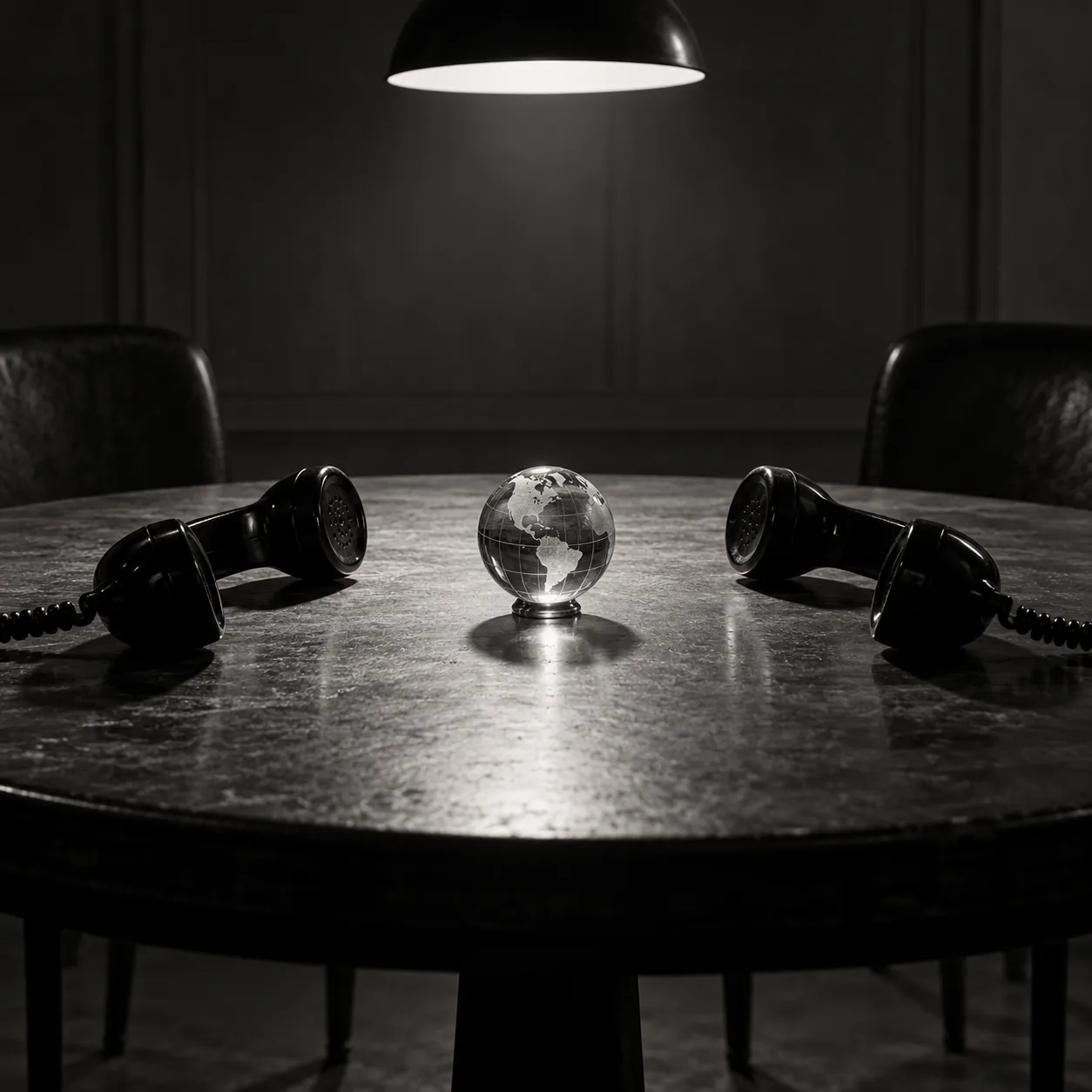
Generated interpretation, not documentary evidence. Two imagined telephone handsets flank a glass globe in monochrome: a metaphor for communication and vulnerability, not a film frame or accurate map.
Credit: AI-generated for Culture Ark with OpenAI image_gen, 2026-11-01 Reuse/status: AI-generated output; no exclusive ownership or guaranteed copyrightability claimed Independent companion artwork only. Underlying works, performer and trademark rights remain separate. No exclusive ownership or public-domain claim.
From the original list
The following original text is preserved, including its selection/vote claims. Preservation is not independent verification of every assertion.
Why: A nuclear apocalypse satire.
What to preserve: The film
Year and origin: 1964 · United Kingdom/United States
Vote: 5/9 (historian 2 · future kid 1 · curator 2)
Learn more: Dr. Strangelove on Wikipedia
Supplemental context
Dr. Strangelove turns the fear of nuclear catastrophe into black comedy. Sony’s synopsis describes an American general launching an attack and a president trying to avert disaster through communication with the Soviet leader. BFI archival commentary explains that Kubrick adapted Peter George’s serious novel Red Alert and developed the project as satire. The result is useful cultural evidence about how cinema could question military rationality, political language and faith in procedures without presenting a literal policy lesson. Future viewers should compare its invented situations with historically sourced accounts of Cold War institutions. Studying the screenplay and production design alongside the film would also distinguish cinematic persuasion from the actual spaces and technologies it imitates.
Creator/community: Stanley Kubrick and collaborators Place/era: United Kingdom/United States; 1964 feature film
Context and limits
The theatrical film is dated 1964; Sony’s copyright notice says 1963, which is not a contradictory theatrical-release date. This is fiction and satire, not a technical account of nuclear systems. The companion artwork is not the famous war-room set.
Where to learn more
- https://apiarybee.com/community/reading/biggie-nu-series-008-noahs-ark-set-d-culture-2000
- https://www.bfi.org.uk/features/celebrating-kubricks-dr-strangelove-50
- https://www.sonypictures.com/movies/drstrangeloveorhowilearnedtostopworryingandlovethebomb
Apiary library | Original Culture Ark article
Public ID and individual routes: pending publisher allocation. Internal source ID: D-0354
Part of the Culture Ark: 2,000 things people should still be able to see in 2,000 years, picked by AI research teams. This page keeps the original list entry for D-0354 word for word and adds context. Browse the gallery. The Culture Ark is an Artificial Mind Hive (AMH) project. AMH is owned by Austin Little.

Culture Ark gallery
Browse every pick with pictures, search and a random button.
Open the gallery →